Laporte Aimée N, Barrott Jared J, Yao Ren Jie, Poulin Neal M, Brodin Bertha A, Jones Kevin B, Underhill T Michael, Nielsen Torsten O
Faculty of Medicine, Vancouver Coastal Health Research Institute, University of British Columbia, Vancouver, British Columbia, Canada.
Department of Orthopaedics, Huntsman Cancer Institute, University of Utah, Salt Lake City, Utah, United States of America.
PLoS One. 2017 Jan 5;12(1):e0169407. doi: 10.1371/journal.pone.0169407. eCollection 2017.
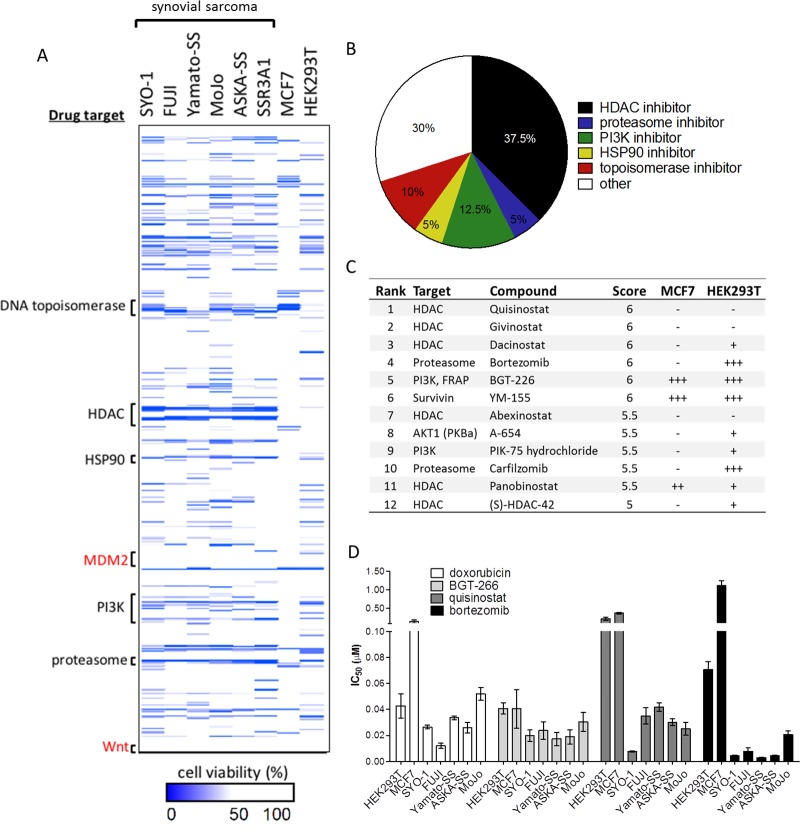
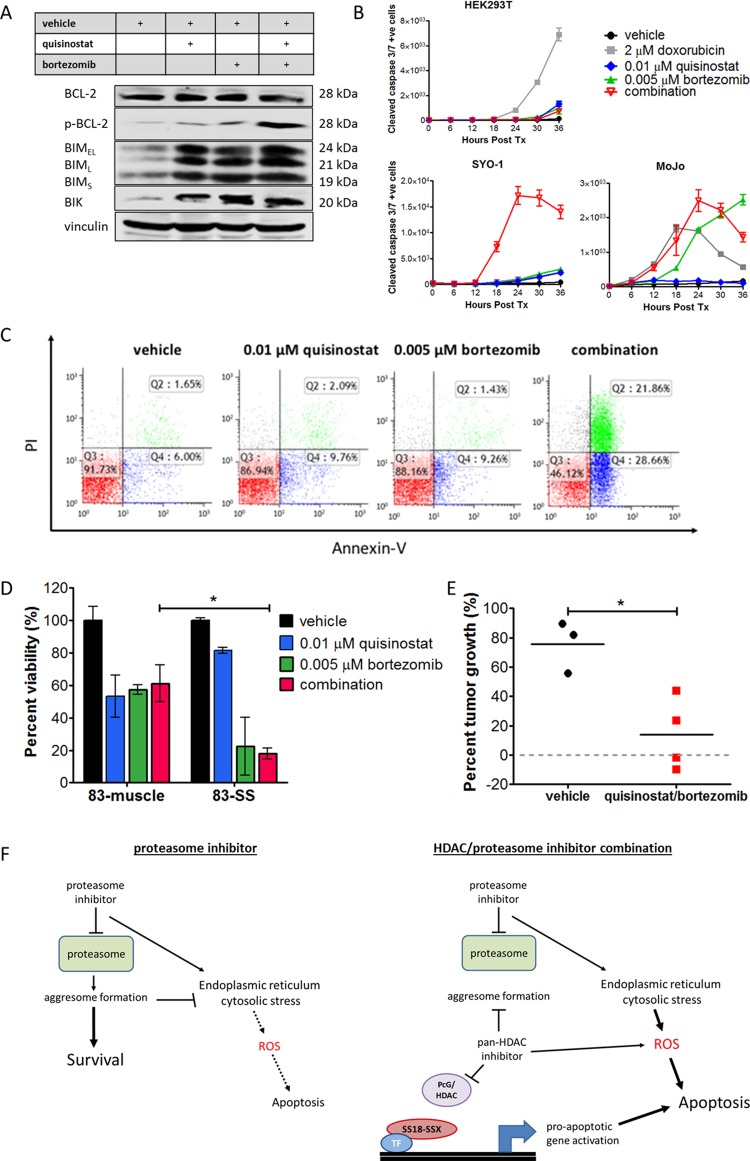
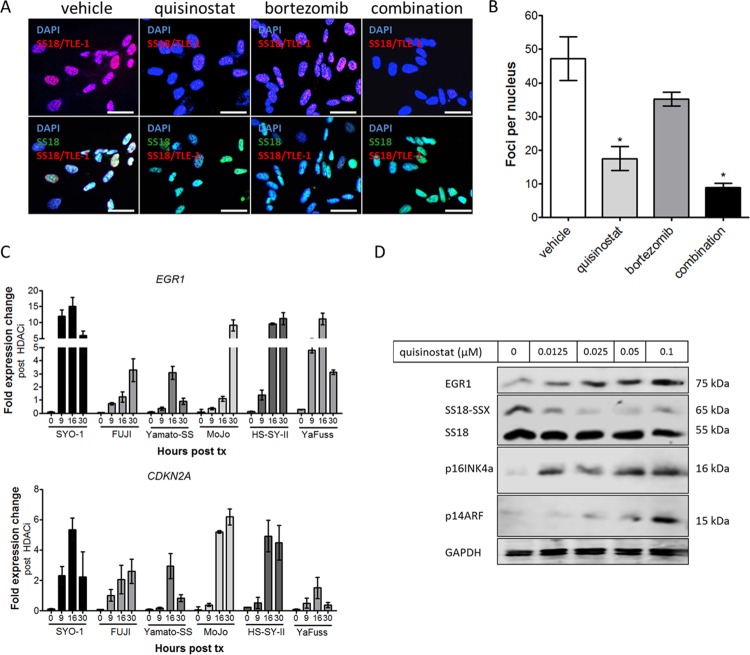
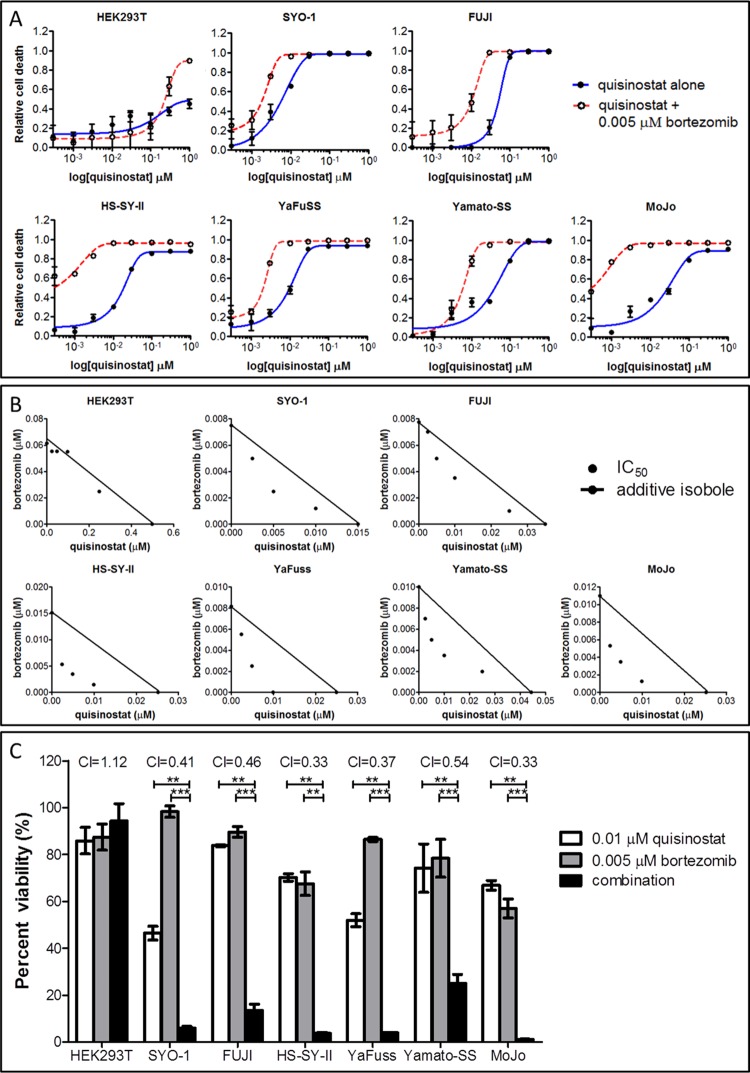
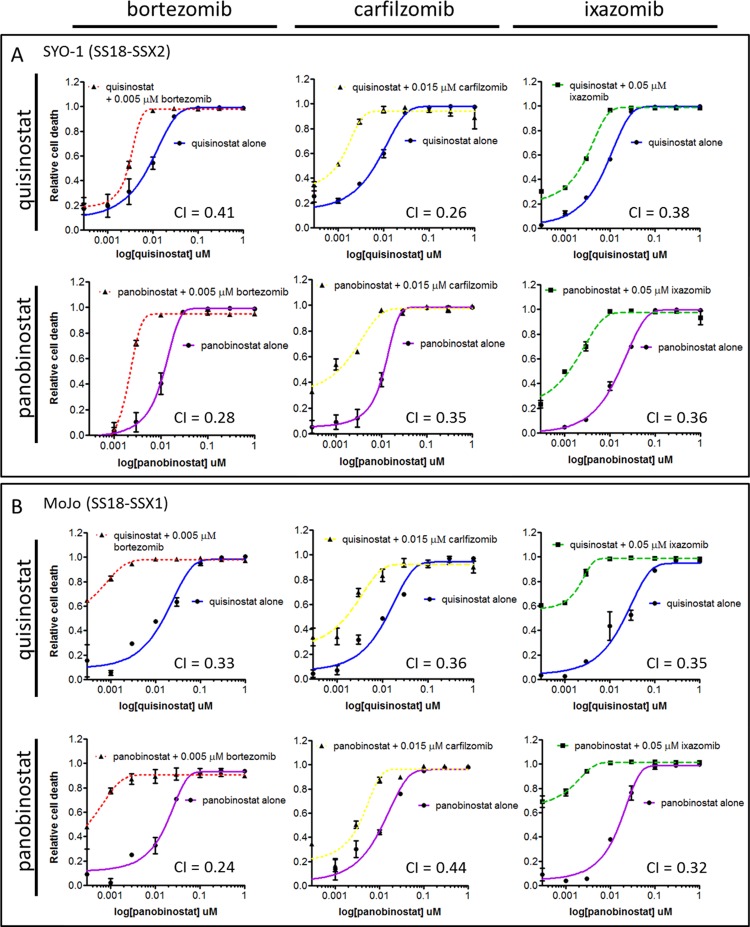
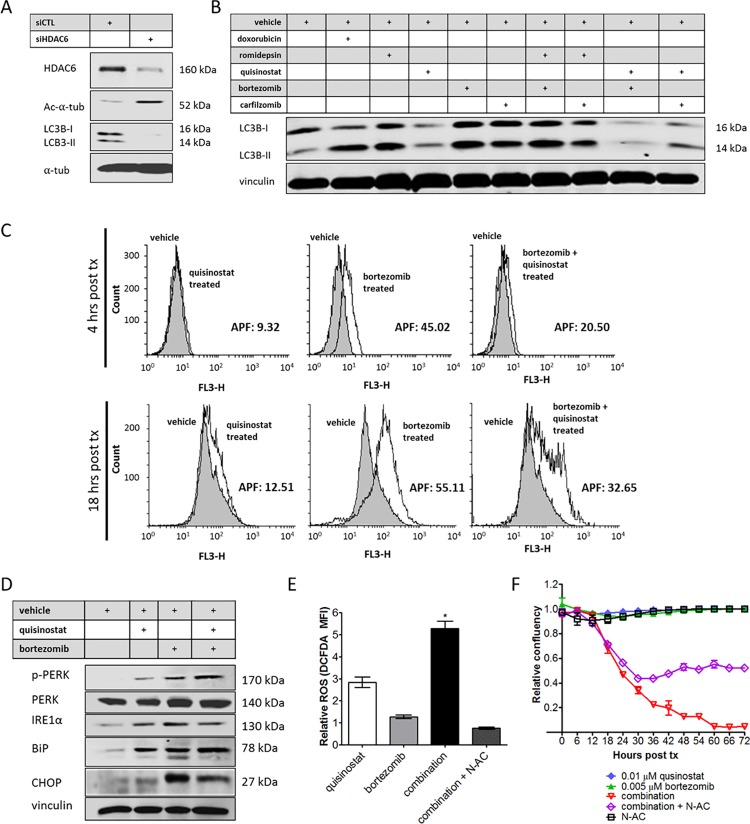
Conventional cytotoxic therapies for synovial sarcoma provide limited benefit, and no drugs specifically targeting its driving SS18-SSX fusion oncoprotein are currently available. Patients remain at high risk for early and late metastasis. A high-throughput drug screen consisting of over 900 tool compounds and epigenetic modifiers, representing over 100 drug classes, was undertaken in a panel of synovial sarcoma cell lines to uncover novel sensitizing agents and targetable pathways. Top scoring drug categories were found to be HDAC inhibitors and proteasomal targeting agents. We find that the HDAC inhibitor quisinostat disrupts the SS18-SSX driving protein complex, thereby reestablishing expression of EGR1 and CDKN2A tumor suppressors. In combination with proteasome inhibition, HDAC inhibitors synergize to decrease cell viability and elicit apoptosis. Quisinostat inhibits aggresome formation in response to proteasome inhibition, and combination treatment leads to elevated endoplasmic reticulum stress, activation of pro-apoptotic effector proteins BIM and BIK, phosphorylation of BCL-2, increased levels of reactive oxygen species, and suppression of tumor growth in a murine model of synovial sarcoma. This study identifies and provides mechanistic support for a particular susceptibility of synovial sarcoma to the combination of quisinostat and proteasome inhibition.
滑膜肉瘤的传统细胞毒性疗法疗效有限,目前尚无专门针对其驱动性SS18 - SSX融合癌蛋白的药物。患者早期和晚期转移风险仍然很高。我们在一组滑膜肉瘤细胞系中进行了一项高通量药物筛选,该筛选由900多种工具化合物和表观遗传修饰剂组成,代表了100多种药物类别,以发现新的增敏剂和可靶向的通路。得分最高的药物类别是组蛋白去乙酰化酶(HDAC)抑制剂和蛋白酶体靶向剂。我们发现HDAC抑制剂喹西他滨破坏了SS18 - SSX驱动蛋白复合物,从而重新建立了EGR1和CDKN2A肿瘤抑制因子的表达。与蛋白酶体抑制相结合,HDAC抑制剂协同作用以降低细胞活力并引发凋亡。喹西他滨抑制蛋白酶体抑制引起的聚集体形成,联合治疗导致内质网应激升高、促凋亡效应蛋白BIM和BIK激活、BCL - 2磷酸化、活性氧水平升高,并在滑膜肉瘤小鼠模型中抑制肿瘤生长。本研究确定了滑膜肉瘤对喹西他滨和蛋白酶体抑制联合治疗的特殊易感性,并提供了机制支持。