Computational Biology Center, IBM TJ Watson Research Centre, Yorktown Hgts, NY, USA.
The Lebanese American University, Chouran, Beirut, Lebanon.
Sci Rep. 2017 Jan 6;7:40338. doi: 10.1038/srep40338.
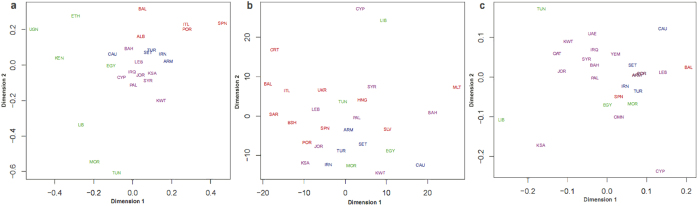
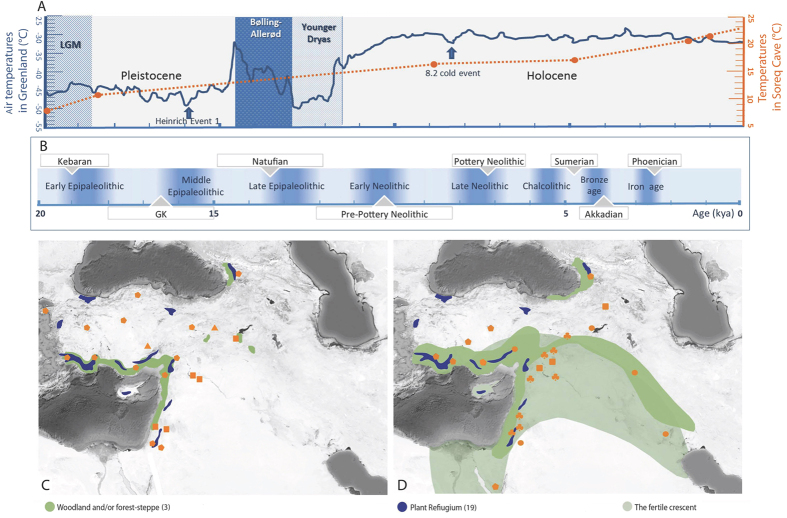
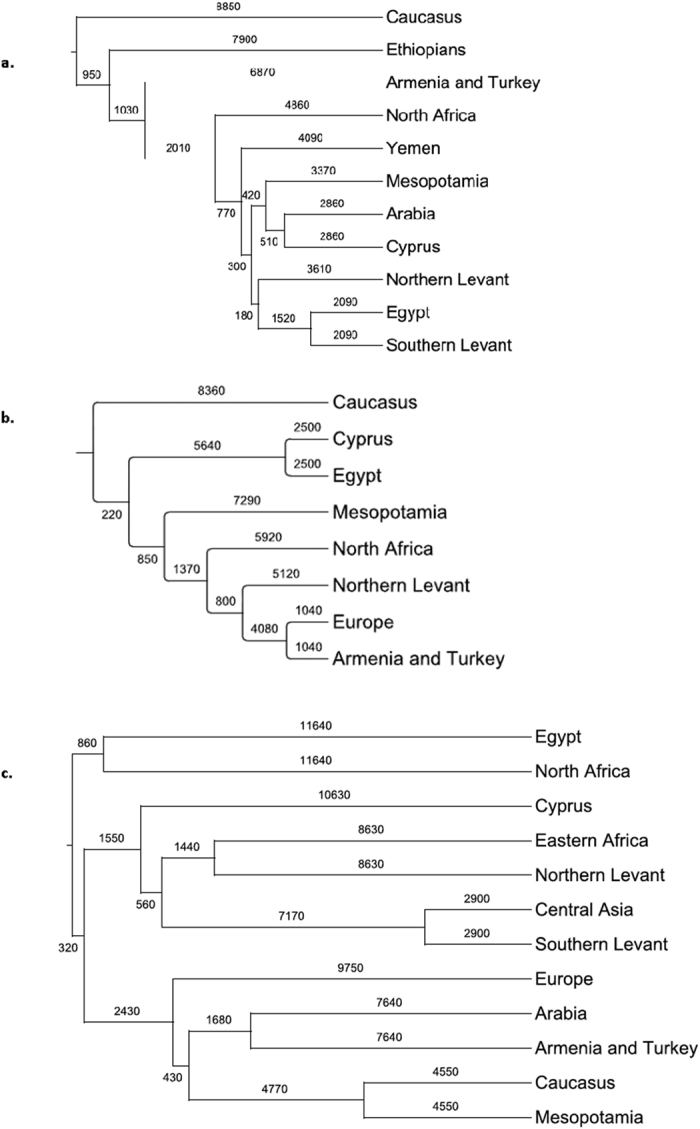
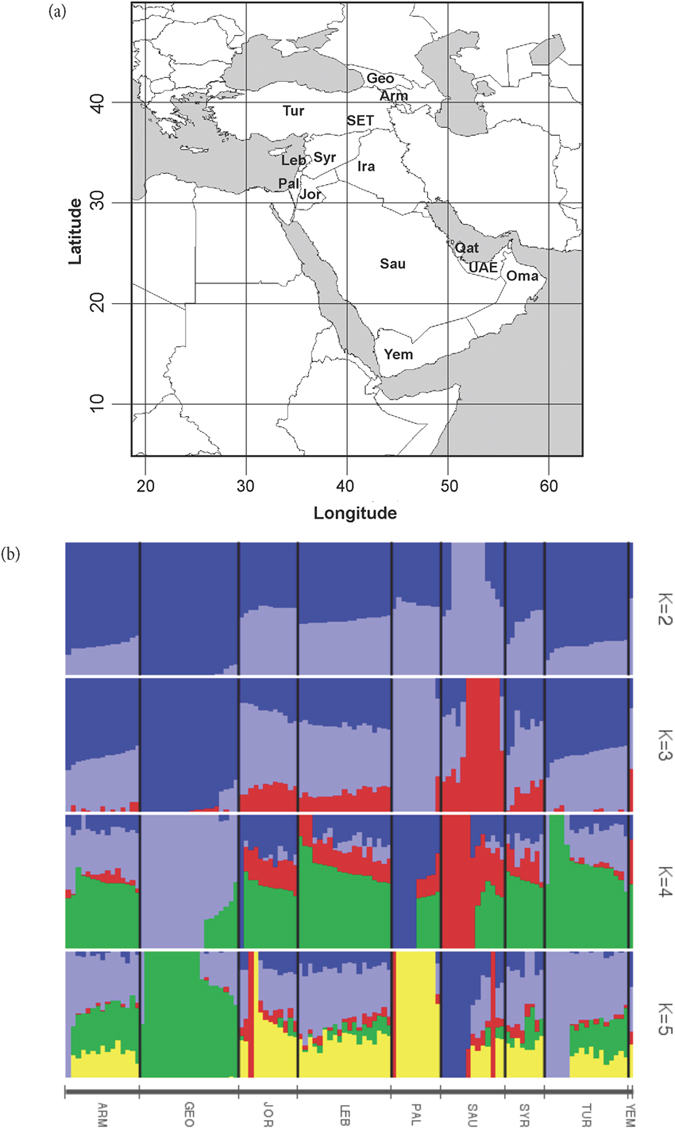
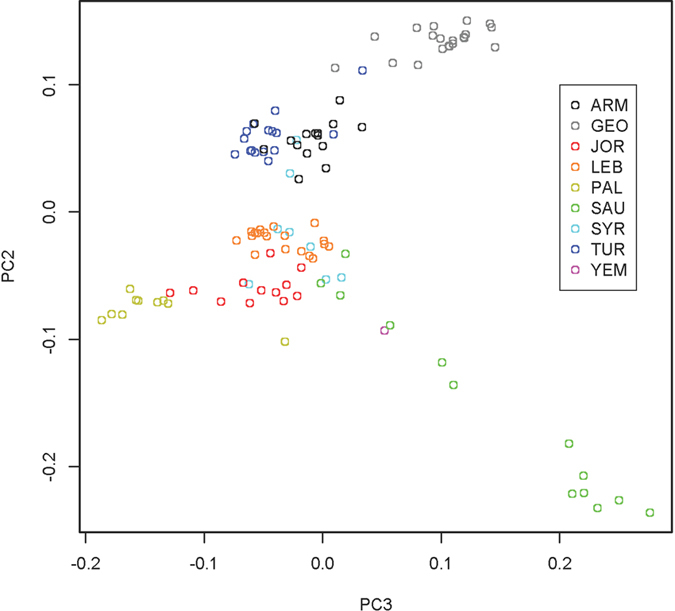
Archaeological, palaeontological and geological evidence shows that post-glacial warming released human populations from their various climate-bound refugia. Yet specific connections between these refugia and the timing and routes of post-glacial migrations that ultimately established modern patterns of genetic variation remain elusive. Here, we use Y-chromosome markers combined with autosomal data to reconstruct population expansions from regional refugia in Southwest Asia. Populations from three regions in particular possess distinctive autosomal genetic signatures indicative of likely refugia: one, in the north, centered around the eastern coast of the Black Sea, the second, with a more Levantine focus, and the third in the southern Arabian Peninsula. Modern populations from these three regions carry the widest diversity and may indeed represent the most likely descendants of the populations responsible for the Neolithic cultures of Southwest Asia. We reveal the distinct and datable expansion routes of populations from these three refugia throughout Southwest Asia and into Europe and North Africa and discuss the possible correlations of these migrations to various cultural and climatic events evident in the archaeological record of the past 15,000 years.
考古学、古生物学和地质学的证据表明,冰期后的变暖使人类种群摆脱了各种气候限制的避难所。然而,这些避难所与冰期后迁移的时间和路线之间的具体联系,以及最终建立现代遗传变异模式的联系仍然难以捉摸。在这里,我们使用 Y 染色体标记物结合常染色体数据,从西南亚的区域避难所重建人口扩张。来自三个特定地区的人群具有独特的常染色体遗传特征,表明可能是避难所:一个位于黑海东部沿岸的北部,另一个以更黎凡特为中心,第三个位于阿拉伯半岛南部。这三个地区的现代人群携带最广泛的多样性,实际上可能代表了负责西南亚新石器时代文化的人群的最有可能的后代。我们揭示了来自这三个避难所的人群在整个西南亚以及进入欧洲和北非的独特和可追溯的扩张路线,并讨论了这些迁移与过去 15000 年考古记录中各种文化和气候事件的可能相关性。