Gamba Cristina, Jones Eppie R, Teasdale Matthew D, McLaughlin Russell L, Gonzalez-Fortes Gloria, Mattiangeli Valeria, Domboróczki László, Kővári Ivett, Pap Ildikó, Anders Alexandra, Whittle Alasdair, Dani János, Raczky Pál, Higham Thomas F G, Hofreiter Michael, Bradley Daniel G, Pinhasi Ron
1] School of Archaeology, University College Dublin, Belfield, Dublin 4, Ireland [2] Conway Institute, University College Dublin, Belfield, Dublin 4, Ireland [3] Smurfit Institute of Genetics, Trinity College Dublin, Dublin, Ireland.
Smurfit Institute of Genetics, Trinity College Dublin, Dublin, Ireland.
Nat Commun. 2014 Oct 21;5:5257. doi: 10.1038/ncomms6257.
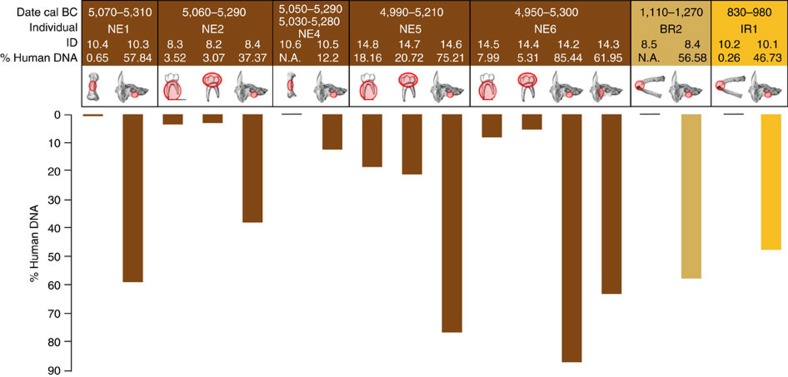
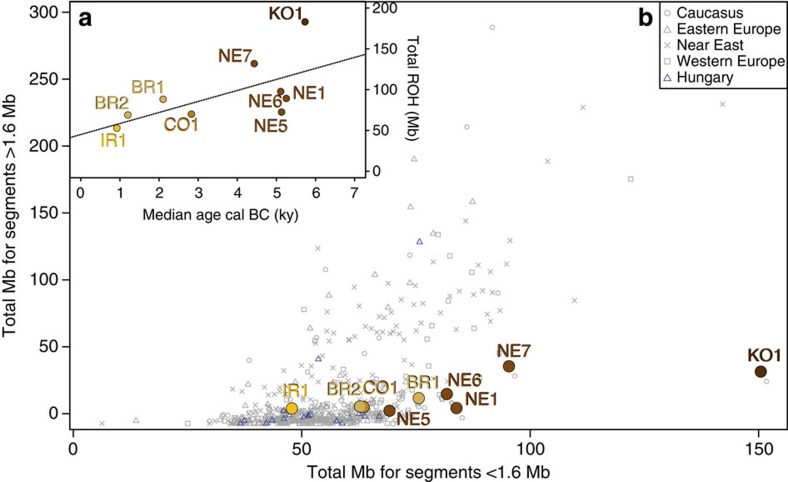
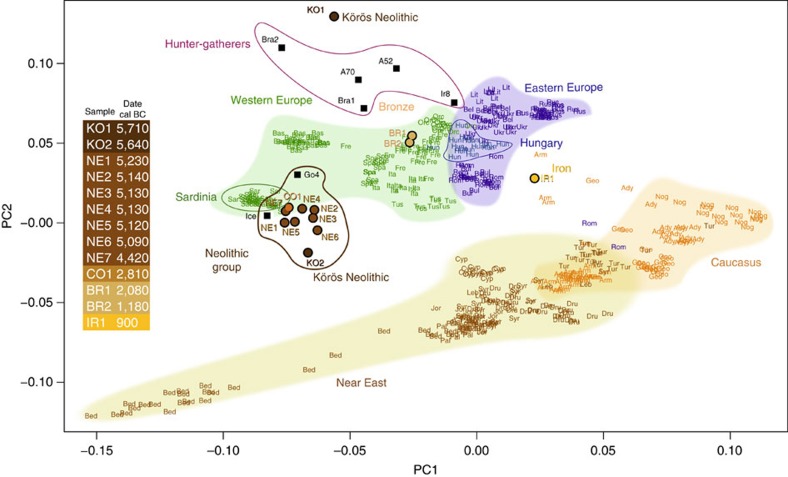
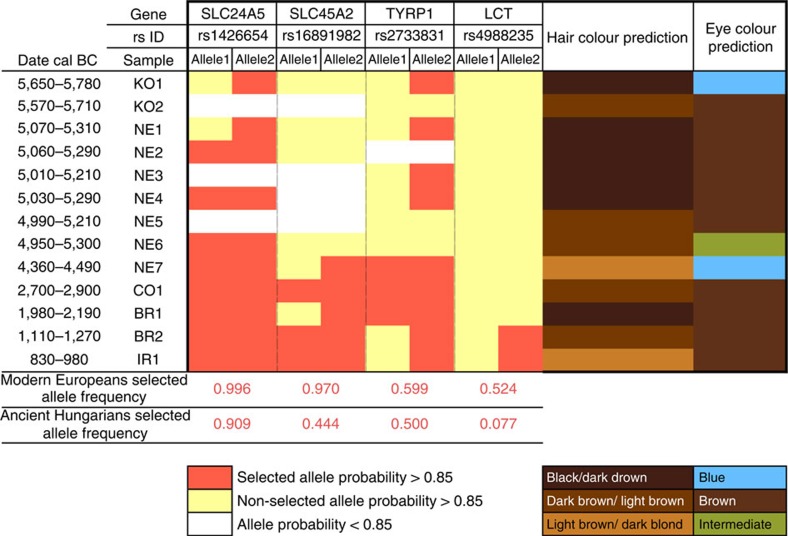
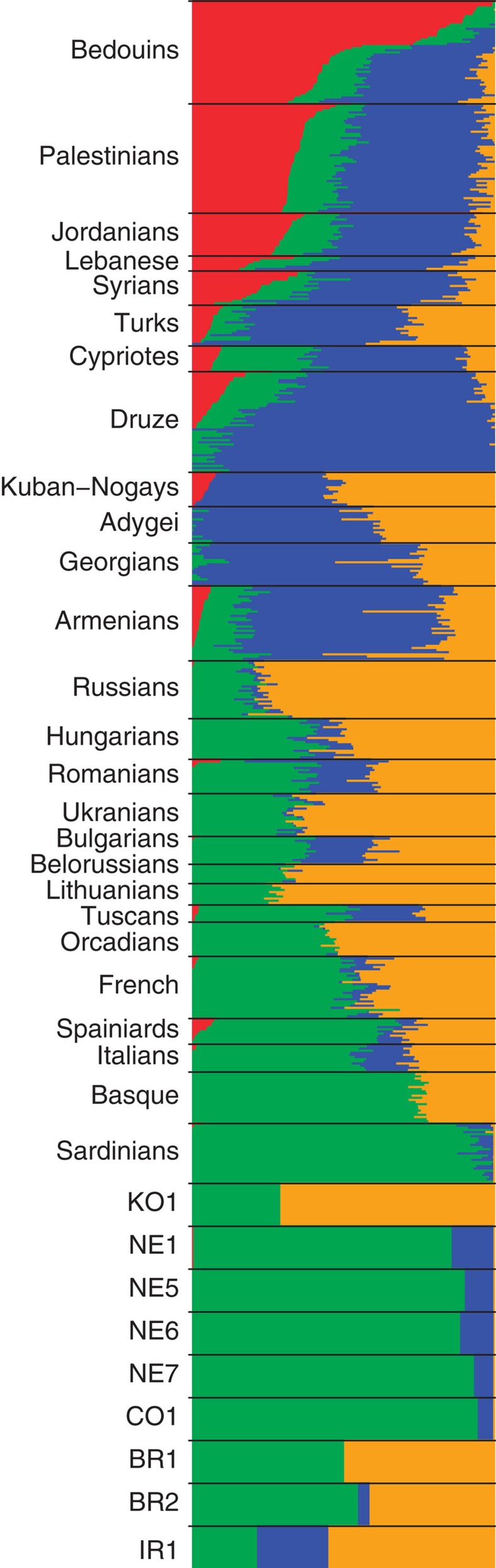
The Great Hungarian Plain was a crossroads of cultural transformations that have shaped European prehistory. Here we analyse a 5,000-year transect of human genomes, sampled from petrous bones giving consistently excellent endogenous DNA yields, from 13 Hungarian Neolithic, Copper, Bronze and Iron Age burials including two to high (~22 × ) and seven to ~1 × coverage, to investigate the impact of these on Europe's genetic landscape. These data suggest genomic shifts with the advent of the Neolithic, Bronze and Iron Ages, with interleaved periods of genome stability. The earliest Neolithic context genome shows a European hunter-gatherer genetic signature and a restricted ancestral population size, suggesting direct contact between cultures after the arrival of the first farmers into Europe. The latest, Iron Age, sample reveals an eastern genomic influence concordant with introduced Steppe burial rites. We observe transition towards lighter pigmentation and surprisingly, no Neolithic presence of lactase persistence.
匈牙利大平原是塑造欧洲史前史的文化变革的十字路口。在这里,我们分析了一个5000年的人类基因组横断面,样本取自岩骨,能持续产生优质的内源性DNA,来自13个匈牙利新石器时代、铜器时代、青铜器时代和铁器时代的墓葬,其中两个达到高(约22倍)覆盖率,七个达到约1倍覆盖率,以研究这些对欧洲基因格局的影响。这些数据表明,随着新石器时代、青铜器时代和铁器时代的到来,基因组发生了变化,其间穿插着基因组稳定期。最早的新石器时代背景基因组显示出欧洲狩猎采集者的基因特征和有限的祖先群体规模,这表明第一批农民抵达欧洲后不同文化之间有直接接触。最新的铁器时代样本显示出与引入的草原葬礼仪式一致的东部基因影响。我们观察到向较浅色素沉着的转变,令人惊讶的是,新石器时代不存在乳糖酶持久性。