Pye Cameron R, Hewitt William M, Schwochert Joshua, Haddad Terra D, Townsend Chad E, Etienne Lyns, Lao Yongtong, Limberakis Chris, Furukawa Akihiro, Mathiowetz Alan M, Price David A, Liras Spiros, Lokey R Scott
Department of Chemistry and Biochemistry, University of California , Santa Cruz, California 95064, United States.
World Wide Medicinal Chemistry, Groton Laboratories, Pfizer Inc. , Groton, Connecticut 06340, United States.
J Med Chem. 2017 Mar 9;60(5):1665-1672. doi: 10.1021/acs.jmedchem.6b01483. Epub 2017 Jan 25.
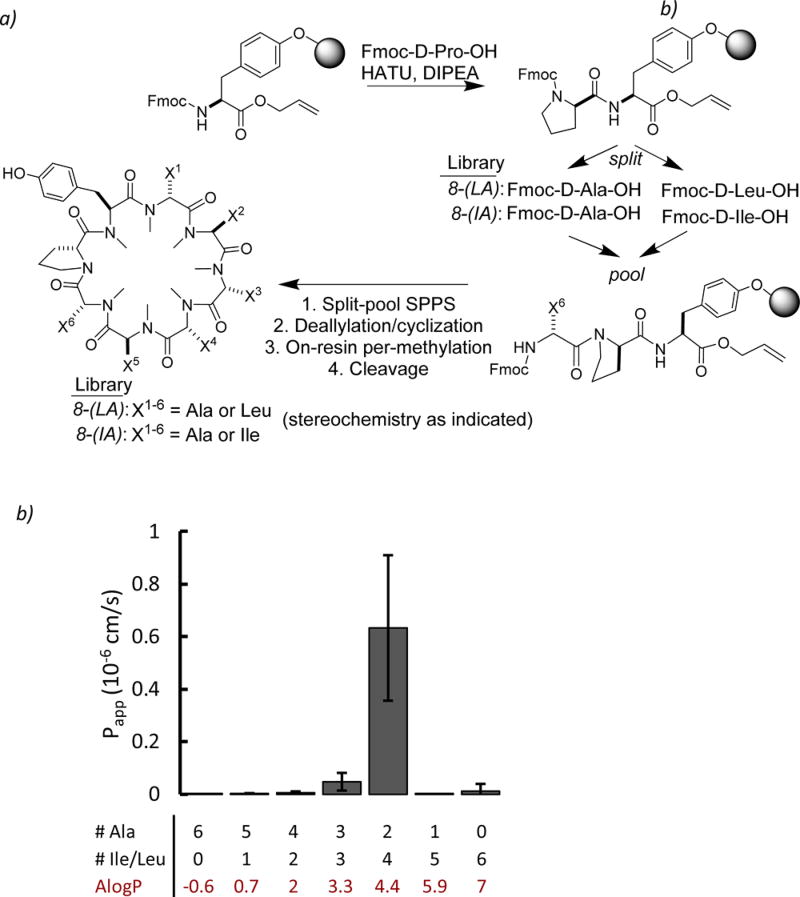
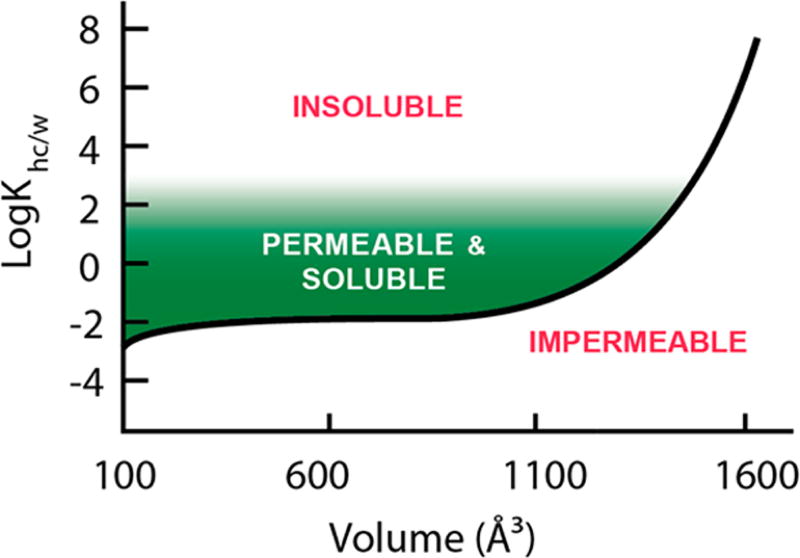
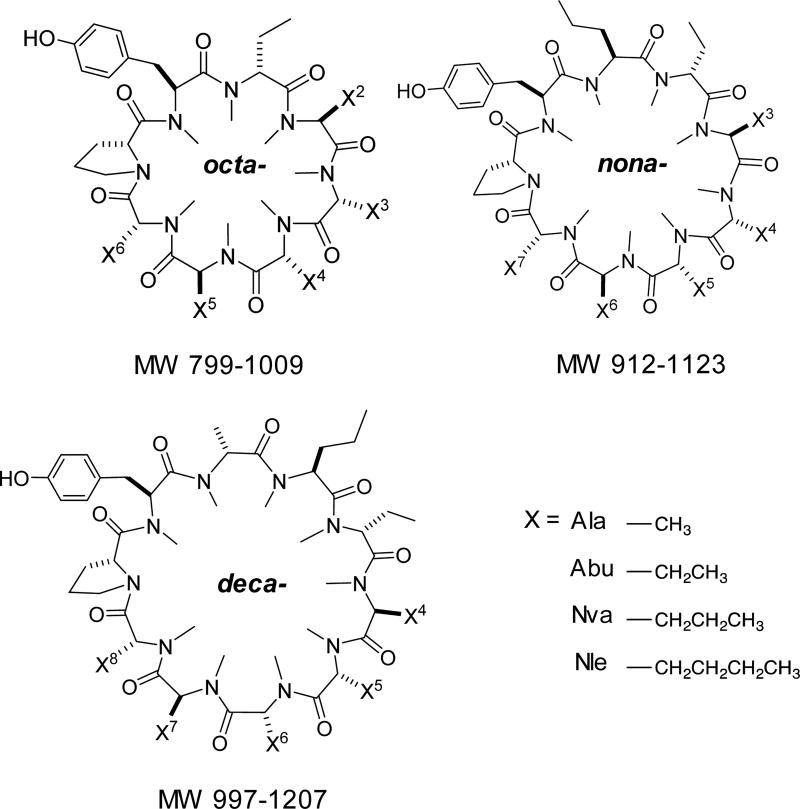
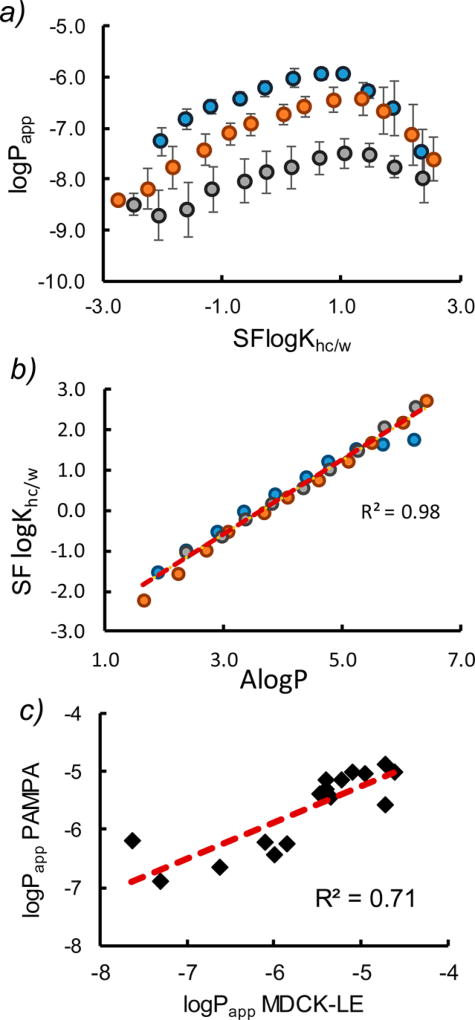
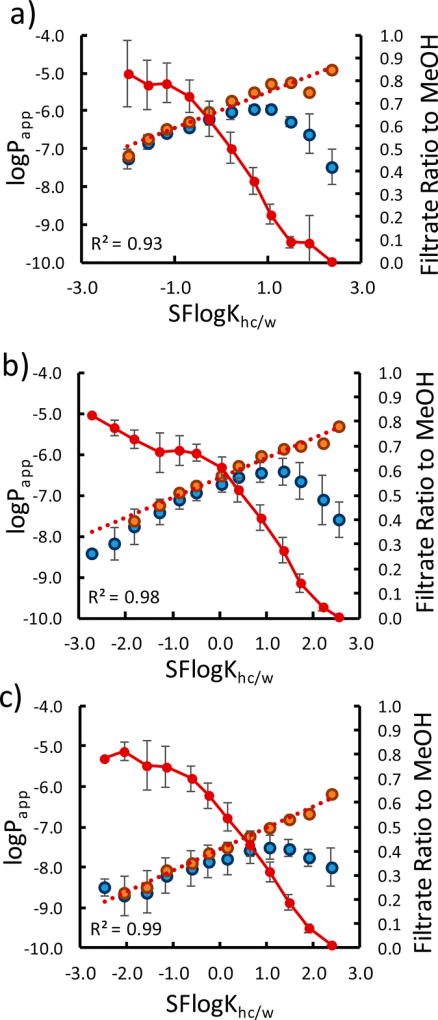
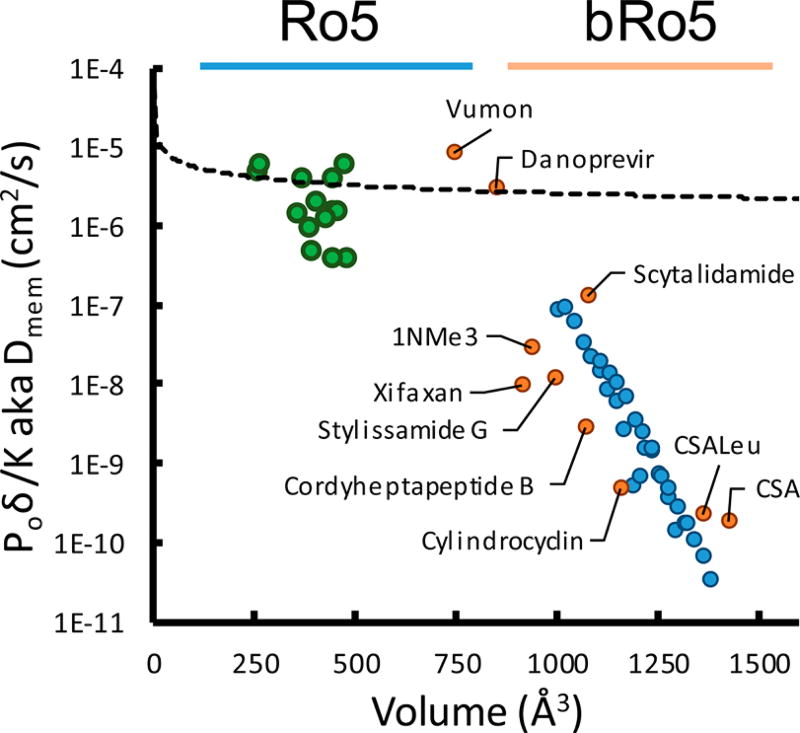
Macrocyclic peptides are considered large enough to inhibit "undruggable" targets, but the design of passively cell-permeable molecules in this space remains a challenge due to the poorly understood role of molecular size on passive membrane permeability. Using split-pool combinatorial synthesis, we constructed a library of cyclic, per-N-methlyated peptides spanning a wide range of calculated lipohilicities (0 < AlogP < 8) and molecular weights (∼800 Da < MW < ∼1200 Da). Analysis by the parallel artificial membrane permeability assay revealed a steep drop-off in apparent passive permeability with increasing size in stark disagreement with current permeation models. This observation, corroborated by a set of natural products, helps define criteria for achieving permeability in larger molecular size regimes and suggests an operational cutoff, beyond which passive permeability is constrained by a sharply increasing penalty on membrane permeation.
大环肽被认为足够大,可以抑制“不可成药”的靶点,但由于分子大小对被动膜通透性的作用尚不清楚,在这个领域设计具有被动细胞通透性的分子仍然是一个挑战。我们使用分池组合合成法构建了一个环状、全N -甲基化肽库,其计算出的亲脂性范围广泛(0 < AlogP < 8),分子量范围为(约800 Da < MW < 约1200 Da)。通过平行人工膜通透性测定分析发现,随着分子大小增加,表观被动通透性急剧下降,这与当前的渗透模型明显不符。一组天然产物证实了这一观察结果,有助于确定在更大分子尺寸范围内实现通透性的标准,并表明存在一个操作临界值,超过该临界值,被动通透性会因膜渗透的惩罚急剧增加而受到限制。