Sung Ying-Ju, Sofoluke Nelson, Nkamany Mary, Deng Shixian, Xie Yuli, Greenwood Jeremy, Farid Ramy, Landry Donald W, Ambron Richard T
Department of Basic Sciences, The Commonwealth Medical College, Scranton, PA, USA.
Department of Medicine, West Virginia University, Morgantown, WV, USA.
Pain. 2017 May;158(5):822-832. doi: 10.1097/j.pain.0000000000000832.
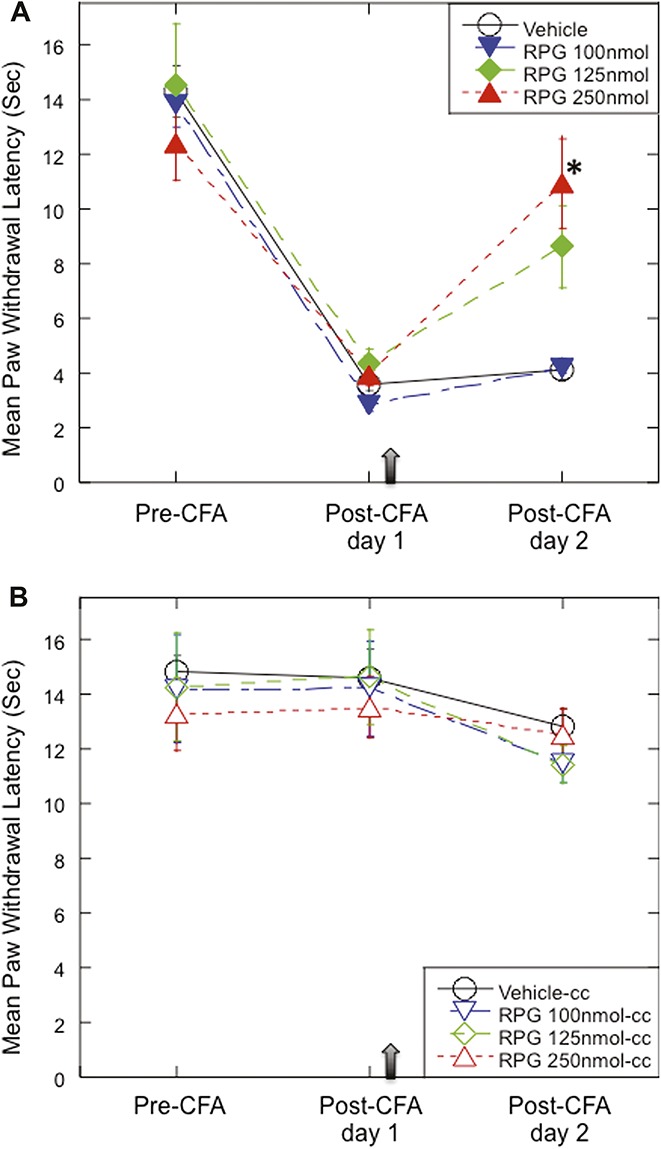
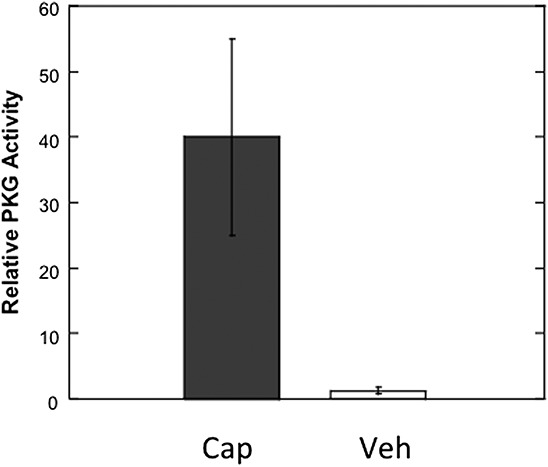
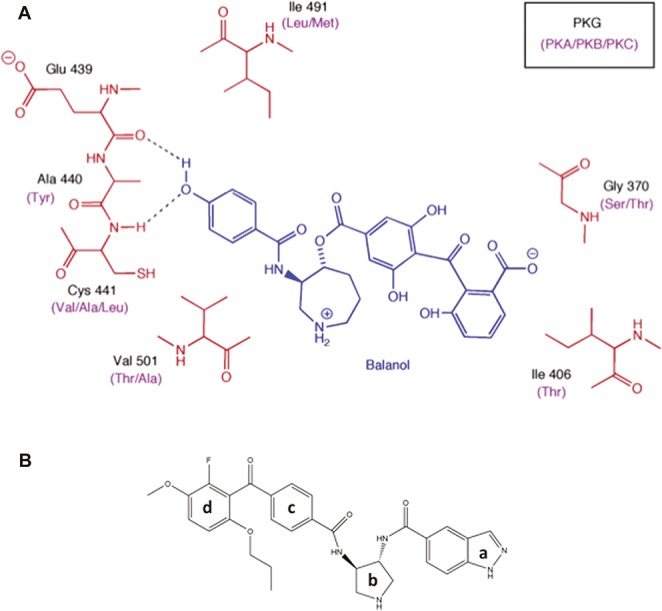
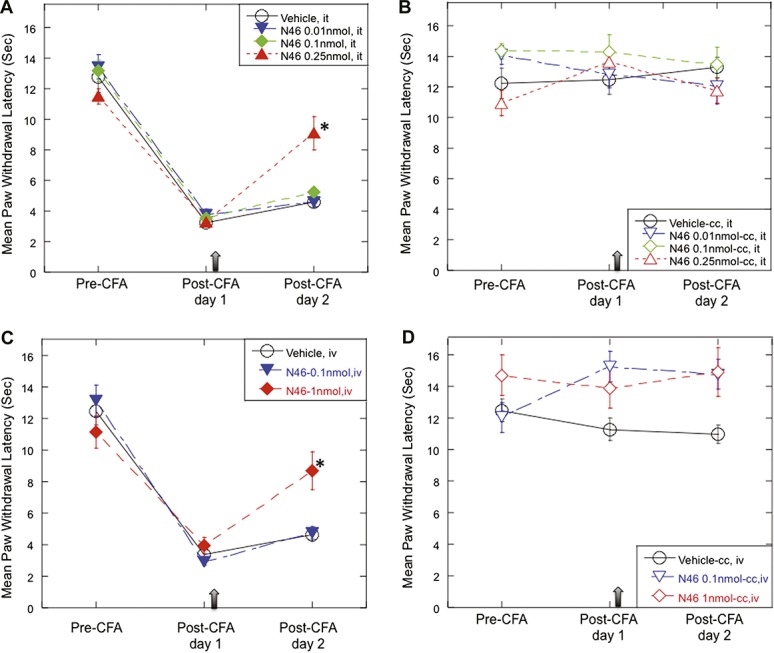
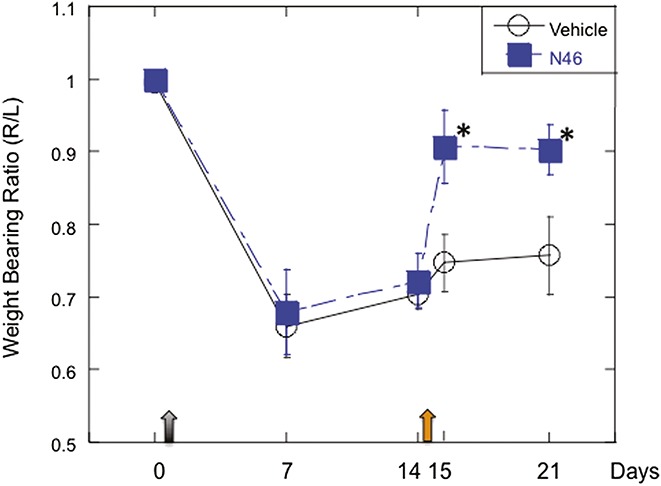
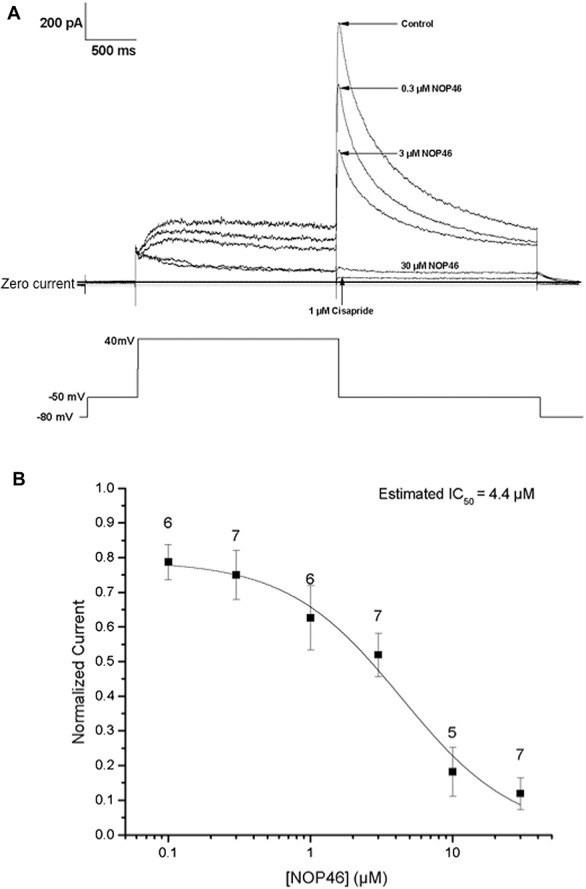
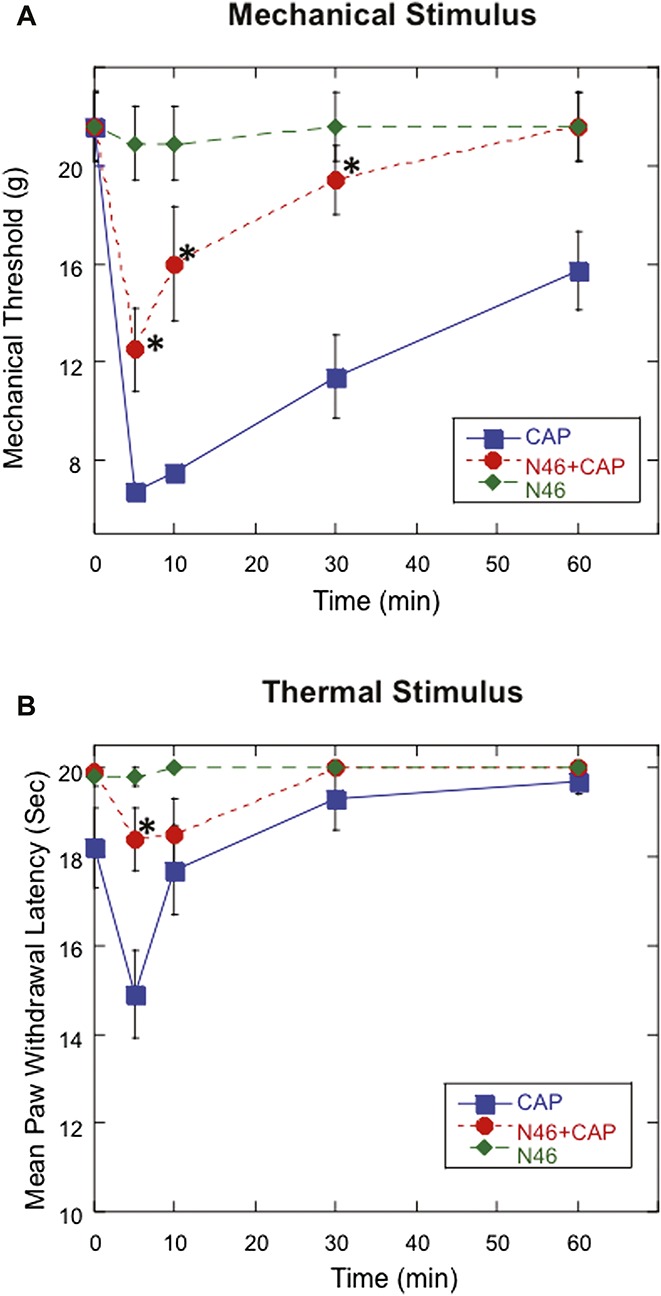
Activating PKG-1α induces a long-term hyperexcitability (LTH) in nociceptive neurons. Since the LTH correlates directly with chronic pain in many animal models, we tested the hypothesis that inhibiting PKG-1α would attenuate LTH-mediated pain. We first synthesized and characterized compound N46 (N-((3R,4R)-4-(4-(2-fluoro-3-methoxy-6-propoxybenzoyl)benzamido)pyrrolidin-3-yl)-1H-indazole-5-carboxamide). N46 inhibits PKG-1α with an IC50 of 7.5 nmol, was highly selective when tested against a panel of 274 kinases, and tissue distribution studies indicate that it does not enter the CNS. To evaluate its antinociceptive potential, we used 2 animal models in which the pain involves both activated PKG-1α and LTH. Injecting complete Freund's adjuvant (CFA) into the rat hind paw causes a thermal hyperalgesia that was significantly attenuated 24 hours after a single intravenous injection of N46. Next, we used a rat model of osteoarthritic knee joint pain and found that a single intra-articular injection of N46 alleviated the pain 14 days after the pain was established and the relief lasted for 7 days. Thermal hyperalgesia and osteoarthritic pain are also associated with the activation of the capsaicin-activated transient receptor protein vanilloid-1 (TRPV1) channel. We show that capsaicin activates PKG-1α in nerves and that a subcutaneous delivery of N46 attenuated the mechanical and thermal hypersensitivity elicited by exposure to capsaicin. Thus, PKG-1α appears to be downstream of the transient receptor protein vanilloid-1. Our studies provide proof of concept in animal models that a PKG-1α antagonist has a powerful antinociceptive effect on persistent, already existing inflammatory pain. They further suggest that N46 is a valid chemotype for the further development of such antagonists.
激活蛋白激酶 G-1α(PKG-1α)会在伤害性神经元中诱导产生长期的兴奋性增高(LTH)。由于在许多动物模型中,LTH 与慢性疼痛直接相关,我们检验了这样一个假设:抑制 PKG-1α 会减轻 LTH 介导的疼痛。我们首先合成并表征了化合物 N46(N-((3R,4R)-4-(4-(2-氟-3-甲氧基-6-丙氧基苯甲酰基)苯甲酰胺基)吡咯烷-3-基)-1H-吲唑-5-甲酰胺)。N46 抑制 PKG-1α 的 IC50 为 7.5 nmol,在针对 274 种激酶进行测试时具有高度选择性,并且组织分布研究表明它不会进入中枢神经系统。为了评估其镇痛潜力,我们使用了 2 种动物模型,其中疼痛涉及激活的 PKG-1α 和 LTH。向大鼠后爪注射完全弗氏佐剂(CFA)会导致热痛觉过敏,单次静脉注射 N46 后 24 小时,这种热痛觉过敏会显著减轻。接下来,我们使用骨关节炎膝关节疼痛的大鼠模型,发现单次关节内注射 N46 可在疼痛形成 14 天后减轻疼痛,且缓解持续 7 天。热痛觉过敏和骨关节炎疼痛也与辣椒素激活的瞬时受体电位香草酸亚型 1(TRPV1)通道的激活有关。我们发现辣椒素可在神经中激活 PKG-1α,皮下注射 N46 可减轻因接触辣椒素而引起的机械性和热超敏反应。因此,PKG-1α 似乎位于瞬时受体电位香草酸亚型 1 的下游。我们的研究在动物模型中提供了概念验证,即 PKG-1α 拮抗剂对持续性、已存在的炎性疼痛具有强大的镇痛作用。它们进一步表明 N46 是进一步开发此类拮抗剂的有效化学类型。