Peng Xiaoxue, Studholme Keith, Kanjiya Martha P, Luk Jennifer, Bogdan Diane, Elmes Matthew W, Carbonetti Gregory, Tong Simon, Gary Teng Yu-Han, Rizzo Robert C, Li Huilin, Deutsch Dale G, Ojima Iwao, Rebecchi Mario J, Puopolo Michelino, Kaczocha Martin
1 Department of Anesthesiology, Stony Brook University, Stony Brook, NY, USA.
2 Department of Biochemistry and Cell Biology, Stony Brook University, Stony Brook, NY, USA.
Mol Pain. 2017 Jan;13:1744806917697007. doi: 10.1177/1744806917697007.
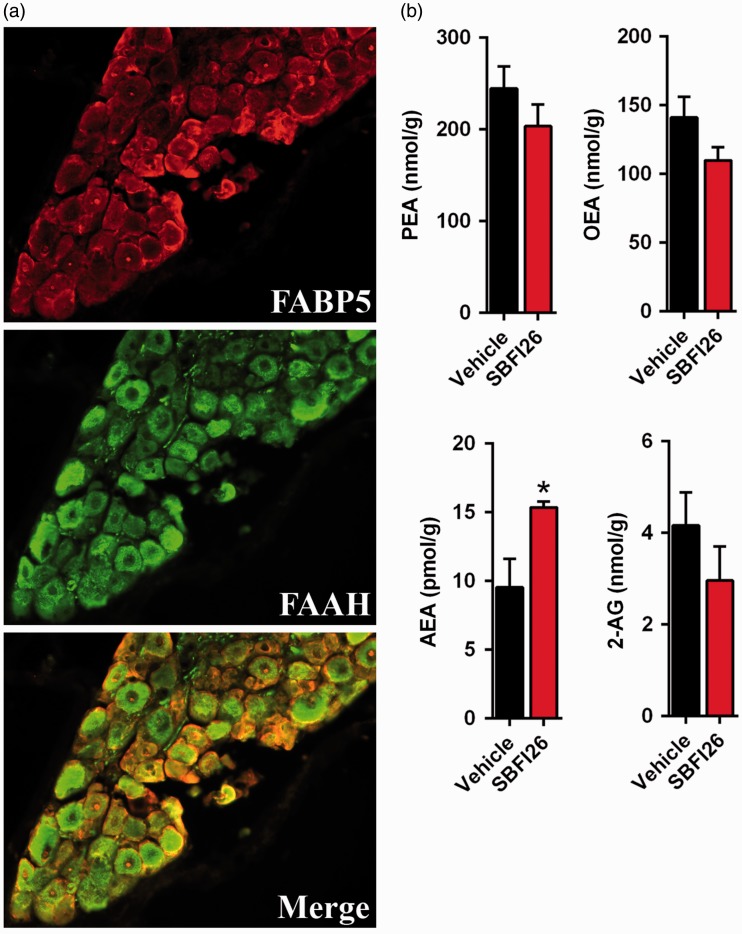
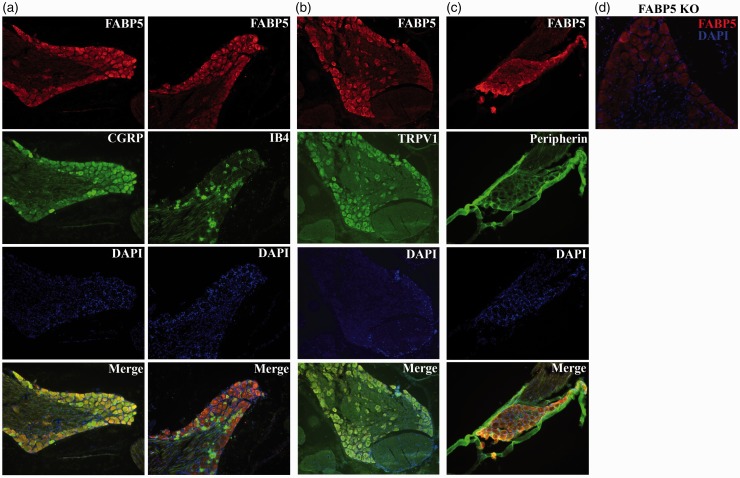
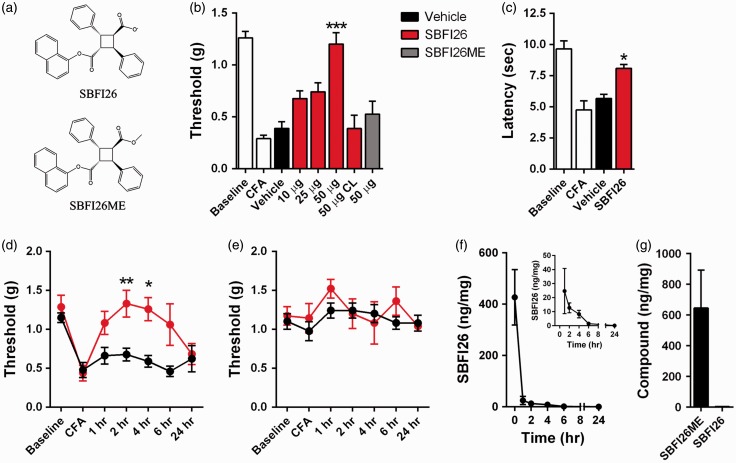
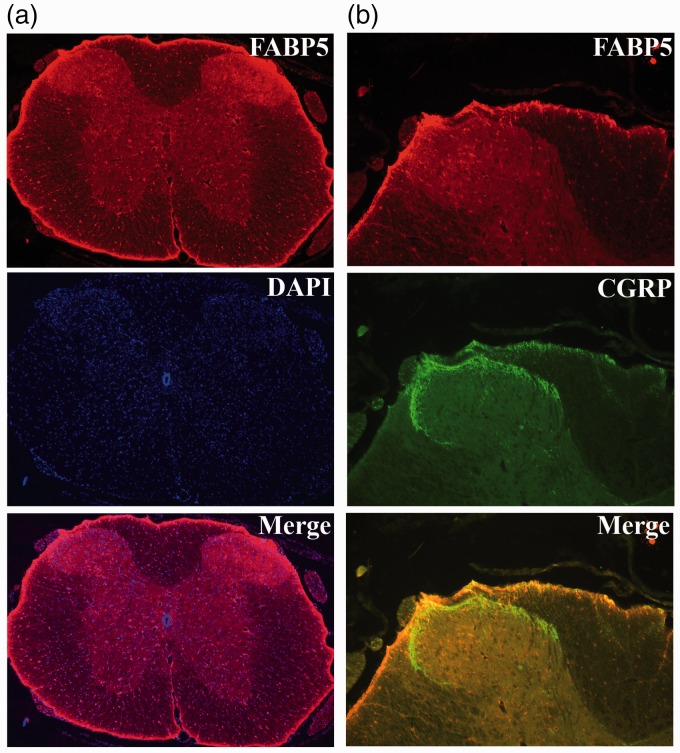
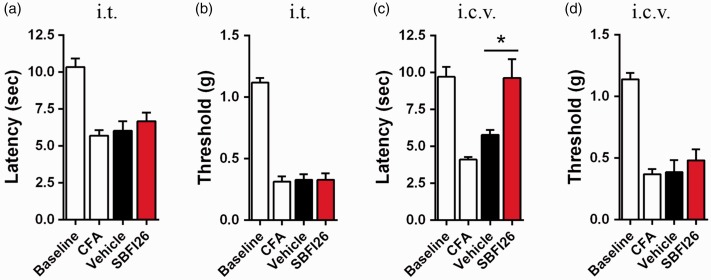
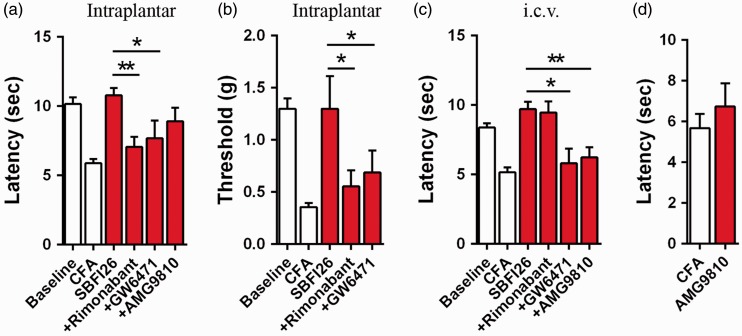
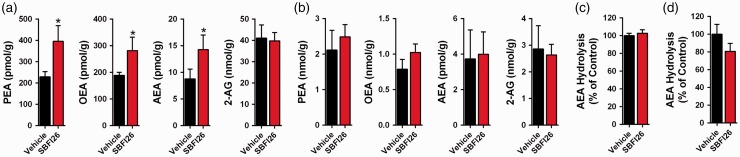
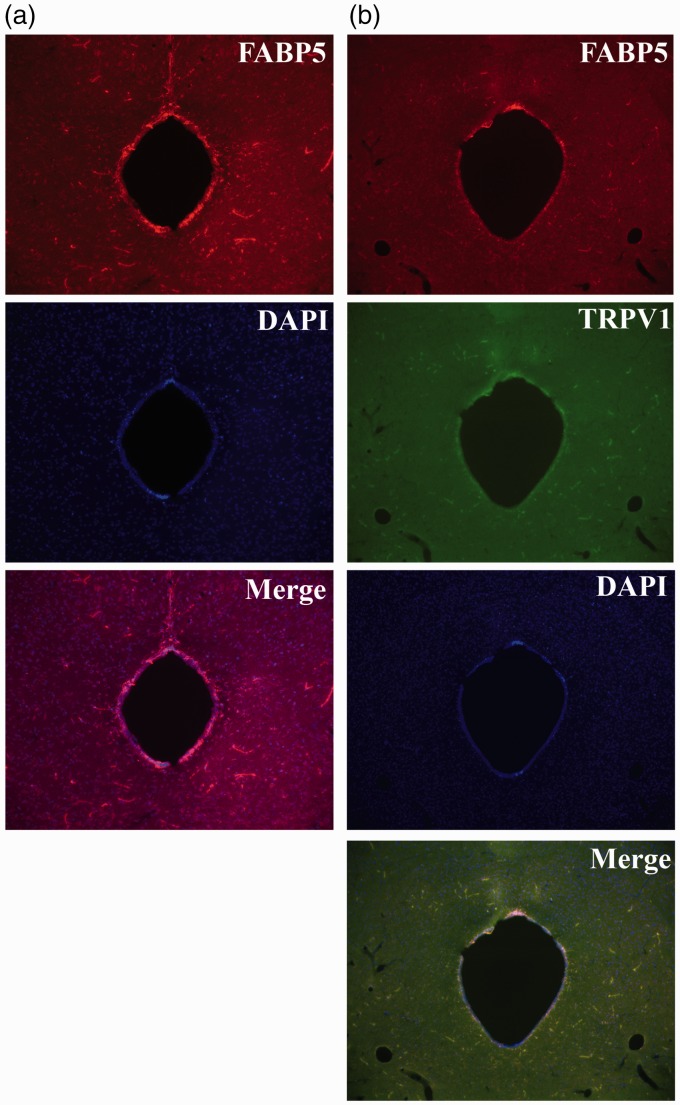
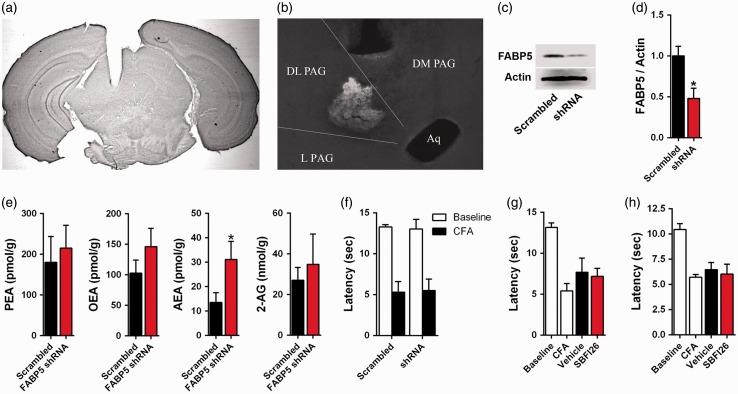
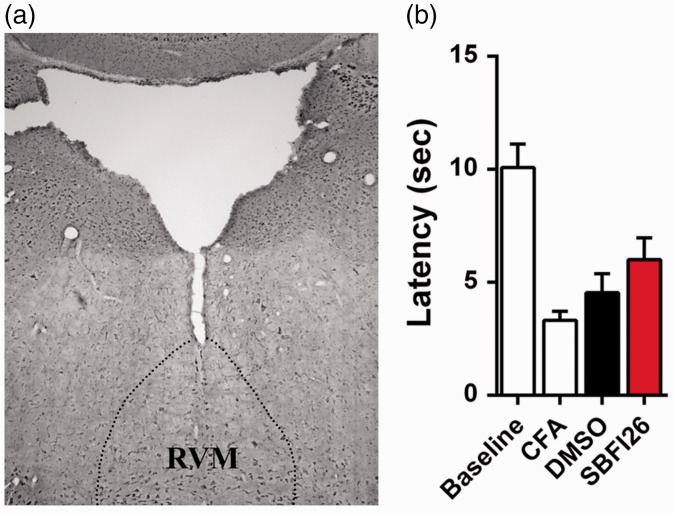
Background Fatty-acid-binding proteins (FABPs) are intracellular carriers for endocannabinoids, N-acylethanolamines, and related lipids. Previous work indicates that systemically administered FABP5 inhibitors produce analgesia in models of inflammatory pain. It is currently not known whether FABP inhibitors exert their effects through peripheral or central mechanisms. Here, we examined FABP5 distribution in dorsal root ganglia and spinal cord and examined the analgesic effects of peripherally and centrally administered FABP5 inhibitors. Results Immunofluorescence revealed robust expression of FABP5 in lumbar dorsal root ganglia. FABP5 was distributed in peptidergic calcitonin gene-related peptide-expressing dorsal root ganglia and non-peptidergic isolectin B4-expressing dorsal root ganglia. In addition, the majority of dorsal root ganglia expressing FABP5 also expressed transient receptor potential vanilloid 1 (TRPV1) and peripherin, a marker of nociceptive fibers. Intraplantar administration of FABP5 inhibitors reduced thermal and mechanical hyperalgesia in the complete Freund's adjuvant model of chronic inflammatory pain. In contrast to its robust expression in dorsal root ganglia, FABP5 was sparsely distributed in the lumbar spinal cord and intrathecal administration of FABP inhibitor did not confer analgesic effects. Administration of FABP inhibitor via the intracerebroventricular (i.c.v.) route reduced thermal hyperalgesia. Antagonists of peroxisome proliferator-activated receptor alpha blocked the analgesic effects of peripherally and i.c.v. administered FABP inhibitor while antagonism of cannabinoid receptor 1 blocked the effects of peripheral FABP inhibition and a TRPV1 antagonist blocked the effects of i.c.v. administered inhibitor. Although FABP5 and TRPV1 were co-expressed in the periaqueductal gray region of the brain, which is known to modulate pain, knockdown of FABP5 in the periaqueductal gray using adeno-associated viruses and pharmacological FABP5 inhibition did not produce analgesic effects. Conclusions This study demonstrates that FABP5 is highly expressed in nociceptive dorsal root ganglia neurons and FABP inhibitors exert peripheral and supraspinal analgesic effects. This indicates that peripherally restricted FABP inhibitors may serve as a new class of analgesic and anti-inflammatory agents.
背景 脂肪酸结合蛋白(FABPs)是内源性大麻素、N-酰基乙醇胺及相关脂质的细胞内载体。先前的研究表明,全身给药的FABP5抑制剂在炎症性疼痛模型中具有镇痛作用。目前尚不清楚FABP抑制剂是通过外周机制还是中枢机制发挥作用。在此,我们研究了FABP5在背根神经节和脊髓中的分布,并研究了外周和中枢给药FABP5抑制剂的镇痛效果。结果 免疫荧光显示FABP5在腰段背根神经节中大量表达。FABP5分布于表达肽能降钙素基因相关肽的背根神经节和表达非肽能荆豆凝集素B4的背根神经节。此外,大多数表达FABP5的背根神经节也表达瞬时受体电位香草酸亚型1(TRPV1)和外周蛋白,后者是伤害性纤维的标志物。在完全弗氏佐剂慢性炎症性疼痛模型中,足底注射FABP5抑制剂可减轻热痛觉过敏和机械性痛觉过敏。与在背根神经节中的大量表达相反,FABP5在腰段脊髓中分布稀疏,鞘内注射FABP抑制剂未产生镇痛作用。脑室内给药FABP抑制剂可减轻热痛觉过敏。过氧化物酶体增殖物激活受体α拮抗剂可阻断外周和脑室内给药FABP抑制剂的镇痛作用,而大麻素受体1拮抗剂可阻断外周FABP抑制的作用,TRPV1拮抗剂可阻断脑室内给药抑制剂的作用。虽然FABP5和TRPV1在已知可调节疼痛的脑导水管周围灰质区域共表达,但使用腺相关病毒在导水管周围灰质中敲低FABP5以及药理学上抑制FABP5均未产生镇痛作用。结论 本研究表明FABP5在伤害性背根神经节神经元中高表达,FABP抑制剂具有外周和脊髓上镇痛作用。这表明外周受限的FABP抑制剂可能成为一类新型的镇痛和抗炎药物。