• 文献检索
  • 文档翻译
  • 深度研究
  • 学术资讯
  • Suppr Zotero 插件Zotero 插件
  • 邀请有礼
  • 套餐&价格
  • 历史记录
应用&插件
Suppr Zotero 插件Zotero 插件浏览器插件Mac 客户端Windows 客户端微信小程序
定价
高级版会员购买积分包购买API积分包
服务
文献检索文档翻译深度研究API 文档MCP 服务
关于我们
关于 Suppr公司介绍联系我们用户协议隐私条款
关注我们

Suppr 超能文献

核心技术专利:CN118964589B侵权必究
粤ICP备2023148730 号-1Suppr @ 2026

文献检索

告别复杂PubMed语法,用中文像聊天一样搜索,搜遍4000万医学文献。AI智能推荐,让科研检索更轻松。

立即免费搜索

文件翻译

保留排版,准确专业,支持PDF/Word/PPT等文件格式,支持 12+语言互译。

免费翻译文档

深度研究

AI帮你快速写综述,25分钟生成高质量综述,智能提取关键信息,辅助科研写作。

立即免费体验

WhatsApp 即时通讯软件作为一种辅助医学生临床实习阶段医学教育的工具。

WhatsApp messenger as a tool to supplement medical education for medical students on clinical attachment.

作者信息

Raiman Lewis, Antbring Richard, Mahmood Asad

机构信息

Queen Mary University of London, Mile End Rd, London, E1 4NS, UK.

出版信息

BMC Med Educ. 2017 Jan 6;17(1):7. doi: 10.1186/s12909-017-0855-x.

DOI:10.1186/s12909-017-0855-x
PMID:28061777
原文链接:https://pmc.ncbi.nlm.nih.gov/articles/PMC5219809/
Abstract

BACKGROUND

Instant messaging applications have the potential to improve and facilitate communication between hospital doctors and students, hence generating and improving learning opportunities. This study aims to demonstrate the feasibility and acceptability of instant messaging communication to supplement medical education for medical students whilst on clinical attachment.

METHODS

A total of 6 WhatsApp Messenger (WhatsApp Inc.) groups were created for medical students on clinical attachment. These were used to provide communication within Problem Based Learning (PBL) groups for a duration of 8 weeks. The frequency and type of communication were recorded. Students' opinions were evaluated through a structured interview process at the end of the study period. A thematic analysis was performed on the content of the instant messaging groups and on the results of the structured interviews.

RESULTS

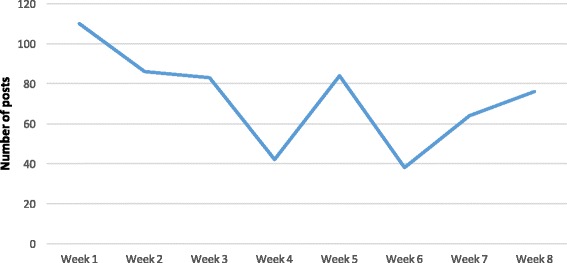
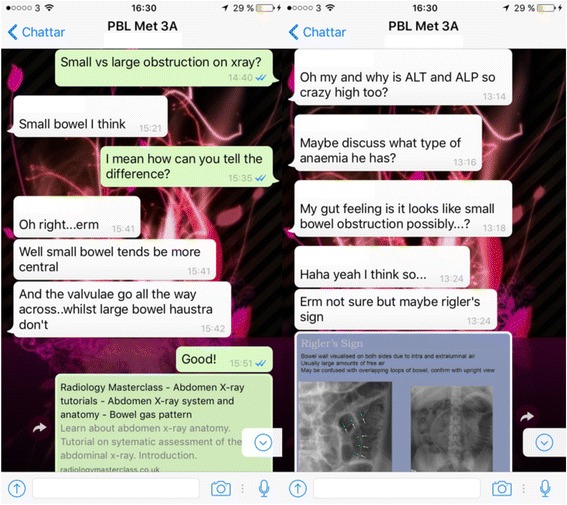
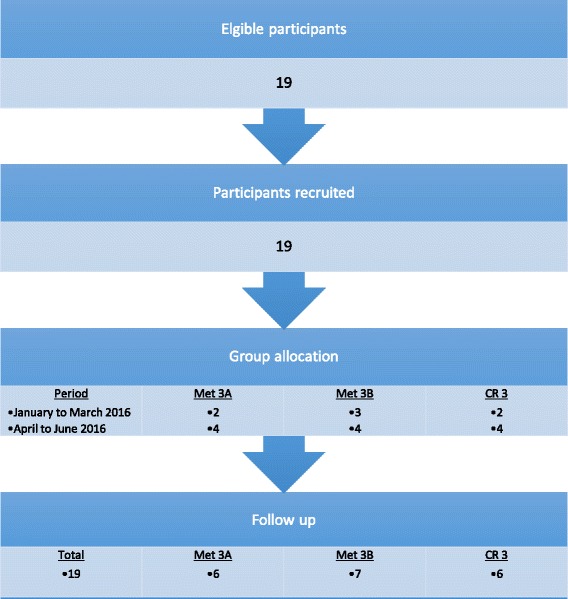
All of the participants were active in their respective messaging groups (19 students and 6 tutors). A total of 582 messages, 22 images and 19 webpage links were sent. Thematic analysis on content of the instant messaging groups identified the following themes: organisational, educational and social. Thematic analysis on the content of interviews identified themes such as the ease of use of instant messaging, benefit of instant messaging to foster understanding and learning, and the ability to access recorded discussions.

CONCLUSION

The findings of this study illustrate a method by which communication within PBL groups can be facilitated by the use of instant messaging. The results indicate the feasibility and acceptability of WhatsApp Messenger in supplementing PBL teaching for medical students, and provides a framework for studies to investigate use amongst larger cohorts of students.

摘要

背景

即时通讯应用程序有潜力改善并促进医院医生与学生之间的沟通,从而创造并增加学习机会。本研究旨在证明即时通讯在医学生临床实习期间辅助医学教育的可行性和可接受性。

方法

为临床实习的医学生创建了6个WhatsApp Messenger(WhatsApp公司)群组。这些群组用于在基于问题的学习(PBL)小组内进行为期8周的交流。记录交流的频率和类型。在研究期结束时,通过结构化访谈过程评估学生的意见。对即时通讯群组的内容和结构化访谈的结果进行了主题分析。

结果

所有参与者都在各自的消息群组中很活跃(19名学生和6名导师)。共发送了582条消息、22张图片和19个网页链接。对即时通讯群组内容的主题分析确定了以下主题:组织、教育和社交。对访谈内容的主题分析确定了诸如即时通讯的易用性、即时通讯对促进理解和学习的益处以及获取记录讨论的能力等主题。

结论

本研究结果说明了一种通过使用即时通讯来促进PBL小组内交流的方法。结果表明WhatsApp Messenger在辅助医学生PBL教学方面的可行性和可接受性,并为研究更大规模学生群体中的使用情况提供了框架。
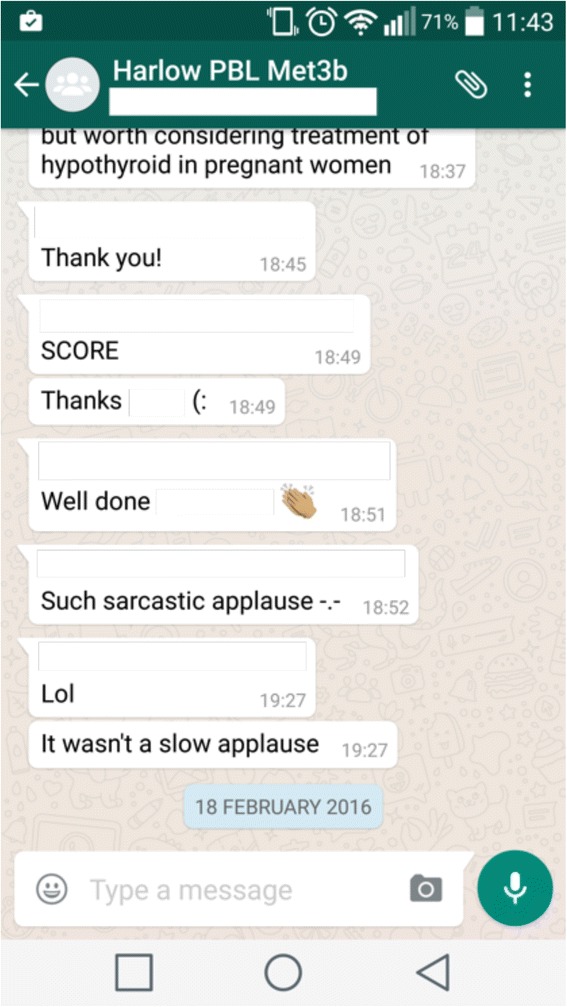
https://cdn.ncbi.nlm.nih.gov/pmc/blobs/cf8f/5219809/14c902f2b131/12909_2017_855_Fig4_HTML.jpg
https://cdn.ncbi.nlm.nih.gov/pmc/blobs/cf8f/5219809/2a5d876d5ac4/12909_2017_855_Fig1_HTML.jpg
https://cdn.ncbi.nlm.nih.gov/pmc/blobs/cf8f/5219809/b72554b7ebd5/12909_2017_855_Fig2_HTML.jpg
https://cdn.ncbi.nlm.nih.gov/pmc/blobs/cf8f/5219809/835143f4186d/12909_2017_855_Fig3_HTML.jpg
https://cdn.ncbi.nlm.nih.gov/pmc/blobs/cf8f/5219809/14c902f2b131/12909_2017_855_Fig4_HTML.jpg
https://cdn.ncbi.nlm.nih.gov/pmc/blobs/cf8f/5219809/2a5d876d5ac4/12909_2017_855_Fig1_HTML.jpg
https://cdn.ncbi.nlm.nih.gov/pmc/blobs/cf8f/5219809/b72554b7ebd5/12909_2017_855_Fig2_HTML.jpg
https://cdn.ncbi.nlm.nih.gov/pmc/blobs/cf8f/5219809/835143f4186d/12909_2017_855_Fig3_HTML.jpg
https://cdn.ncbi.nlm.nih.gov/pmc/blobs/cf8f/5219809/14c902f2b131/12909_2017_855_Fig4_HTML.jpg

相似文献

1
WhatsApp messenger as a tool to supplement medical education for medical students on clinical attachment.WhatsApp 即时通讯软件作为一种辅助医学生临床实习阶段医学教育的工具。
BMC Med Educ. 2017 Jan 6;17(1):7. doi: 10.1186/s12909-017-0855-x.
2
Instant Messaging in Dental Education.牙科教育中的即时通讯
J Dent Educ. 2015 Dec;79(12):1471-8.
3
Mobile Instant Messaging (MIM) to support teaching practice: Insights from a nurse tutor program in Nigeria.支持教学实践的移动即时通讯(MIM):来自尼日利亚一个护士导师项目的见解。
Malawi Med J. 2018 Jun;30(2):120-126. doi: 10.4314/mmj.v30i2.12.
4
Why are medical students 'checking out' of active learning in a new curriculum?为什么医学生在新课程中不再参与主动学习了?
Med Educ. 2014 Mar;48(3):315-24. doi: 10.1111/medu.12356.
5
Techniques used by "expert" and "non-expert" tutors to facilitate problem-based learning tutorials in an undergraduate medical curriculum.“专家”和“非专家”导师在本科医学课程中促进基于问题的学习教程所使用的技巧。
Med Educ. 2003 Jan;37(1):6-14. doi: 10.1046/j.1365-2923.2003.01406.x.
6
What drives students' self-directed learning in a hybrid PBL curriculum.在混合式 PBL 课程中,是什么驱动学生的自主学习。
Adv Health Sci Educ Theory Pract. 2010 Aug;15(3):425-37. doi: 10.1007/s10459-009-9210-2. Epub 2009 Dec 4.
7
Utility of instant messaging application, WhatsApp, as a tool to augment post-graduate radiology education.即时通讯应用程序 WhatsApp 在增强放射科研究生教育方面的应用。
BMC Med Educ. 2024 Jul 23;24(1):789. doi: 10.1186/s12909-024-05762-y.
8
The quality of feedback during formative OSCEs depends on the tutors' profile.形成性客观结构化临床考试(OSCE)期间的反馈质量取决于带教老师的个人情况。
BMC Med Educ. 2016 Nov 15;16(1):293. doi: 10.1186/s12909-016-0815-x.
9
From PBL tutoring to PBL coaching in undergraduate medical education: an interpretative phenomenological analysis study.从本科医学教育中的基于问题的学习辅导到基于问题的学习指导:一项解释性现象学分析研究。
Med Educ Online. 2016 Jul 8;21:31973. doi: 10.3402/meo.v21.31973. eCollection 2016.
10
Students and tutors' social representations of assessment in problem-based learning tutorials supporting change.学生和导师对基于问题的学习辅导中评估的社会表征支持变革。
BMC Med Educ. 2009 Jun 7;9:30. doi: 10.1186/1472-6920-9-30.

引用本文的文献

1
Using WhatsApp for Nutrition Surveillance Among Children Under 5 Years in West Java, Indonesia: Cross-Sectional Survey and Feasibility Study.在印度尼西亚西爪哇省5岁以下儿童中使用WhatsApp进行营养监测:横断面调查与可行性研究
JMIR Pediatr Parent. 2025 May 15;8:e58752. doi: 10.2196/58752.
2
Randomized controlled trial parallel-group on optimizing community pharmacist's care for the elderly: The influence of WhatsApp-Email delivered clinical case scenarios.优化社区药剂师对老年人护理的随机对照试验平行组:WhatsApp-Email 传递临床病例情景的影响。
PLoS One. 2024 Oct 22;19(10):e0308448. doi: 10.1371/journal.pone.0308448. eCollection 2024.
3

本文引用的文献

1
Blended learning: how can we optimise undergraduate student engagement?混合式学习:我们如何优化本科生的参与度?
BMC Med Educ. 2016 Aug 4;16:195. doi: 10.1186/s12909-016-0716-z.
2
Instant messaging - one solution to doctor-student communication?即时通讯——解决医生与学生沟通问题的一种方法?
Med Educ Online. 2015 Dec 23;20:30593. doi: 10.3402/meo.v20.30593. eCollection 2015.
3
Undergraduate nurses reflections on Whatsapp use in improving primary health care education.本科护士对使用WhatsApp改善初级卫生保健教育的反思。
Utility of instant messaging application, WhatsApp, as a tool to augment post-graduate radiology education.
即时通讯应用程序 WhatsApp 在增强放射科研究生教育方面的应用。
BMC Med Educ. 2024 Jul 23;24(1):789. doi: 10.1186/s12909-024-05762-y.
4
Advancing orthopaedic trauma care through WhatsApp: An analysis of clinical and non-clinical applications, challenges, and future directions.通过WhatsApp推进骨科创伤护理:临床与非临床应用、挑战及未来方向分析
World J Orthop. 2024 Jun 18;15(6):529-538. doi: 10.5312/wjo.v15.i6.529.
5
Impact of smartphone on mental health among medical undergraduates: A cross-sectional study.智能手机对医学本科生心理健康的影响:一项横断面研究。
J Educ Health Promot. 2024 Apr 29;13:137. doi: 10.4103/jehp.jehp_806_23. eCollection 2024.
6
The Effect of WhatsApp-Based and Conventional Education Methods on Sexual Myths and Sexual Health Knowledge: A Comparative Intervention Study in Midwifery Students.基于WhatsApp的教育方法与传统教育方法对性观念和性健康知识的影响:一项针对助产专业学生的比较性干预研究
Int J Sex Health. 2021 May 3;33(3):326-341. doi: 10.1080/19317611.2021.1913688. eCollection 2021.
7
Which educational messengers do medical students prefer for receiving healthinformation? Development and psychometrics of using health messengers questionnaire.医学生更喜欢哪些教育信息传递者来接收健康信息?使用健康信息传递者问卷的开发和心理测量学。
BMC Public Health. 2024 Jan 10;24(1):139. doi: 10.1186/s12889-023-17400-1.
8
Online learning resources and social media platforms used by medical students during the COVID-19 pandemic.医学生在 COVID-19 大流行期间使用的在线学习资源和社交媒体平台。
BMC Med Educ. 2023 Dec 19;23(1):969. doi: 10.1186/s12909-023-04906-w.
9
Curriculum delivery in Medical Education during an emergency: A guide based on the responses to the COVID-19 pandemic.紧急情况下医学教育的课程交付:基于对COVID-19大流行的应对措施的指南
MedEdPublish (2016). 2020 Apr 16;9:69. doi: 10.15694/mep.2020.000069.1. eCollection 2020.
10
Evolution in Congenital Cardiology Education: The Rise of Digital-Learning Tools.先天性心脏病学教育的发展:数字学习工具的兴起
CJC Pediatr Congenit Heart Dis. 2022 Dec 28;2(2):93-102. doi: 10.1016/j.cjcpc.2022.12.005. eCollection 2023 Apr.
Curationis. 2015 Aug 13;38(2):1512. doi: 10.4102/curationis.v38i2.1512.
4
Smartphones let surgeons know WhatsApp: an analysis of communication in emergency surgical teams.智能手机让外科医生用上WhatsApp:急诊外科团队中的沟通分析
Am J Surg. 2015 Jan;209(1):45-51. doi: 10.1016/j.amjsurg.2014.08.030. Epub 2014 Oct 22.
5
Effects of a blended learning approach on student outcomes in a graduate-level public health course.混合学习方法对研究生公共卫生课程学生学习成果的影响。
BMC Med Educ. 2014 Mar 11;14:47. doi: 10.1186/1472-6920-14-47.
6
Students' experiences of blended learning across a range of postgraduate programmes.学生在一系列研究生课程中对混合式学习的体验。
Nurse Educ Today. 2012 May;32(4):464-8. doi: 10.1016/j.nedt.2011.05.014. Epub 2011 Jun 8.
7
Education. Farewell, lecture?教育。告别讲座?
Science. 2009 Jan 2;323(5910):50-1. doi: 10.1126/science.1168927.