Xu Lina, Fan Songqing, Zhao Jin, Zhou Peng, Chu Shuzhou, Luo Jiadi, Wen Qiuyuan, Chen Lingjiao, Wen Sailan, Wang Li, Shi Lei
Department of Pathology, The Second Xiangya Hospital of Central South University, Renmin Road 139, Changsha, Hunan, 410000, China.
Department of Clinical Laboratory, Hunan Cancer Hospital, Changsha, Hunan, China.
Diagn Pathol. 2017 Jan 7;12(1):2. doi: 10.1186/s13000-016-0589-9.
The Cks1 protein is an essential factor in regulating cell cycle by mediating the ubiquitination of CDK inhibitor p27. It has been reported that aberrant expression of Cks1 and p27 proteins was found in various tumors and related to initiation and progression of carcinomas. However, the potential roles which Cks1 and p27 proteins play in NPC remain unclear. This study aims to examine the expression status of Cks1 and p27 and their possible prognostic significance in NPC.
Paraffin-embedded specimens with NPC (n = 168) and non-tumor nasopharyngeal tissues (n = 49) were analyzed by IHC.
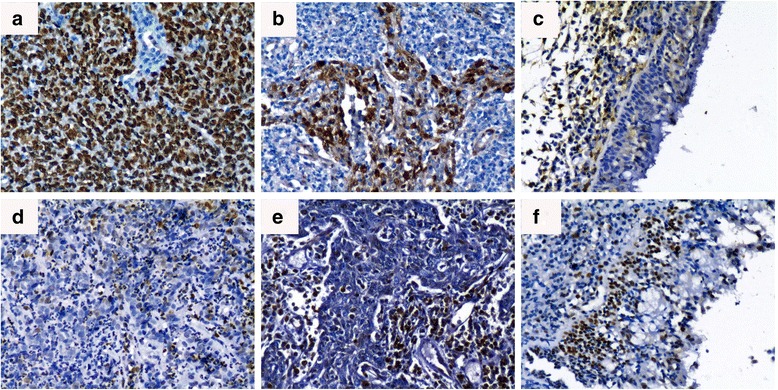
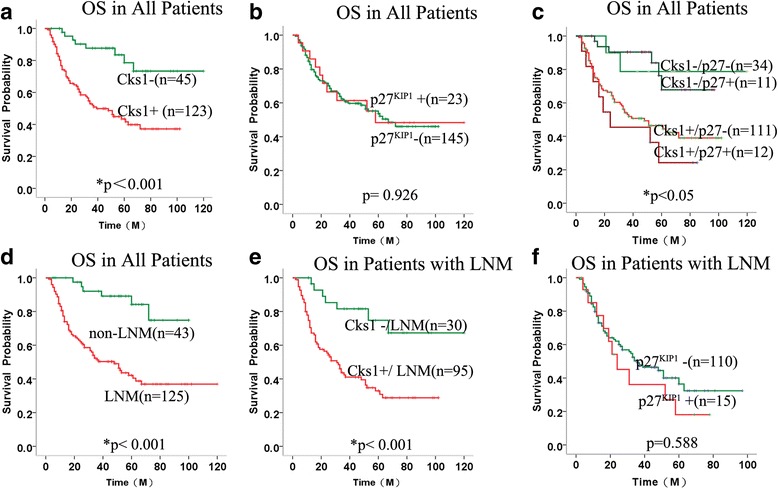
Expression of Cks1 increased in NPC tissues compared with non-tumor nasopharyngeal tissues (P < 0.05), whereas p27 protein frequently expressed in non-tumor nasopharyngeal tissues compared with NPC tissues (P < 0.05). There was a significant reverse correlation between Cks1 and p27 protein expression in NPC (r = -0.189, P < 0.05).In addition, Kaplan-Meier survival curve showed that there was a significant tendency of shorter overall survival (OS) in NPC patients with Cks1 positive expression compared to negative ones, especially in patients with lymph node metastasis (P < 0.001, respectively). But there was no significance between p27 expression and survival viability of NPC patients. Multivariate Cox regression analysis further identified increased expression of Cks1 was the independent poor prognostic factor for NPC (p = 0.13).
Our research found expression of Cks1 increased and was inverse to the expression of p27. High expression of Cks1 was significantly associated with lymph node metastasis and survival status in NPC. In addition, the abnormally high level of Cks1 protein was proved to be an independent poor prognostic factor in NPC. These results may provide novel clue for NPC therapy method.
Cks1蛋白是通过介导细胞周期蛋白依赖性激酶抑制剂p27的泛素化来调节细胞周期的重要因子。据报道,在各种肿瘤中发现Cks1和p27蛋白表达异常,且与癌症的发生和发展有关。然而,Cks1和p27蛋白在鼻咽癌中的潜在作用仍不清楚。本研究旨在检测Cks1和p27的表达状况及其在鼻咽癌中的可能预后意义。
采用免疫组化法分析168例鼻咽癌石蜡包埋标本和49例非肿瘤性鼻咽组织标本。
与非肿瘤性鼻咽组织相比,鼻咽癌组织中Cks1的表达增加(P<0.05),而与鼻咽癌组织相比,p27蛋白在非肿瘤性鼻咽组织中表达更为频繁(P<0.05)。鼻咽癌中Cks1和p27蛋白表达呈显著负相关(r=-0.189,P<0.05)。此外,Kaplan-Meier生存曲线显示,Cks1阳性表达的鼻咽癌患者总生存期(OS)明显短于阴性患者,尤其是有淋巴结转移的患者(分别为P<0.001)。但p27表达与鼻咽癌患者的生存能力之间无显著差异。多因素Cox回归分析进一步确定Cks1表达增加是鼻咽癌独立的不良预后因素(p=0.13)。
我们的研究发现Cks1表达增加且与p27表达呈负相关。Cks1高表达与鼻咽癌的淋巴结转移和生存状况显著相关。此外,Cks1蛋白异常高水平被证明是鼻咽癌独立的不良预后因素。这些结果可能为鼻咽癌的治疗方法提供新线索。