Krajewski Stefanie Sandra, Isoz Isabelle, Johansson Jörgen
Department of Molecular Biology, Umeå University, 90187 Umeå, Sweden.
Laboratory for Molecular Infection Medicine Sweden (MIMS), Umeå University, 90187 Umeå, Sweden.
Nucleic Acids Res. 2017 Feb 28;45(4):1914-1924. doi: 10.1093/nar/gkw1308.
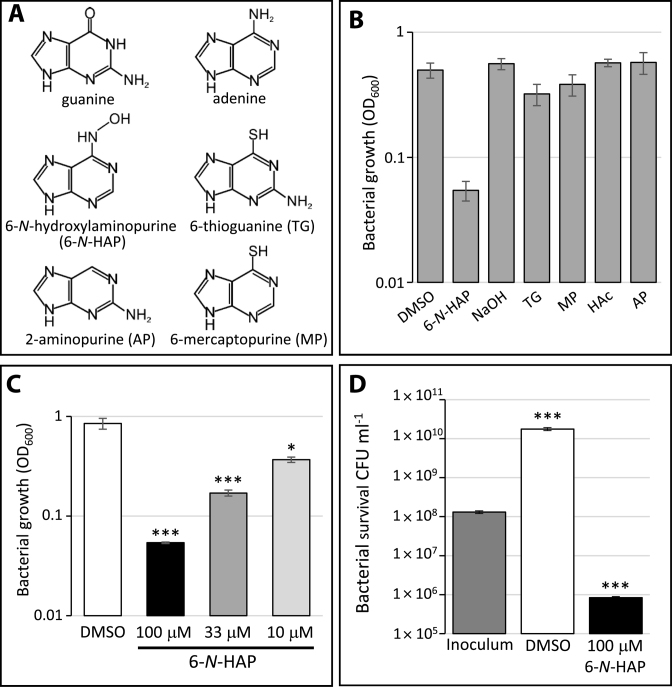
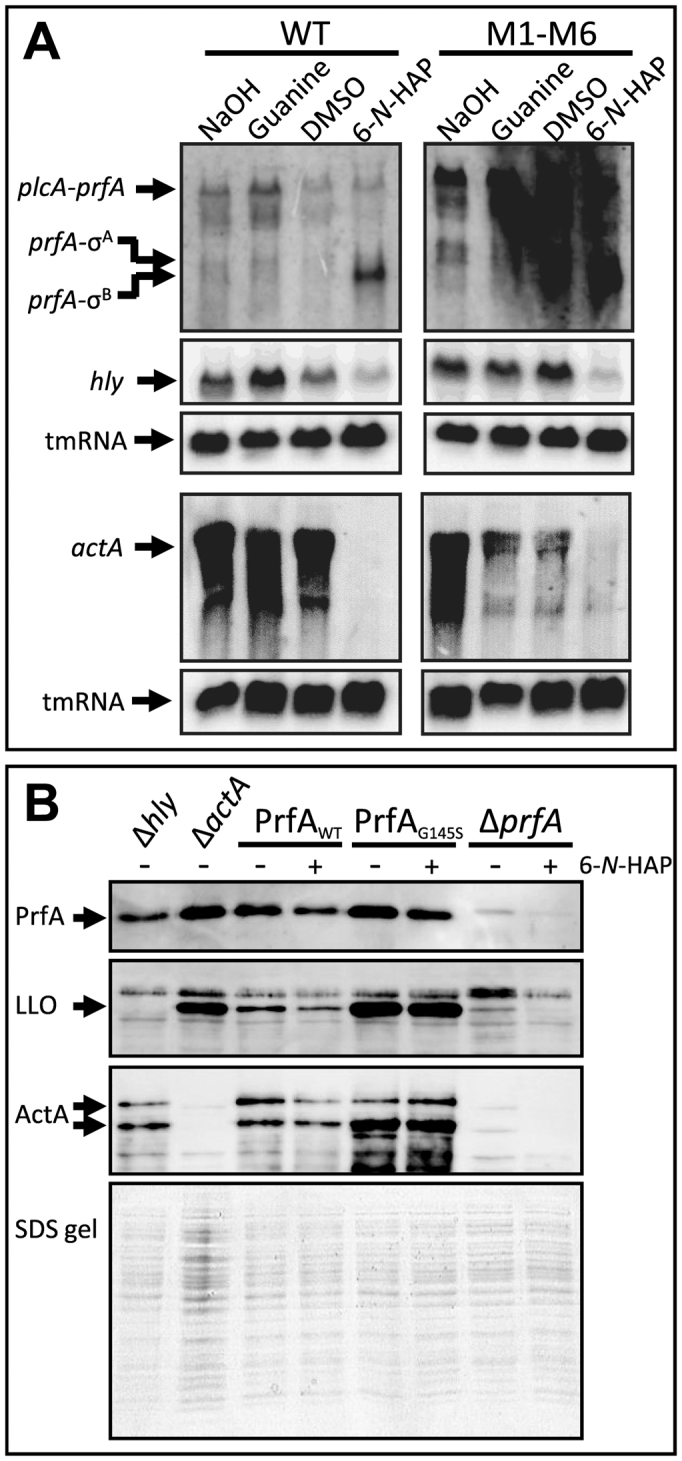
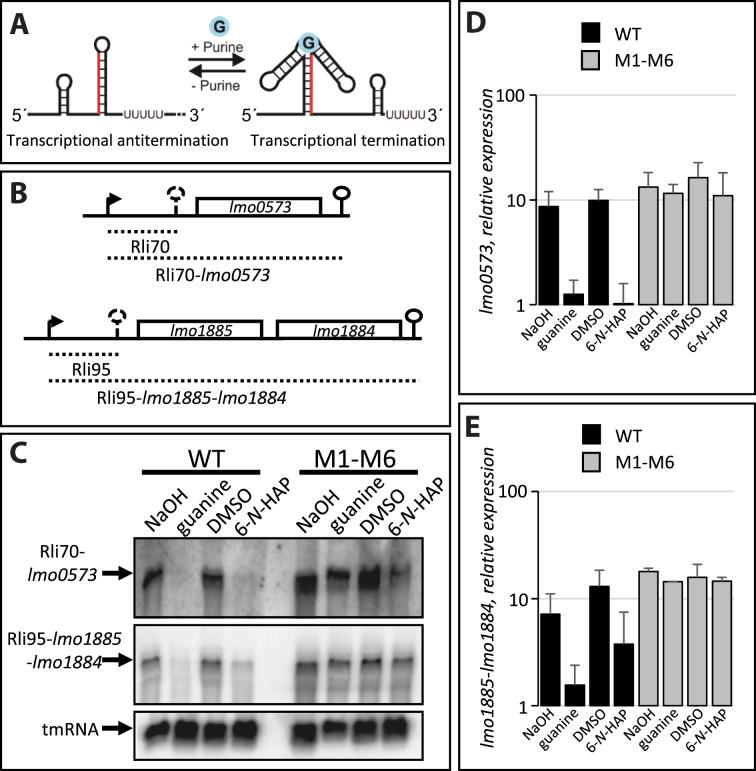
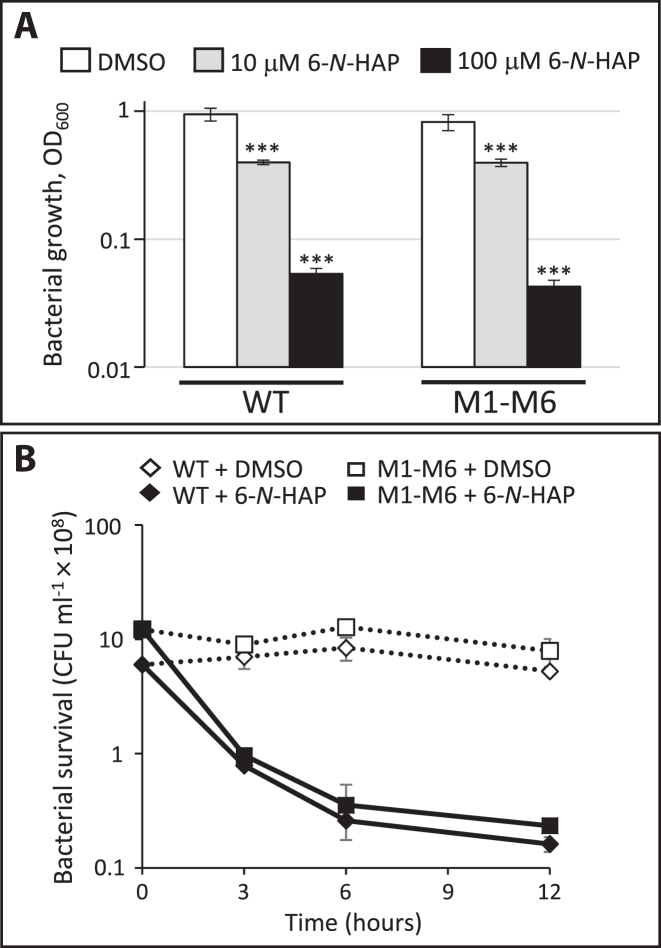
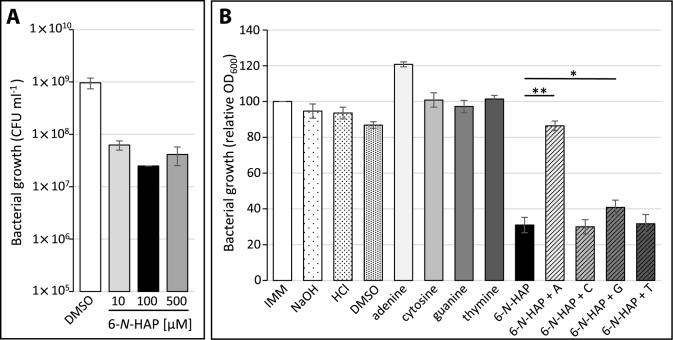
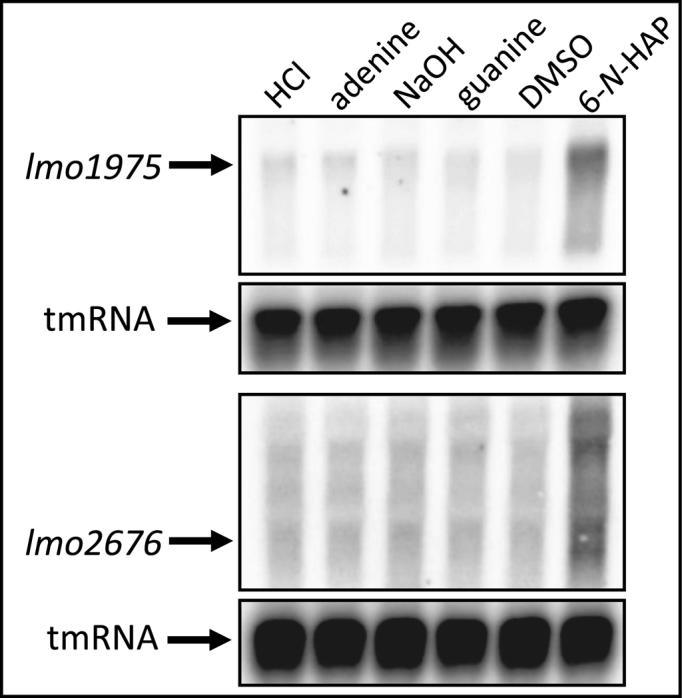
The emerging development of antibiotic resistant bacteria calls for novel types of antibacterial agents. In this work we examined the putative antibacterial effect of purine analogs in Listeria monocytogenes. We show that, among several tested purine analogs, only 6-N-hydroxylaminopurine (6-N-HAP) reduces the viability of the Gram-positive pathogen Listeria monocytogenes. As in Bacillus subtilis, 6-N-HAP terminates expression at guanine riboswitches in L. monocytogenes hence preventing expression of their downstream genes. However, we show that the bacteriocidal effect of the compound was unlinked to the terminated expression at the guanine riboswitches. When further examining the antimicrobial effect, we observed that 6-N-HAP acts as a potent mutagen in L. monocytogenes, by increasing the mutation rate and inducing the SOS-response. Also, addition of 6-N-HAP decreased virulence gene expression by reducing both the levels and activity of the virulence regulator PrfA.
抗生素耐药菌的不断出现促使人们研发新型抗菌剂。在这项研究中,我们检测了嘌呤类似物对单核细胞增生李斯特菌的潜在抗菌作用。我们发现,在几种测试的嘌呤类似物中,只有6-N-羟基氨基嘌呤(6-N-HAP)能降低革兰氏阳性病原菌单核细胞增生李斯特菌的活力。与枯草芽孢杆菌一样,6-N-HAP会终止单核细胞增生李斯特菌中鸟嘌呤核糖开关处的表达,从而阻止其下游基因的表达。然而,我们发现该化合物的杀菌作用与鸟嘌呤核糖开关处的表达终止无关。在进一步研究其抗菌作用时,我们观察到6-N-HAP在单核细胞增生李斯特菌中是一种强效诱变剂,它会提高突变率并诱导SOS反应。此外,添加6-N-HAP会通过降低毒力调节因子PrfA的水平和活性来降低毒力基因的表达。