Liang Kaiwei, Volk Andrew G, Haug Jeffrey S, Marshall Stacy A, Woodfin Ashley R, Bartom Elizabeth T, Gilmore Joshua M, Florens Laurence, Washburn Michael P, Sullivan Kelly D, Espinosa Joaquin M, Cannova Joseph, Zhang Jiwang, Smith Edwin R, Crispino John D, Shilatifard Ali
Department of Biochemistry and Molecular Genetics, Northwestern University Feinberg School of Medicine, 320 E. Superior St., Chicago, IL 60611, USA; Stowers Institute for Medical Research, 1000 E. 50th St., Kansas City, MO 64110, USA.
Department of Biochemistry and Molecular Genetics, Northwestern University Feinberg School of Medicine, 320 E. Superior St., Chicago, IL 60611, USA; Division of Hematology and Oncology, Northwestern University Feinberg School of Medicine, 303 E. Superior St., Chicago, IL 60611, USA.
Cell. 2017 Jan 12;168(1-2):59-72.e13. doi: 10.1016/j.cell.2016.12.011. Epub 2017 Jan 5.
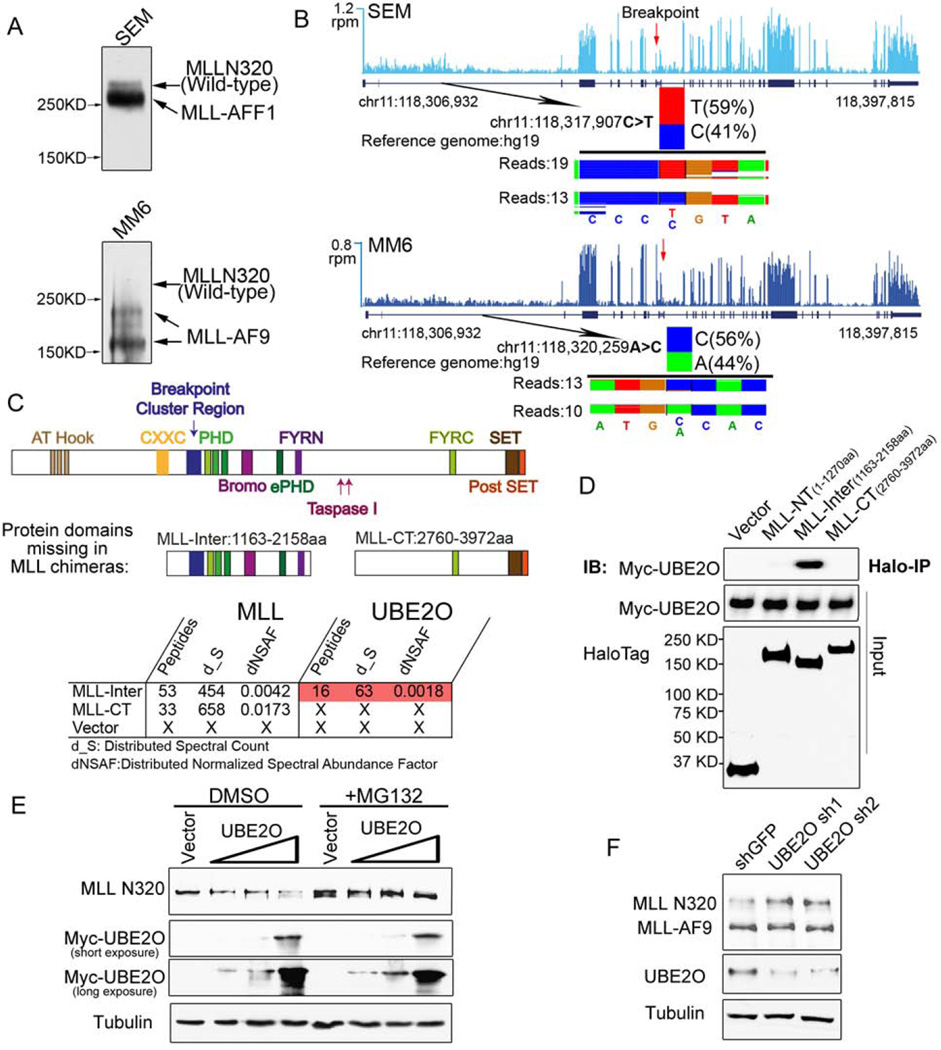
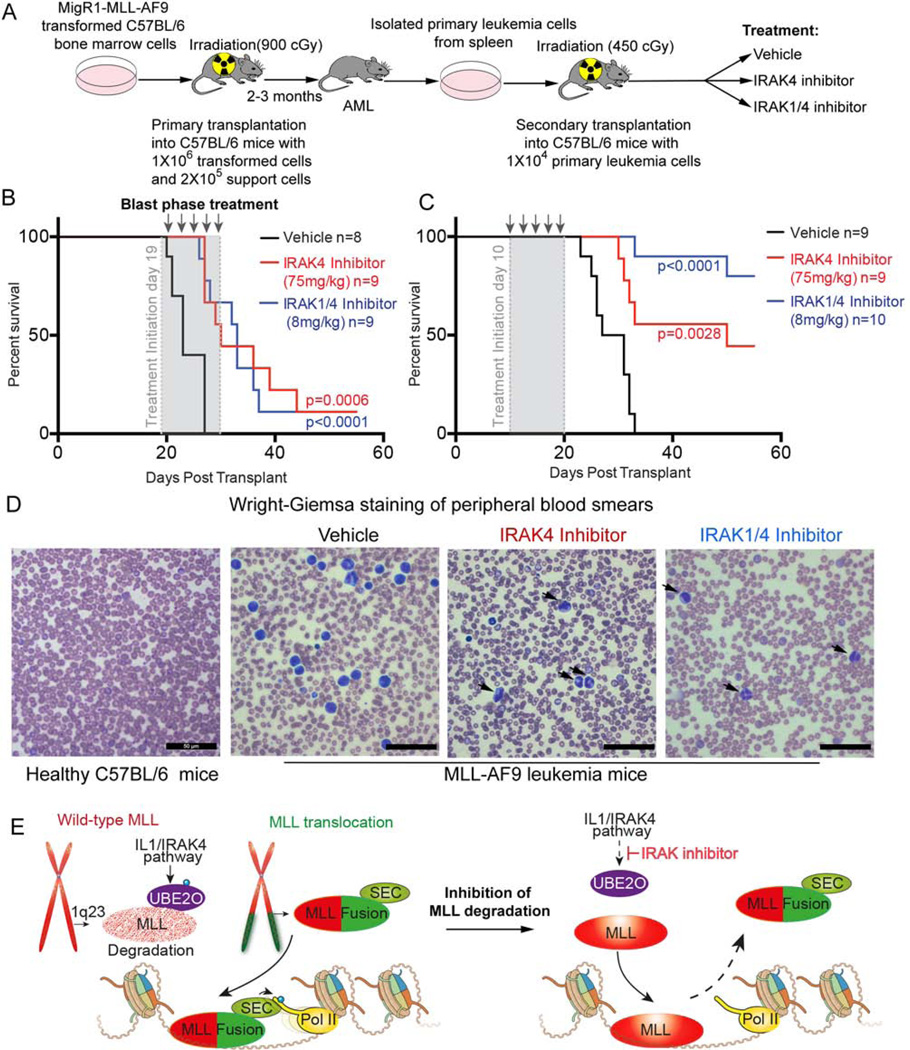
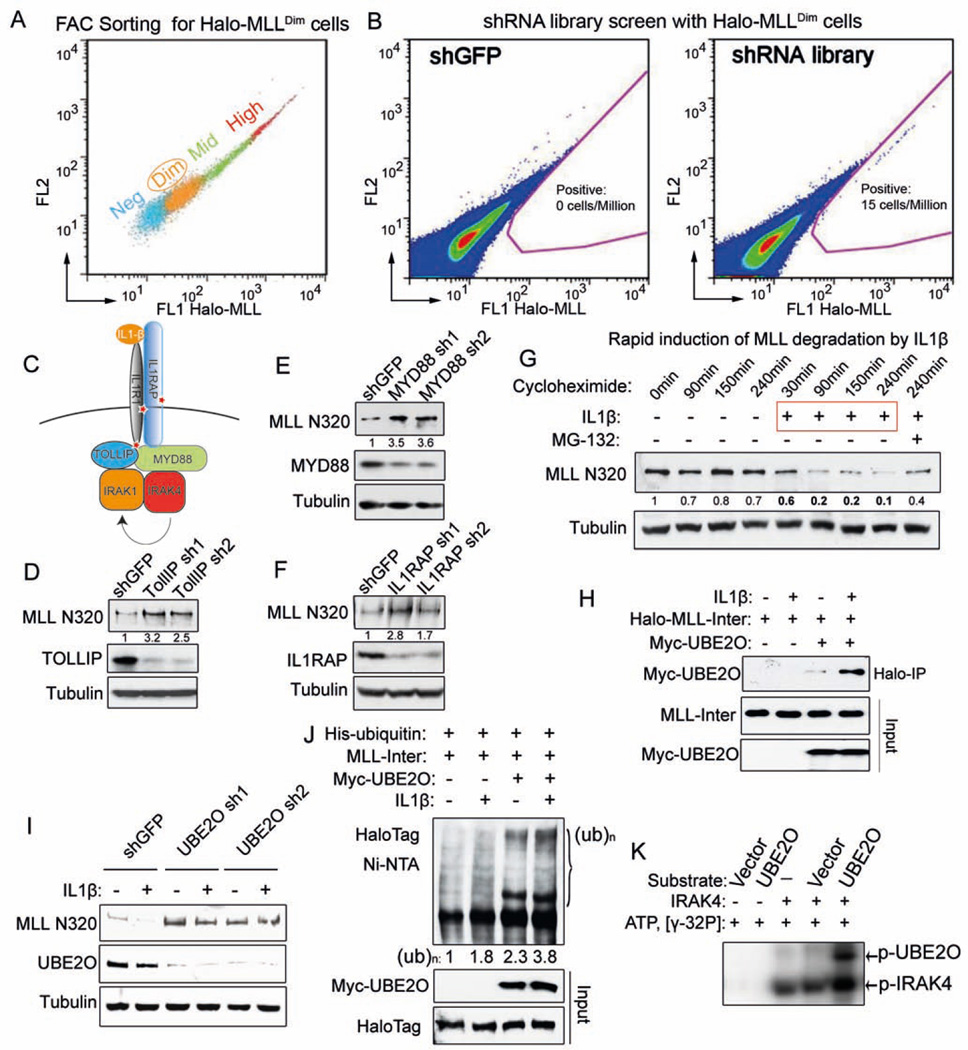
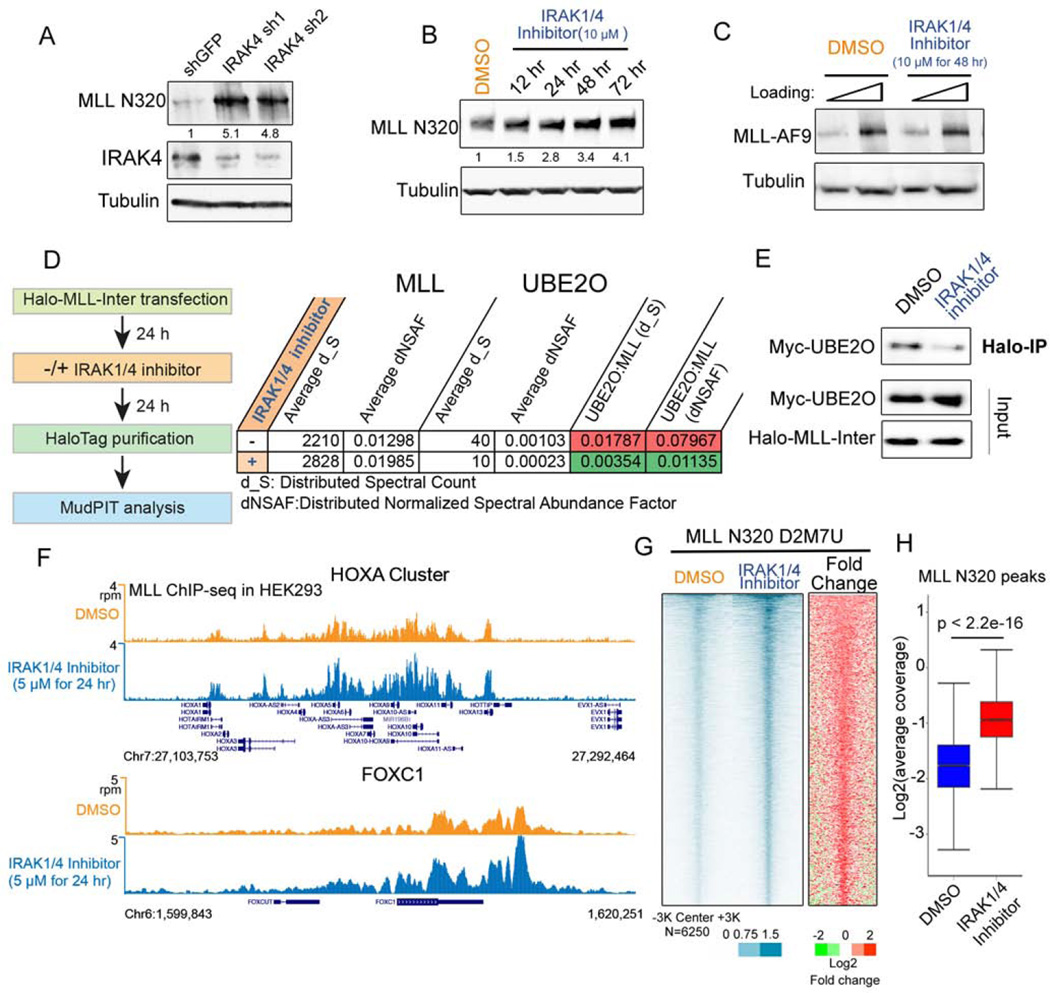
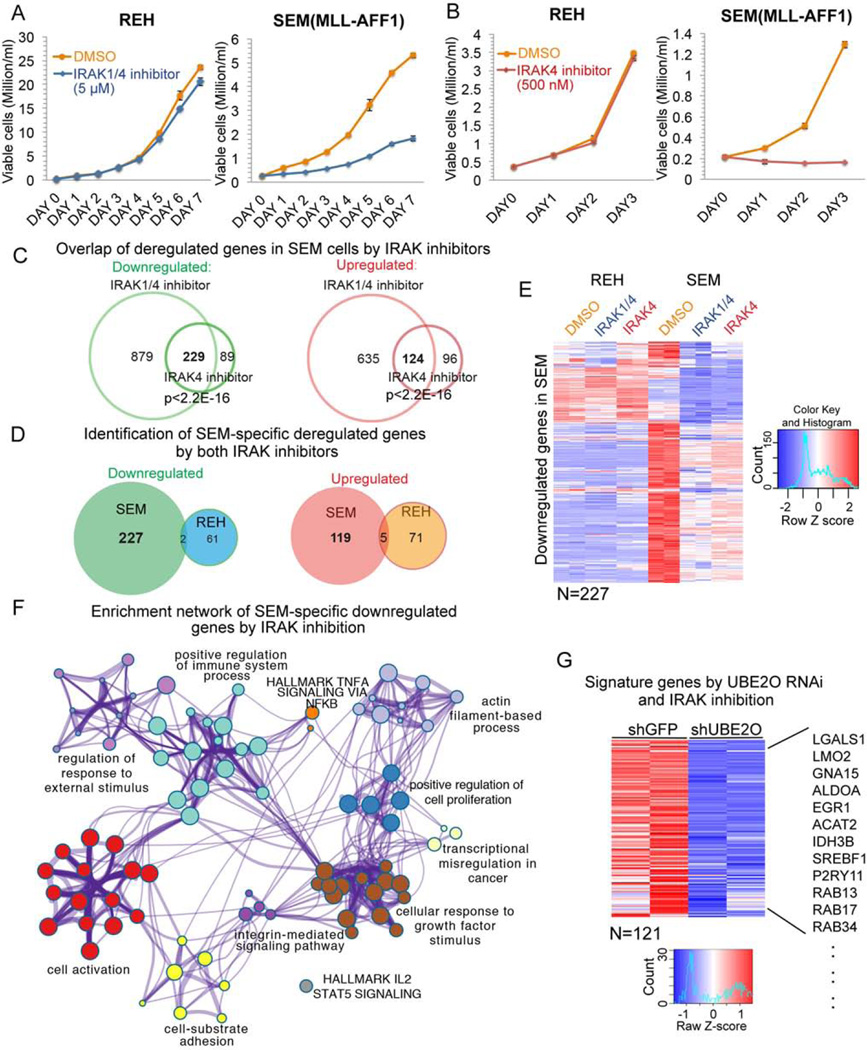
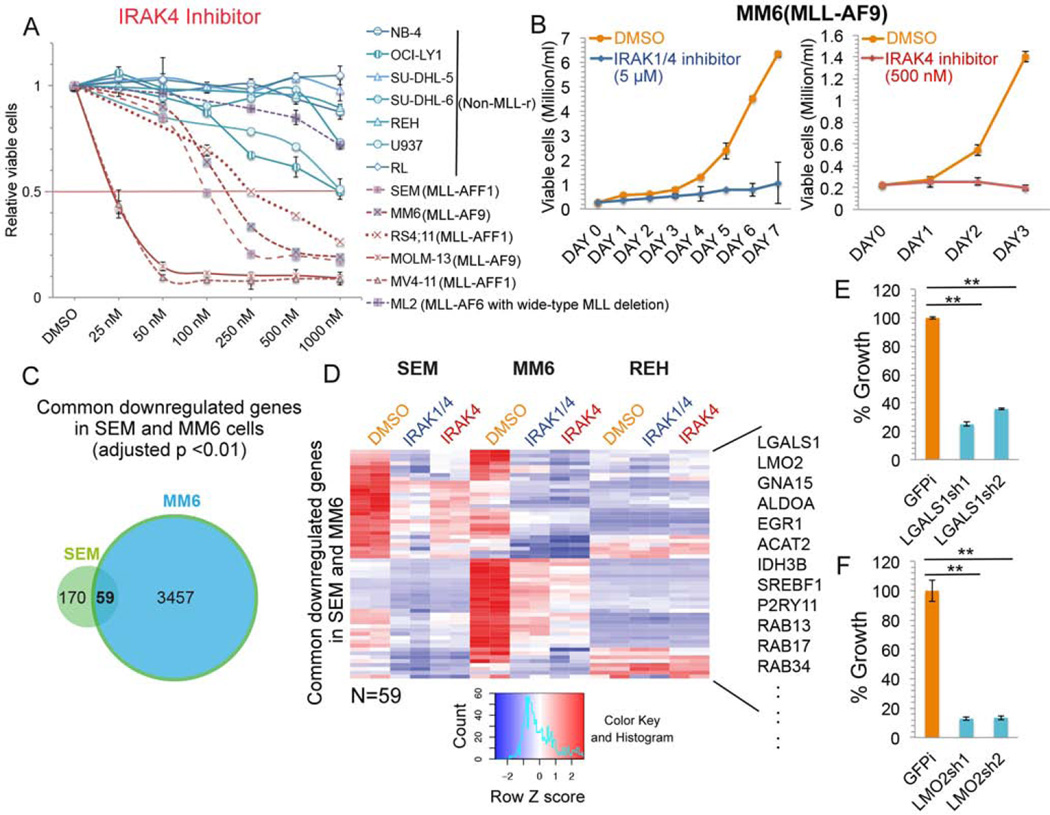
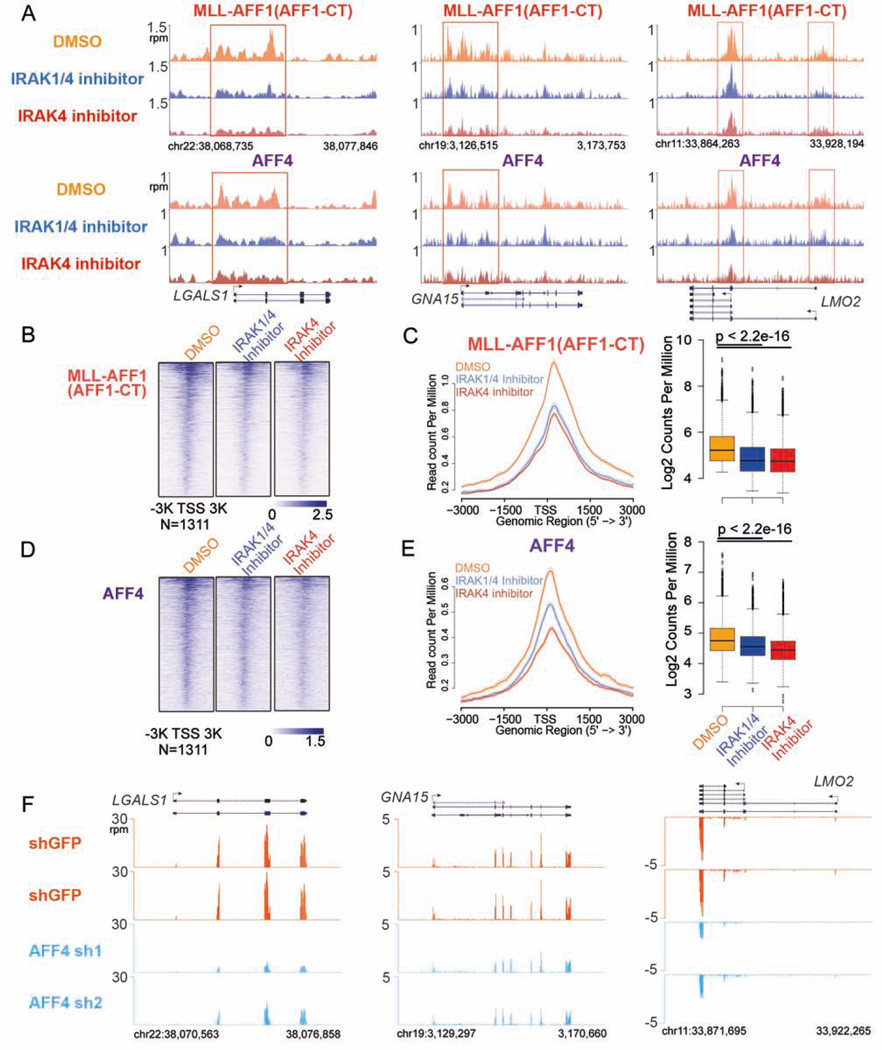
Chromosomal translocations of the mixed-lineage leukemia (MLL) gene with various partner genes result in aggressive leukemia with dismal outcomes. Despite similar expression at the mRNA level from the wild-type and chimeric MLL alleles, the chimeric protein is more stable. We report that UBE2O functions in regulating the stability of wild-type MLL in response to interleukin-1 signaling. Targeting wild-type MLL degradation impedes MLL leukemia cell proliferation, and it downregulates a specific group of target genes of the MLL chimeras and their oncogenic cofactor, the super elongation complex. Pharmacologically inhibiting this pathway substantially delays progression, and it improves survival of murine leukemia through stabilizing wild-type MLL protein, which displaces the MLL chimera from some of its target genes and, therefore, relieves the cellular oncogenic addiction to MLL chimeras. Stabilization of MLL provides us with a paradigm in the development of therapies for aggressive MLL leukemia and perhaps for other cancers caused by translocations.
混合谱系白血病(MLL)基因与多种伙伴基因的染色体易位会导致侵袭性白血病,预后不佳。尽管野生型和嵌合MLL等位基因在mRNA水平上表达相似,但嵌合蛋白更稳定。我们报告称,UBE2O在响应白细胞介素-1信号时发挥调节野生型MLL稳定性的作用。靶向野生型MLL降解会阻碍MLL白血病细胞增殖,并下调MLL嵌合体及其致癌辅因子超级延伸复合物的一组特定靶基因。从药理学上抑制该途径可显著延迟疾病进展,并通过稳定野生型MLL蛋白提高小鼠白血病的生存率,该蛋白会将MLL嵌合体从其一些靶基因上取代,从而缓解细胞对MLL嵌合体的致癌依赖性。MLL的稳定为侵袭性MLL白血病以及可能由易位引起的其他癌症的治疗开发提供了一个范例。