Shahi Mina, van Vreeswijk Carl, Pipa Gordon
Department of Neuroinformatics, Institute of Cognitive Science, University of Osnabrück Osnabrück, Germany.
Centre de Neurophysique, Physiologie et Pathologie, Université René Descartes Paris, France.
Front Comput Neurosci. 2016 Dec 23;10:139. doi: 10.3389/fncom.2016.00139. eCollection 2016.
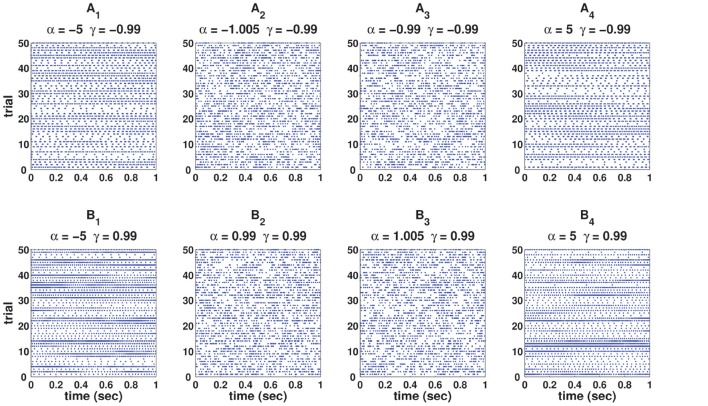
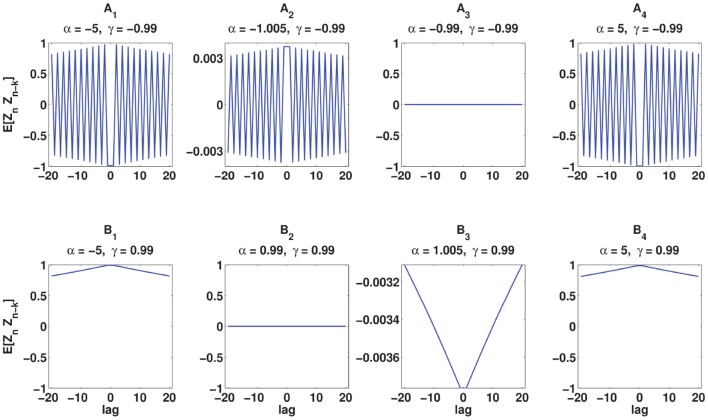
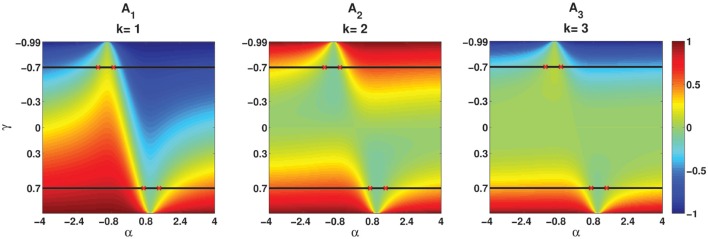
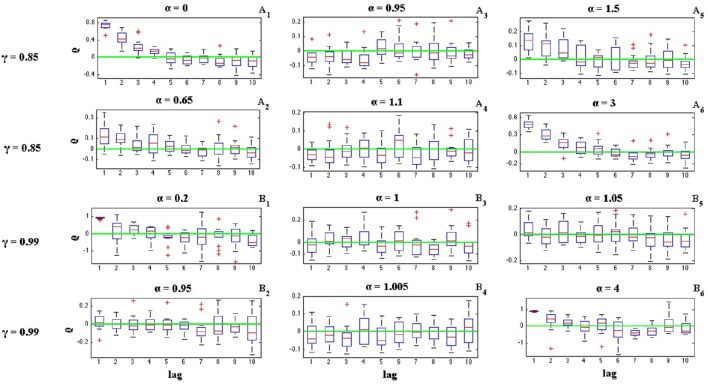
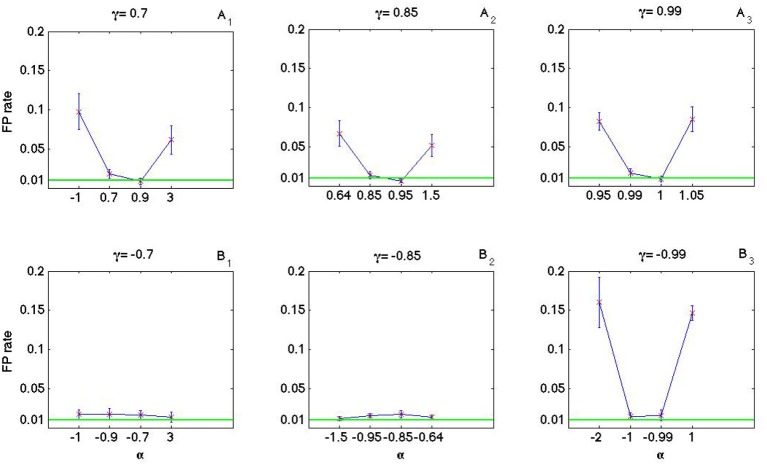
Detecting the existence of temporally coordinated spiking activity, and its role in information processing in the cortex, has remained a major challenge for neuroscience research. Different methods and approaches have been suggested to test whether the observed synchronized events are significantly different from those expected by chance. To analyze the simultaneous spike trains for precise spike correlation, these methods typically model the spike trains as a Poisson process implying that the generation of each spike is independent of all the other spikes. However, studies have shown that neural spike trains exhibit dependence among spike sequences, such as the absolute and relative refractory periods which govern the spike probability of the oncoming action potential based on the time of the last spike, or the bursting behavior, which is characterized by short epochs of rapid action potentials, followed by longer episodes of silence. Here we investigate non-renewal processes with the inter-spike interval distribution model that incorporates spike-history dependence of individual neurons. For that, we use the Monte Carlo method to estimate the full shape of the coincidence count distribution and to generate false positives for coincidence detection. The results show that compared to the distributions based on homogeneous Poisson processes, and also non-Poisson processes, the width of the distribution of joint spike events changes. Non-renewal processes can lead to both heavy tailed or narrow coincidence distribution. We conclude that small differences in the exact autostructure of the point process can cause large differences in the width of a coincidence distribution. Therefore, manipulations of the autostructure for the estimation of significance of joint spike events seem to be inadequate.
检测时间上协调的尖峰活动的存在及其在皮层信息处理中的作用,一直是神经科学研究的一大挑战。人们提出了不同的方法和途径来测试观察到的同步事件是否与偶然预期的事件有显著差异。为了分析同时出现的尖峰序列以进行精确的尖峰相关性分析,这些方法通常将尖峰序列建模为泊松过程,这意味着每个尖峰的产生与所有其他尖峰无关。然而,研究表明神经尖峰序列在尖峰序列之间表现出依赖性,例如绝对和相对不应期,它们根据最后一个尖峰的时间来控制即将到来的动作电位的尖峰概率,或者爆发行为,其特征是快速动作电位的短时期,随后是较长时间的沉默期。在这里,我们使用包含单个神经元尖峰历史依赖性的尖峰间隔分布模型来研究非更新过程。为此,我们使用蒙特卡罗方法来估计符合计数分布的完整形状,并为符合检测生成误报。结果表明,与基于均匀泊松过程以及非泊松过程的分布相比,联合尖峰事件分布的宽度发生了变化。非更新过程可能导致重尾或狭窄的符合分布。我们得出结论,点过程精确自结构的微小差异可能会导致符合分布宽度的巨大差异。因此,通过操纵自结构来估计联合尖峰事件的显著性似乎并不充分。