Van Biesen Debbie, Hettinga Florentina J, McCulloch Katina, Vanlandewijck Yves
Research Unit Adapted Physical Activity and Psychomotor Rehabilitation, Department of Rehabilitation Sciences, Faculty of Kinesiology and Rehabilitation Sciences, KU Leuven Leuven, Belgium.
Research Unit Adapted Physical Activity and Psychomotor Rehabilitation, Department of Rehabilitation Sciences, Faculty of Kinesiology and Rehabilitation Sciences, KU LeuvenLeuven, Belgium; Centre for Sports and Exercise Sciences, School of Biological Sciences, University of EssexColchester, UK.
Front Physiol. 2016 Dec 20;7:624. doi: 10.3389/fphys.2016.00624. eCollection 2016.
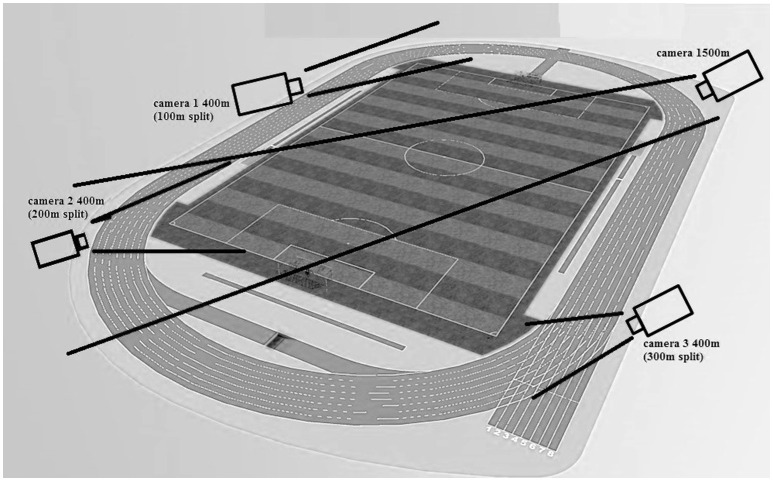
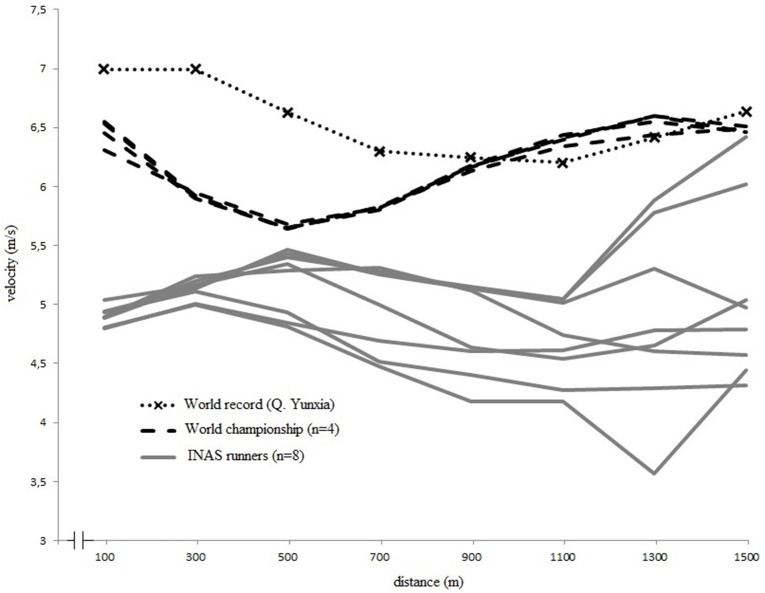
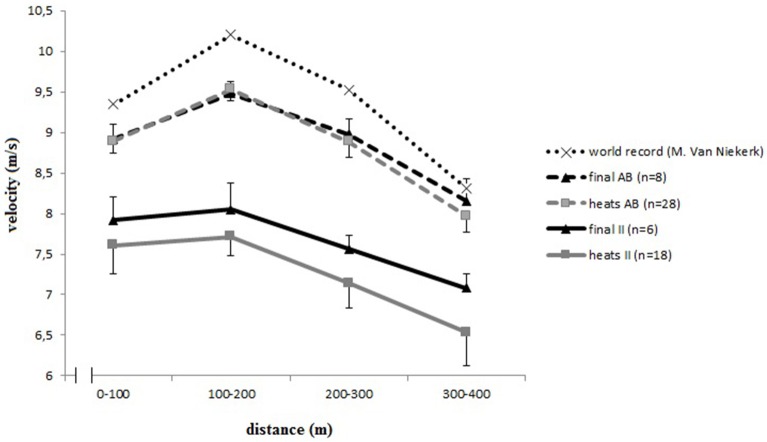
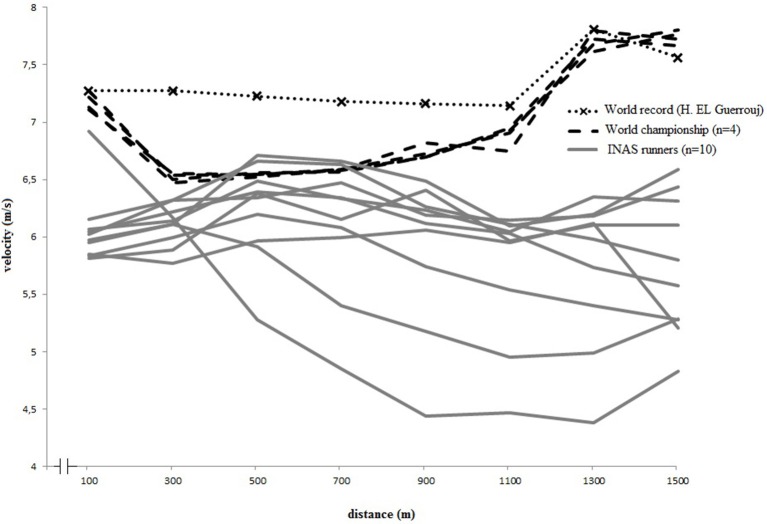
Pacing has been defined as the goal-directed regulation of exercise intensity over an exercise bout, in which athletes need to decide how and when to invest their energy. The purpose of this study was to explore if the regulation of exercise intensity during competitive track races is different between runners with and without intellectual impairment, which is characterized by significant limitations in intellectual functioning (IQ ≤ 75) and adaptive behavioral deficits, diagnosed before the age of 18. The samples included elite runners with intellectual impairment ( = 36) and a comparison group of world class runners without impairment ( = 39), of which 47 were 400 m runners (all male) and 28 were 1500 m-runners (15 male and 13 female). Pacing was analyzed by means of 100 m split times (for 400 m races) and 200 m split times (for 1500 m races). Based on the split times, the average velocity was calculated for four segments of the races. Velocity fluctuations were defined as the differences in velocity between consecutive race segments. A mixed model ANOVA revealed significant differences in pacing profiles between runners with and without intellectual impairment ( < 0.05). Maximal velocity of elite 400 m runners with intellectual impairment in the first race segment (7.9 ± 0.3 m/s) was well below the top-velocity reached by world level 400 m runners without intellectual impairment (8.9 ± 0.2 m/s), and their overall pace was slower ( = 120.7, < 0.05). In addition, both groups followed a different pacing profile and inter-individual differences in pacing profiles were larger, with differences most pronounced for 1500 m races. Whereas, male 1500 m-runners without intellectual impairment reached a high velocity in the first 100 m (7.2 ± 0.1 m/s), slowly decelerated in the second race segment (-0.6 ± 0.1 m/s), and finished with an end sprint (+0.9 ± 0.1 m/s); the 1500 m runners with intellectual impairment started slower (6.1 ± 0.3 m/s), accelerated in the second segment (+0.2 ± 0.7 m/s), and then slowly decreased until the finish ( = 6.8, < 0.05). Our findings support the hypothesis that runners with intellectual impairment have difficulties to efficiently self-regulate their exercise intensity. Their limited cognitive resources may constrain the successful integration of appropriate pacing strategies during competitive races.
节奏被定义为在一次运动过程中对运动强度进行的目标导向性调节,在此过程中运动员需要决定如何以及何时投入能量。本研究的目的是探讨在有智力障碍和无智力障碍的跑步者之间,在竞技田径比赛中运动强度的调节是否存在差异,智力障碍的特征是在18岁之前被诊断出智力功能存在显著限制(智商≤75)和适应性行为缺陷。样本包括有智力障碍的精英跑步者(n = 36)和无智力障碍的世界级跑步者对照组(n = 39),其中47人是400米跑步者(均为男性),28人是1500米跑步者(15名男性和13名女性)。通过400米比赛的100米分段时间和1500米比赛的200米分段时间来分析节奏。根据分段时间,计算比赛四个阶段的平均速度。速度波动被定义为连续比赛阶段之间的速度差异。混合模型方差分析显示,有智力障碍和无智力障碍的跑步者在节奏特征上存在显著差异(p < 0.05)。有智力障碍的精英400米跑步者在第一个比赛阶段的最大速度(7.9 ± 0.3米/秒)远低于无智力障碍的世界水平400米跑步者达到的最高速度(8.9 ± 0.2米/秒),并且他们的整体节奏较慢(p = 120.7,p < 0.05)。此外,两组遵循不同的节奏特征,并且节奏特征的个体间差异更大,在1500米比赛中差异最为明显。无智力障碍的男性1500米跑步者在最初100米达到较高速度(7.2 ± 0.1米/秒),在第二个比赛阶段缓慢减速(-0.6 ± 0.1米/秒),并以冲刺结束(+0.9 ± 0.1米/秒);有智力障碍的1500米跑步者起跑较慢(6.1 ± 0.3米/秒),在第二个阶段加速(+0.2 ± 0.7米/秒),然后直到终点逐渐缓慢下降(p = 6.8,p < 0.05)。我们的研究结果支持这样的假设,即有智力障碍的跑步者在有效自我调节运动强度方面存在困难。他们有限的认知资源可能会限制在竞技比赛中成功整合适当的节奏策略。