Zhang Nan, Yang Dongqing, Kendall Joshua R A, Borriss Rainer, Druzhinina Irina S, Kubicek Christian P, Shen Qirong, Zhang Ruifu
Jiangsu Key Lab and Engineering Center for Solid Organic Waste Utilization, National Engineering Research Center for Organic-based Fertilizers, Jiangsu Collaborative Innovation Center for Solid Organic Waste Resource Utilization, Nanjing Agricultural University Nanjing, China.
Jiangsu Key Lab and Engineering Center for Solid Organic Waste Utilization, National Engineering Research Center for Organic-based Fertilizers, Jiangsu Collaborative Innovation Center for Solid Organic Waste Resource Utilization, Nanjing Agricultural UniversityNanjing, China; Department of Science and Technology, Evangel UniversitySpringfield, IL, USA.
Front Microbiol. 2016 Dec 20;7:2039. doi: 10.3389/fmicb.2016.02039. eCollection 2016.
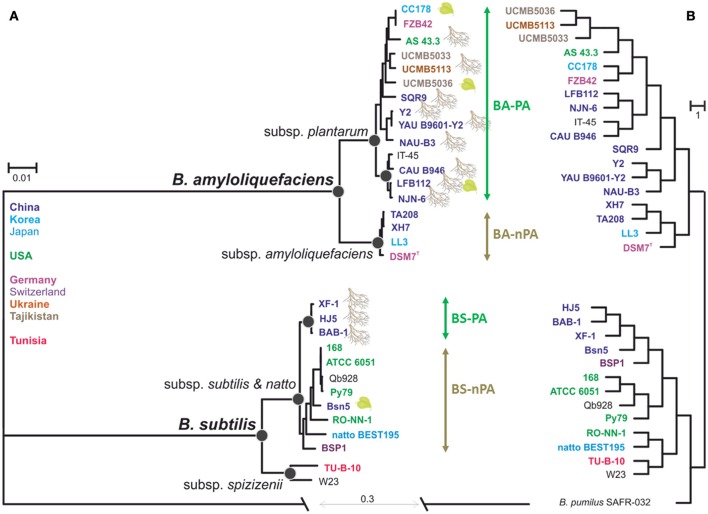
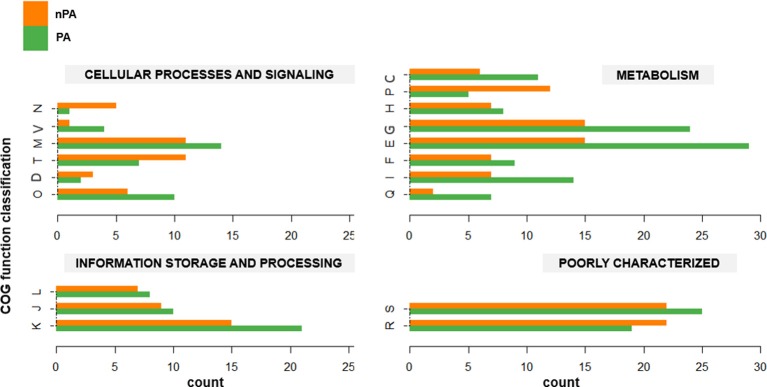
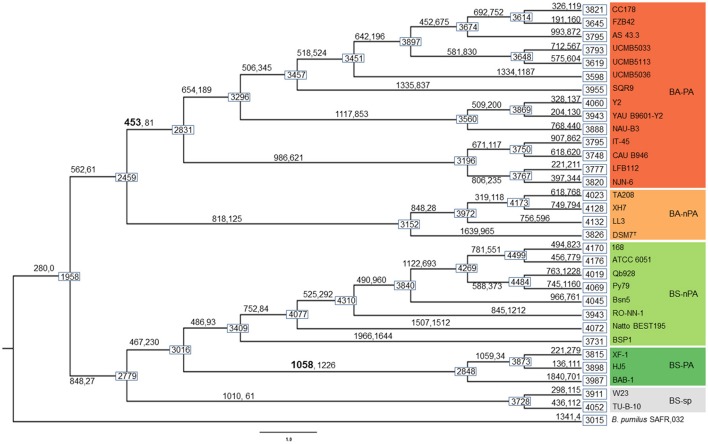
and its sister species comprise an evolutionary compact but physiologically versatile group of bacteria that includes strains isolated from diverse habitats. Many of these strains are used as plant growth-promoting rhizobacteria (PGPR) in agriculture and a plant-specialized subspecies of subsp. , has recently been recognized, here we used 31 whole genomes [including two newly sequenced PGPR strains: NJN-6 isolated from sp. (banana) and HJ5 from sp. (cotton)] to perform comparative analysis and investigate the genomic characteristics and evolution traits of both species in different niches. Phylogenomic analysis indicated that strains isolated from plant-associated (PA) habitats could be distinguished from those from non-plant-associated (nPA) niches in both species. The core genomes of PA strains are more abundant in genes relevant to intermediary metabolism and secondary metabolites biosynthesis as compared with those of nPA strains, and they also possess additional specific genes involved in utilization of plant-derived substrates and synthesis of antibiotics. A further gene gain/loss analysis indicated that only a few of these specific genes (18/192 for and 53/688 for ) were acquired by PA strains at the initial divergence event, but most were obtained successively by different subgroups of PA stains during the evolutional process. This study demonstrated the genomic differences between PA and nPA and from different niches and the involved evolutional traits, and has implications for screening of PGPR strains in agricultural production.
其姊妹物种构成了一组进化紧密但生理功能多样的细菌,其中包括从不同栖息地分离出的菌株。这些菌株中的许多在农业中被用作促进植物生长的根际细菌(PGPR),并且最近已经识别出一个植物特化的亚种。在这里,我们使用了31个全基因组[包括两个新测序的PGPR菌株:从芭蕉属植物(香蕉)中分离出的NJN - 6和从棉属植物(棉花)中分离出的HJ5]来进行比较分析,并研究这两个物种在不同生态位中的基因组特征和进化特性。系统基因组分析表明,在这两个物种中,从与植物相关(PA)栖息地分离出的菌株可以与那些来自非植物相关(nPA)生态位的菌株区分开来。与nPA菌株相比,PA菌株的核心基因组在与中间代谢和次生代谢物生物合成相关的基因方面更为丰富,并且它们还拥有参与利用植物衍生底物和抗生素合成的额外特定基因。进一步的基因获得/丢失分析表明,这些特定基因中只有少数(对于[物种名称1]为18/192,对于[物种名称2]为53/688)是PA菌株在初始分化事件时获得的,但大多数是在进化过程中由PA菌株的不同亚组相继获得的。这项研究证明了来自不同生态位的PA和nPA[物种名称1]和[物种名称2]之间的基因组差异以及所涉及的进化特性,并且对农业生产中PGPR菌株的筛选具有启示意义。