Zhang Xiaoli, Liu Yumei, Fang Zhiyuan, Li Zhansheng, Yang Limei, Zhuang Mu, Zhang Yangyong, Lv Honghao
Group of Cabbage and Broccoli Breeding, Institute of Vegetables and Flowers - Chinese Academy of Agricultural Sciences Beijing, China.
Front Plant Sci. 2016 Dec 23;7:1929. doi: 10.3389/fpls.2016.01929. eCollection 2016.
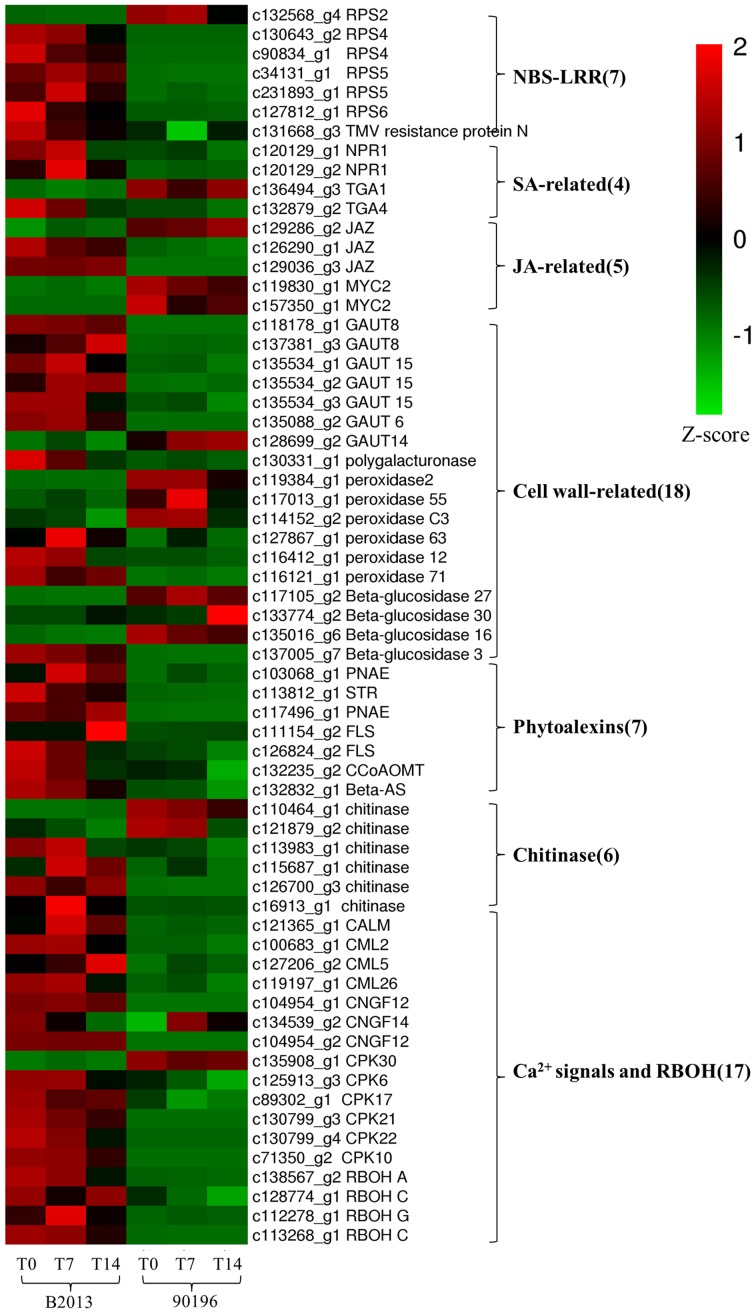
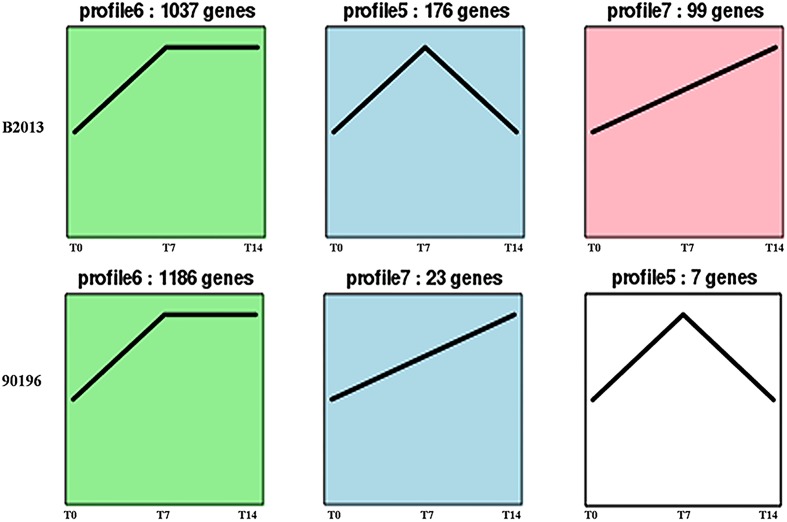
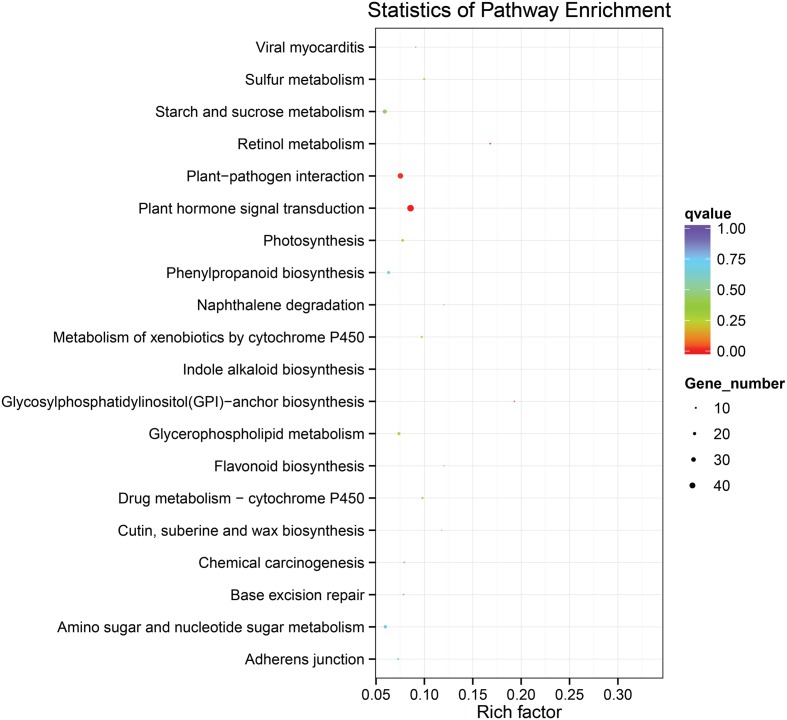
Clubroot, one of the most devastating diseases to the Brassicaceae family, is caused by the obligate biotrophic pathogen . However, studies of the molecular basis of disease resistance are still poor especially in quantitative resistance. In the present paper, two previously identified genotypes, a clubroot-resistant genotype (wild cabbage, B2013) and a clubroot-susceptible genotype (broccoli, 90196) were inoculated by for 0 (T0), 7 (T7), and 14 (T14) day after inoculation (DAI). Gene expression pattern analysis suggested that response changes in transcript level of two genotypes under infection were mainly activated at the primary stage (T7). Based on the results of DEGs functional enrichments from two infection stages, genes associated with cell wall biosynthesis, glucosinolate biosynthesis, and plant hormone signal transduction showed down-regulated at T14 compared to T7, indicating that defense responses to were induced earlier, and related pathways were repressed at T14. In addition, the genes related to NBS-LRR proteins, SA signal transduction, cell wall and phytoalexins biosynthesis, chitinase, Ca signals and RBOH proteins were mainly up-regulated in B2013 by comparing those of 90196, indicating the pathways of response defense to clubroot were activated in the resistant genotype. This is the first report about comparative transcriptome analysis for broccoli and its wild relative during the different stages of infection and the results should be useful for molecular assisted screening and breeding of clubroot-resistant genotypes.
根肿病是十字花科植物最具毁灭性的病害之一,由专性活体营养型病原菌引起。然而,尤其是在数量抗性方面,对其抗病分子基础的研究仍然不足。在本文中,对两种先前鉴定的基因型,即根肿病抗性基因型(野生甘蓝,B2013)和根肿病敏感基因型(西兰花,90196)在接种后0(T0)、7(T7)和14(T14)天进行接种。基因表达模式分析表明,两种基因型在病原菌感染下转录水平的反应变化主要在初期(T7)被激活。基于两个感染阶段差异表达基因(DEGs)的功能富集结果,与细胞壁生物合成、芥子油苷生物合成和植物激素信号转导相关的基因在T14时相比于T7下调,表明对病原菌的防御反应较早被诱导,且相关途径在T14时受到抑制。此外,通过比较90196,与NBS-LRR蛋白、水杨酸(SA)信号转导、细胞壁和植保素生物合成、几丁质酶、钙信号和呼吸爆发氧化酶(RBOH)蛋白相关的基因在B2013中主要上调,表明抗性基因型中对根肿病的防御反应途径被激活。这是关于西兰花及其野生近缘种在病原菌感染不同阶段的比较转录组分析的首次报道,其结果应有助于根肿病抗性基因型的分子辅助筛选和育种。