Fellows Christopher R, Matta Csaba, Zakany Roza, Khan Ilyas M, Mobasheri Ali
Faculty of Health and Medical Sciences, University of Surrey Guildford, UK.
Faculty of Health and Medical Sciences, University of SurreyGuildford, UK; Department of Anatomy, Histology and Embryology, Faculty of Medicine, University of DebrecenDebrecen, Hungary.
Front Genet. 2016 Dec 20;7:213. doi: 10.3389/fgene.2016.00213. eCollection 2016.
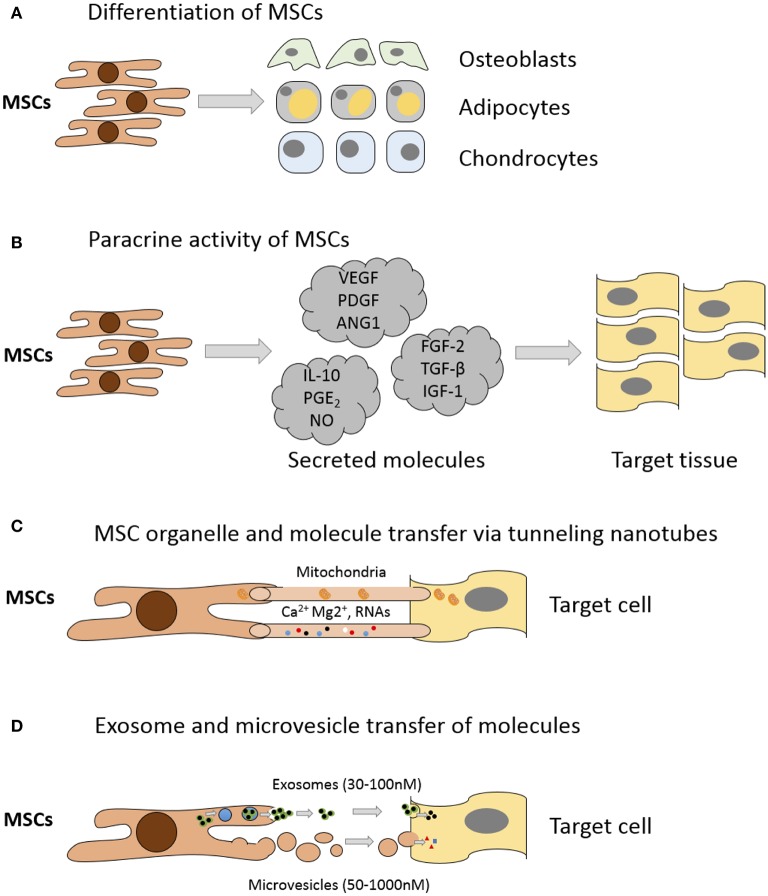
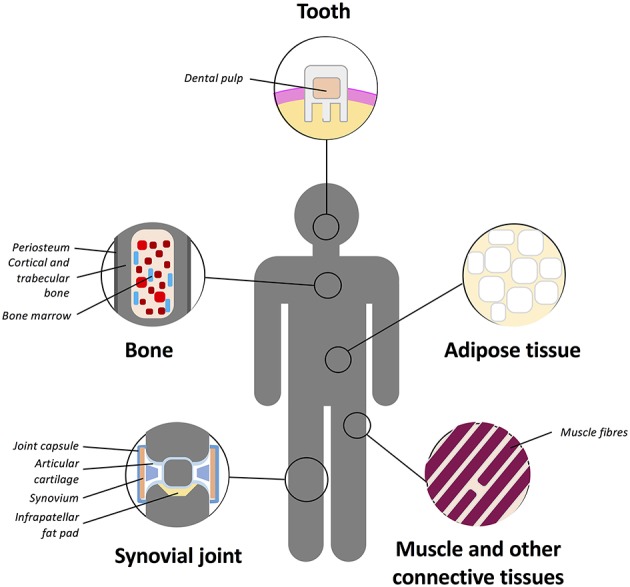
Current cell-based repair strategies have proven unsuccessful for treating cartilage defects and osteoarthritic lesions, consequently advances in innovative therapeutics are required and mesenchymal stem cell-based (MSC) therapies are an expanding area of investigation. MSCs are capable of differentiating into multiple cell lineages and exerting paracrine effects. Due to their easy isolation, expansion, and low immunogenicity, MSCs are an attractive option for regenerative medicine for joint repair. Recent studies have identified several MSC tissue reservoirs including in adipose tissue, bone marrow, cartilage, periosteum, and muscle. MSCs isolated from these discrete tissue niches exhibit distinct biological activities, and have enhanced regenerative potentials for different tissue types. Each MSC type has advantages and disadvantages for cartilage repair and their use in a clinical setting is a balance between expediency and effectiveness. In this review we explore the challenges associated with cartilage repair and regeneration using MSC-based cell therapies and provide an overview of phenotype, biological activities, and functional properties for each MSC population. This paper also specifically explores the therapeutic potential of each type of MSC, particularly focusing on which cells are capable of producing stratified hyaline-like articular cartilage regeneration. Finally we highlight areas for future investigation. Given that patients present with a variety of problems it is unlikely that cartilage regeneration will be a simple "one size fits all," but more likely an array of solutions that need to be applied systematically to achieve regeneration of a biomechanically competent repair tissue.
目前基于细胞的修复策略已被证明在治疗软骨缺损和骨关节炎病变方面并不成功,因此需要创新疗法取得进展,而基于间充质干细胞(MSC)的疗法是一个不断扩大的研究领域。间充质干细胞能够分化为多种细胞谱系并发挥旁分泌作用。由于其易于分离、扩增且免疫原性低,间充质干细胞是用于关节修复的再生医学的一个有吸引力的选择。最近的研究已经确定了几个间充质干细胞组织库,包括脂肪组织、骨髓、软骨、骨膜和肌肉。从这些不同的组织微环境中分离出的间充质干细胞表现出不同的生物学活性,并且对不同组织类型具有增强的再生潜力。每种间充质干细胞类型在软骨修复方面都有优缺点,其在临床环境中的应用是便利性和有效性之间的平衡。在这篇综述中,我们探讨了使用基于间充质干细胞的细胞疗法进行软骨修复和再生所面临的挑战,并概述了每个间充质干细胞群体的表型、生物学活性和功能特性。本文还特别探讨了每种间充质干细胞的治疗潜力,尤其关注哪些细胞能够产生分层的透明样关节软骨再生。最后,我们强调了未来研究的领域。鉴于患者存在各种各样的问题,软骨再生不太可能是一种简单的“一刀切”方法,而更可能是一系列需要系统应用的解决方案,以实现具有生物力学功能的修复组织的再生。