Institute of Immunology and the Key Laboratory of Innate Immunity and Chronic Disease (Chinese Academy of Science), School of Life Science and Medical Center, University of Science and Technology of China, Hefei 230027, China.
Hefei National Laboratory for Physical Sciences at Microscale, Hefei, Anhui 230027, China.
Nat Commun. 2017 Jan 9;7:13839. doi: 10.1038/ncomms13839.
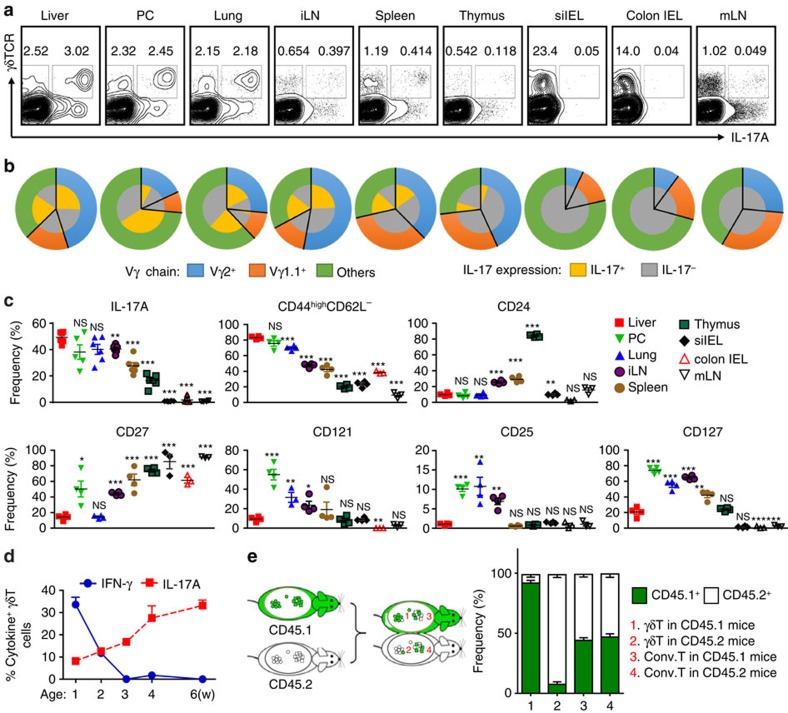
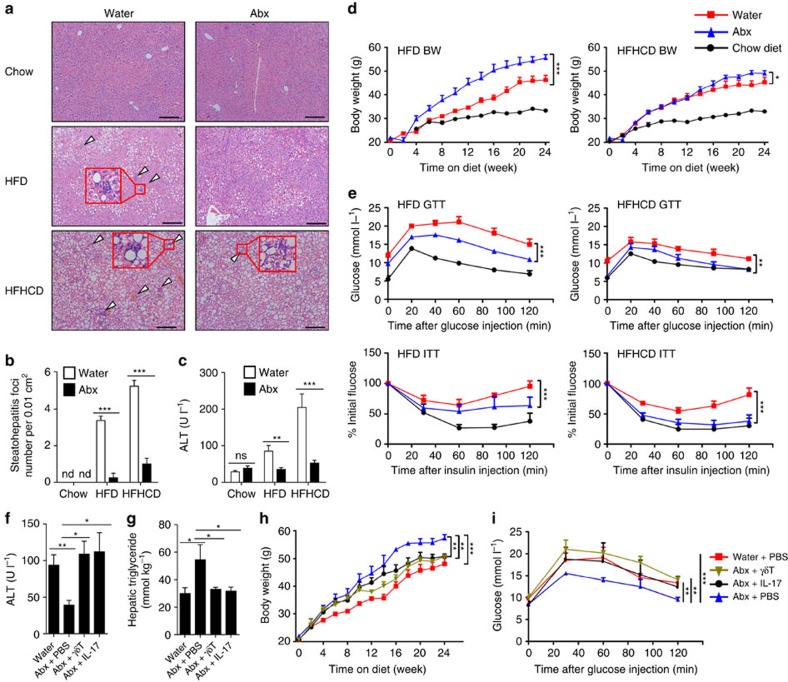
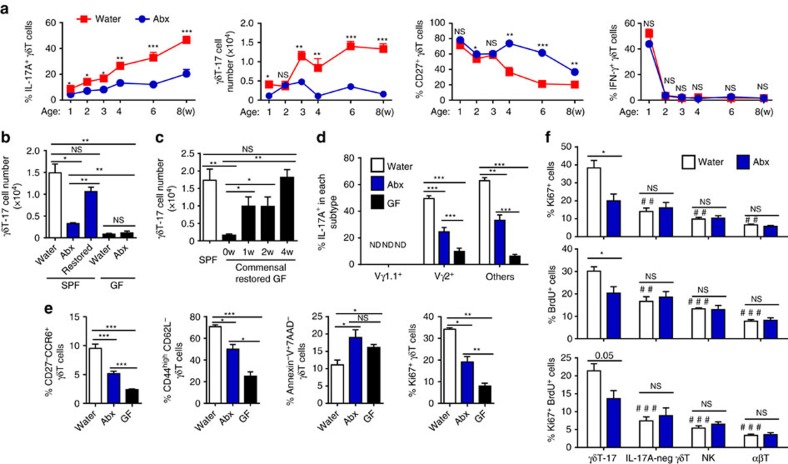
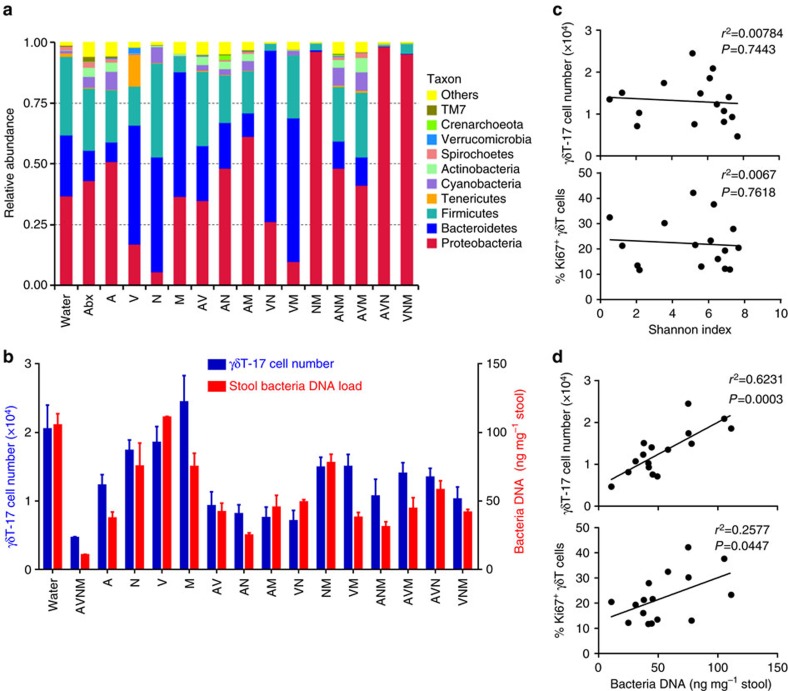
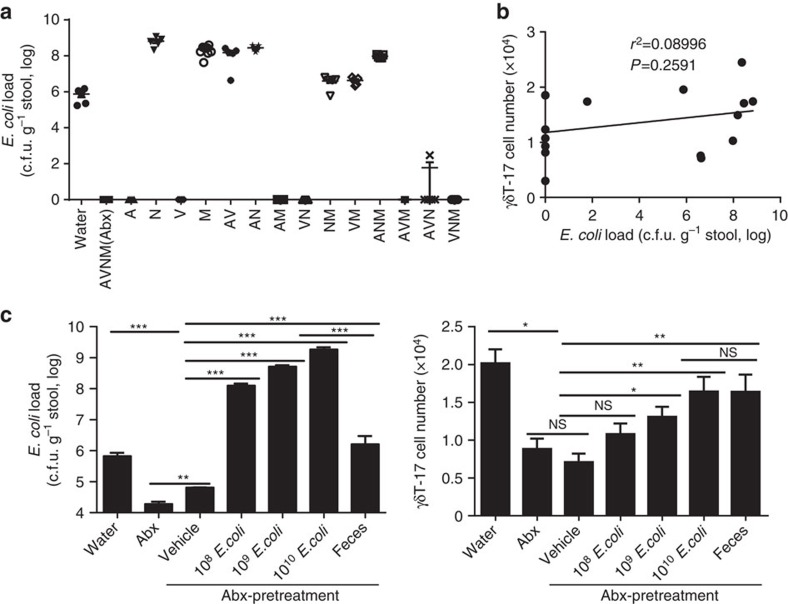
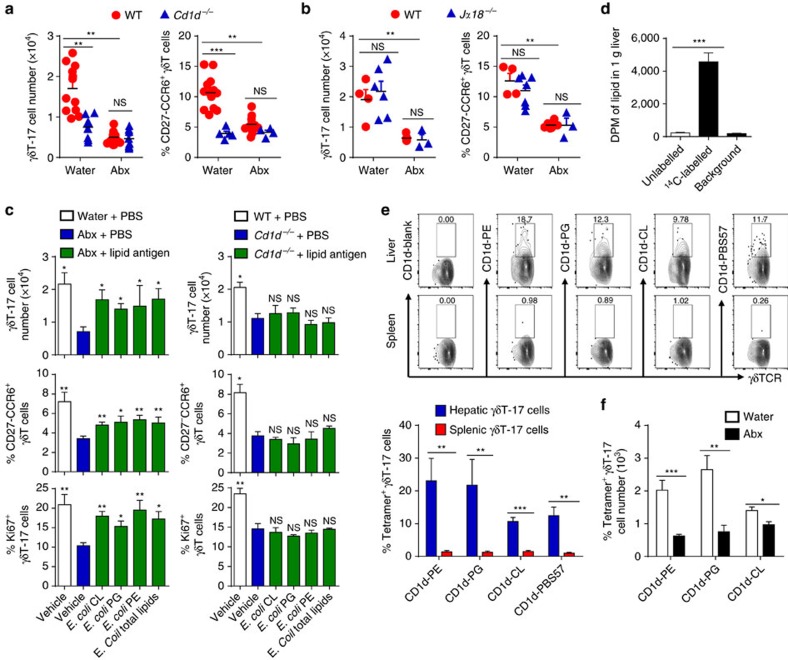
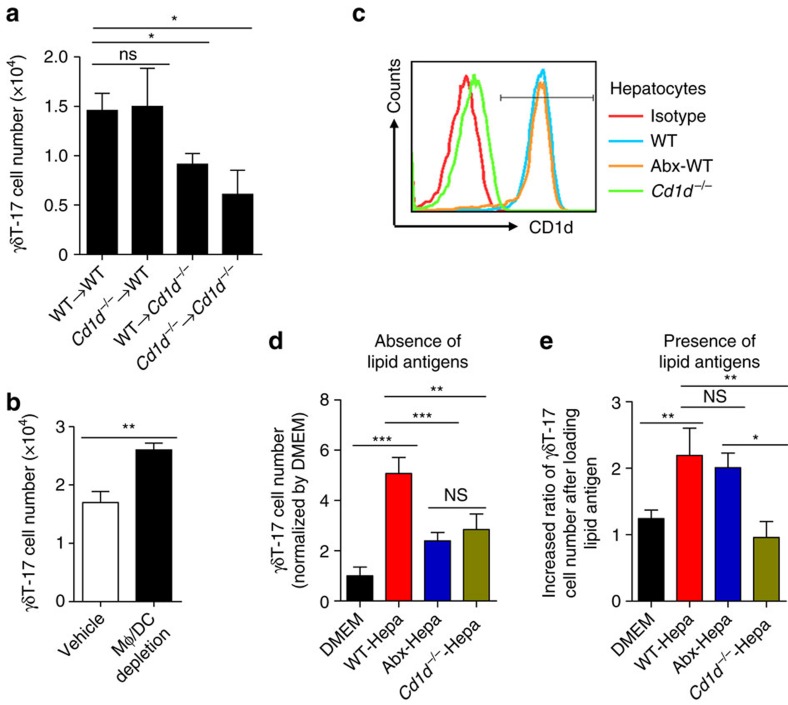
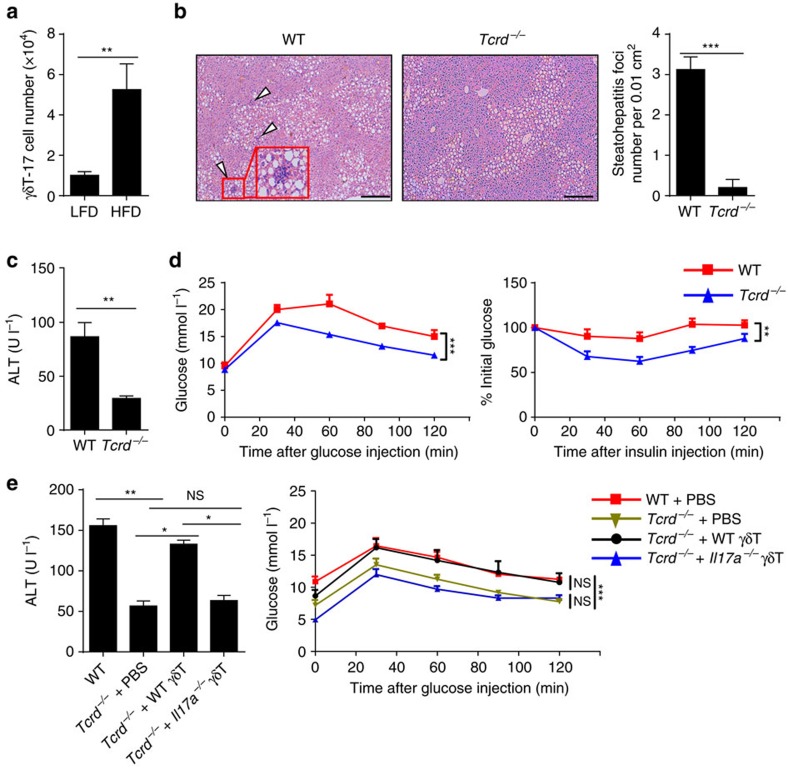
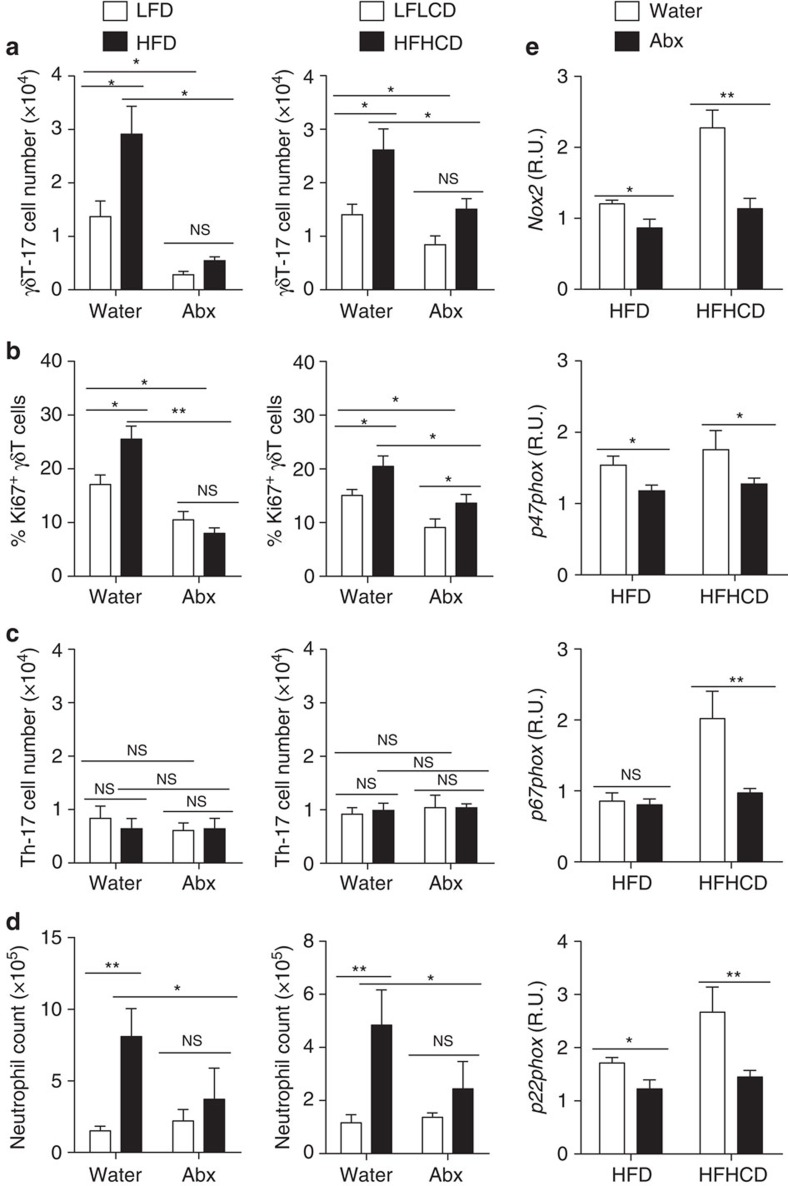
The microbiota control regional immunity using mechanisms such as inducing IL-17A-producing γδ T (γδT-17) cells in various tissues. However, little is known regarding hepatic γδT cells that are constantly stimulated by gut commensal microbes. Here we show hepatic γδT cells are liver-resident cells and predominant producers of IL-17A. The microbiota sustain hepatic γδT-17 cell homeostasis, including activation, survival and proliferation. The global commensal quantity affects the number of liver-resident γδT-17 cells; indeed, E. coli alone can generate γδT-17 cells in a dose-dependent manner. Liver-resident γδT-17 cell homeostasis depends on hepatocyte-expressed CD1d, that present lipid antigen, but not Toll-like receptors or IL-1/IL-23 receptor signalling. Supplementing mice in vivo or loading hepatocytes in vitro with exogenous commensal lipid antigens augments the hepatic γδT-17 cell number. Moreover, the microbiota accelerate nonalcoholic fatty liver disease through hepatic γδT-17 cells. Thus, our work describes a unique liver-resident γδT-17 cell subset maintained by gut commensal microbes through CD1d/lipid antigens.
微生物群通过在各种组织中诱导产生白细胞介素-17A(IL-17A)的γδ T(γδT-17)细胞等机制来控制区域免疫。然而,对于经常受到肠道共生微生物刺激的肝γδT 细胞,人们知之甚少。在这里,我们展示了肝γδT 细胞是肝脏驻留细胞,并且是 IL-17A 的主要产生细胞。微生物群维持肝γδT-17 细胞的稳态,包括激活、存活和增殖。全局共生数量影响肝脏驻留 γδT-17 细胞的数量;事实上,大肠杆菌单独就可以以剂量依赖的方式产生 γδT-17 细胞。肝脏驻留 γδT-17 细胞的稳态依赖于肝细胞表达的 CD1d,该分子可以呈递脂质抗原,而不依赖于 Toll 样受体或 IL-1/IL-23 受体信号。在体内补充小鼠或在体外负载肝细胞时,外源性共生脂质抗原可增加肝γδT-17 细胞数量。此外,微生物群通过肝γδT-17 细胞加速非酒精性脂肪性肝病。因此,我们的工作描述了一种通过 CD1d/脂质抗原由肠道共生微生物维持的独特的肝脏驻留 γδT-17 细胞亚群。