Nayak Tapas K, Mamidi Prabhudutta, Kumar Abhishek, Singh Laishram Pradeep K, Sahoo Subhransu S, Chattopadhyay Soma, Chattopadhyay Subhasis
School of Biological Sciences, National Institute of Science Education & Research, Bhubaneswar, HBNI, Jatni, Khurda, Odisha 752050, India.
Infectious Disease Biology, Institute of Life Sciences, (Autonomous Institute of Department of Biotechnology, Government of India), Nalco Square, Bhubaneswar, Odisha 751023, India.
Viruses. 2017 Jan 6;9(1):3. doi: 10.3390/v9010003.
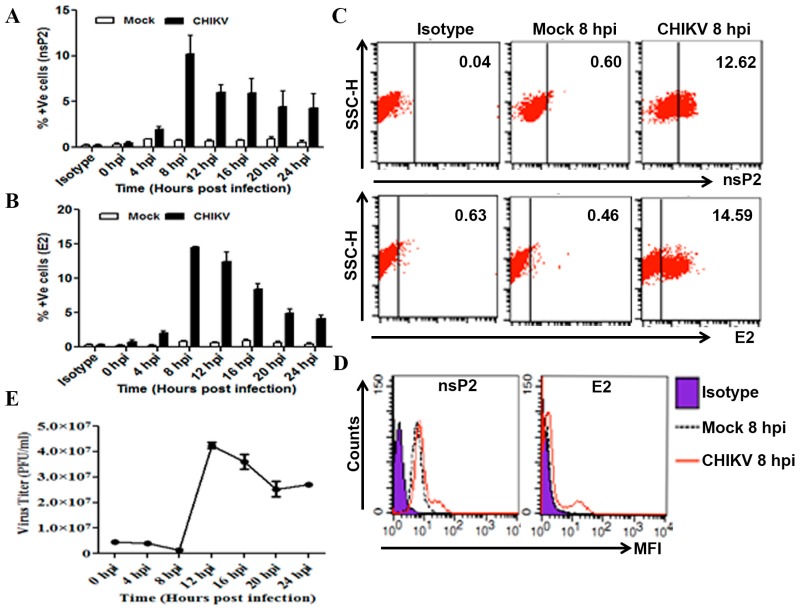
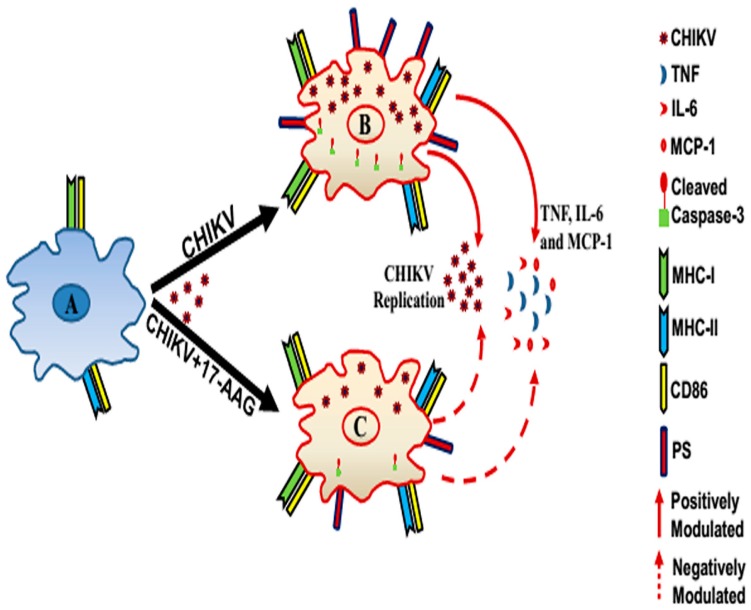
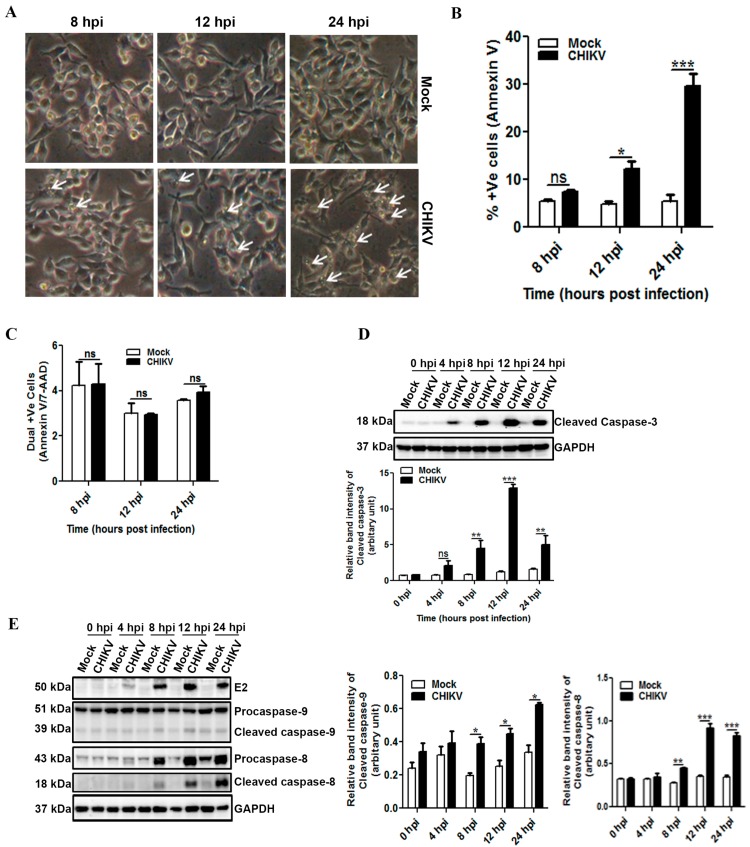
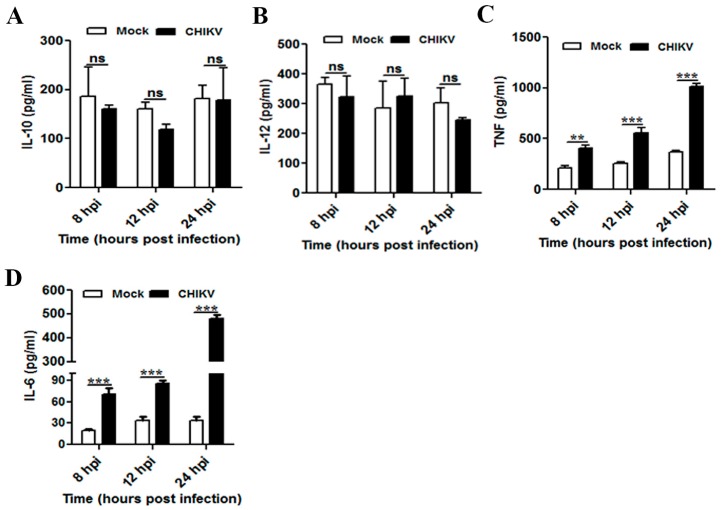
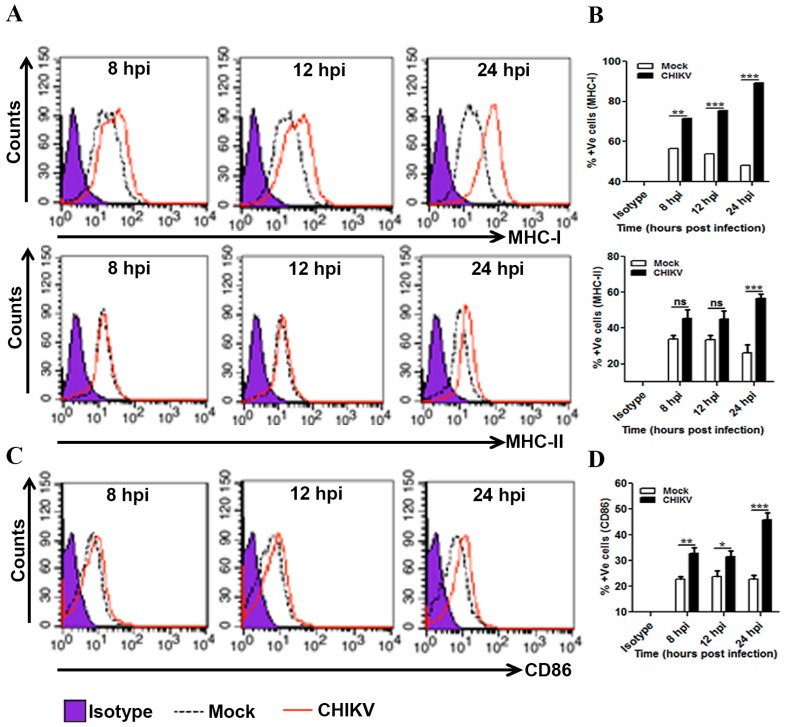
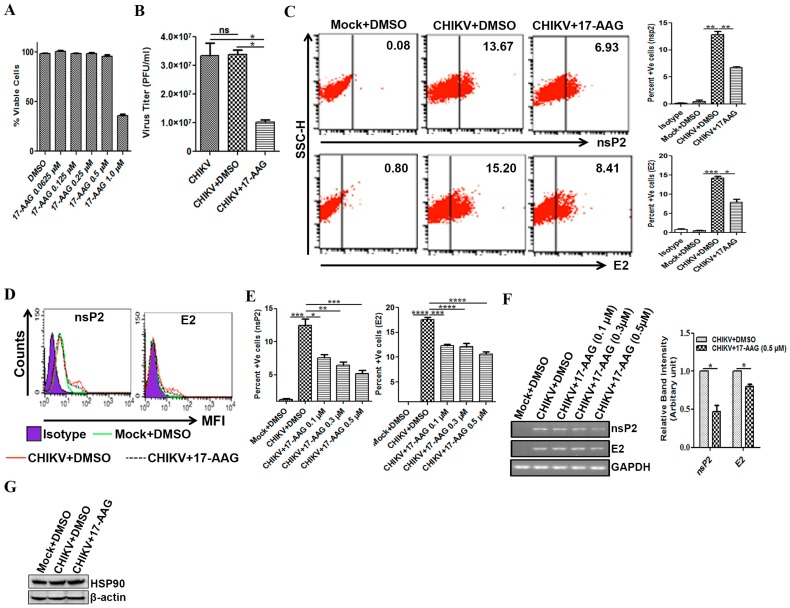
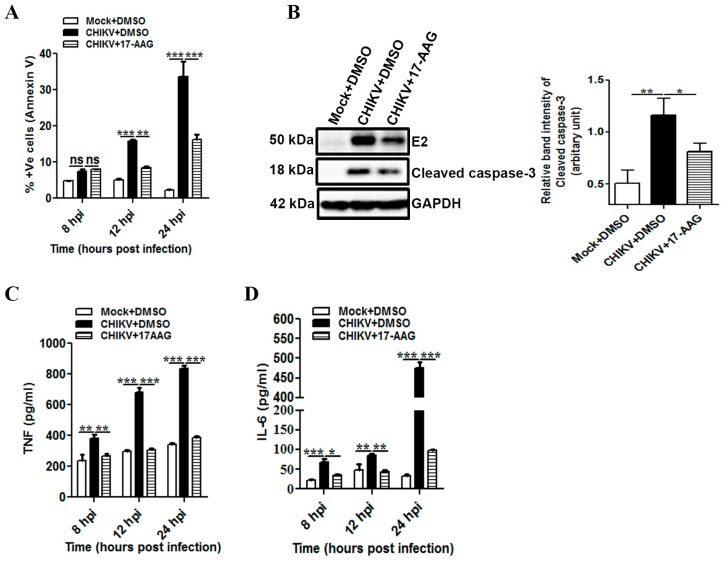
Chikungunya virus (CHIKV) infection has re-emerged as a major public health concern due to its recent worldwide epidemics and lack of control measures. Although CHIKV is known to infect macrophages, regulation of CHIKV replication, apoptosis and immune responses towards macrophages are not well understood. Accordingly, the Raw264.7 cells, a mouse macrophage cell line, were infected with CHIKV and viral replication as well as new viral progeny release was assessed by flow cytometry and plaque assay, respectively. Moreover, host immune modulation and apoptosis were studied through flow cytometry, Western blot and ELISA. Our current findings suggest that expression of CHIKV proteins were maximum at 8 hpi and the release of new viral progenies were remarkably increased around 12 hpi. The induction of Annexin V binding, cleaved caspase-3, cleaved caspase-9 and cleaved caspase-8 in CHIKV infected macrophages suggests activation of apoptosis through both intrinsic and extrinsic pathways. The pro-inflammatory mediators (TNF and IL-6) MHC-I/II and B7.2 (CD86) were also up-regulated during infection over time. Further, 17-AAG, a potential HSP90 inhibitor, was found to regulate CHIKV infection, apoptosis and pro-inflammatory cytokine/chemokine productions of host macrophages significantly. Hence, the present findings might bring new insight into the therapeutic implication in CHIKV disease biology.
由于近期在全球范围内的流行以及缺乏控制措施,基孔肯雅病毒(CHIKV)感染再次成为主要的公共卫生问题。尽管已知CHIKV会感染巨噬细胞,但对CHIKV复制、凋亡以及巨噬细胞免疫反应的调控尚不清楚。因此,用CHIKV感染小鼠巨噬细胞系Raw264.7细胞,并分别通过流式细胞术和蚀斑试验评估病毒复制以及新病毒子代的释放。此外,通过流式细胞术、蛋白质免疫印迹法和酶联免疫吸附测定法研究宿主免疫调节和凋亡。我们目前的研究结果表明,CHIKV蛋白的表达在感染后8小时达到最高,新病毒子代的释放在感染后12小时左右显著增加。CHIKV感染的巨噬细胞中膜联蛋白V结合、裂解的半胱天冬酶-3、裂解的半胱天冬酶-9和裂解的半胱天冬酶-8的诱导表明通过内源性和外源性途径激活了凋亡。随着时间的推移,促炎介质(TNF和IL-6)、MHC-I/II和B7.2(CD86)在感染期间也上调。此外,发现17-AAG(一种潜在的HSP90抑制剂)可显著调节CHIKV感染、宿主巨噬细胞的凋亡以及促炎细胞因子/趋化因子的产生。因此,目前的研究结果可能为基孔肯雅病毒疾病生物学的治疗意义带来新的见解。