Adams James, Howsmon Daniel P, Kruger Uwe, Geis Elizabeth, Gehn Eva, Fimbres Valeria, Pollard Elena, Mitchell Jessica, Ingram Julie, Hellmers Robert, Quig David, Hahn Juergen
Arizona State University, Tempe, AZ, United States of America.
Rensselaer Polytechnic Institute, Troy, NY, United States of America.
PLoS One. 2017 Jan 9;12(1):e0169526. doi: 10.1371/journal.pone.0169526. eCollection 2017.
A number of previous studies examined a possible association of toxic metals and autism, and over half of those studies suggest that toxic metal levels are different in individuals with Autism Spectrum Disorders (ASD). Additionally, several studies found that those levels correlate with the severity of ASD.
In order to further investigate these points, this paper performs the most detailed statistical analysis to date of a data set in this field. First morning urine samples were collected from 67 children and adults with ASD and 50 neurotypical controls of similar age and gender. The samples were analyzed to determine the levels of 10 urinary toxic metals (UTM). Autism-related symptoms were assessed with eleven behavioral measures. Statistical analysis was used to distinguish participants on the ASD spectrum and neurotypical participants based upon the UTM data alone. The analysis also included examining the association of autism severity with toxic metal excretion data using linear and nonlinear analysis. "Leave-one-out" cross-validation was used to ensure statistical independence of results.
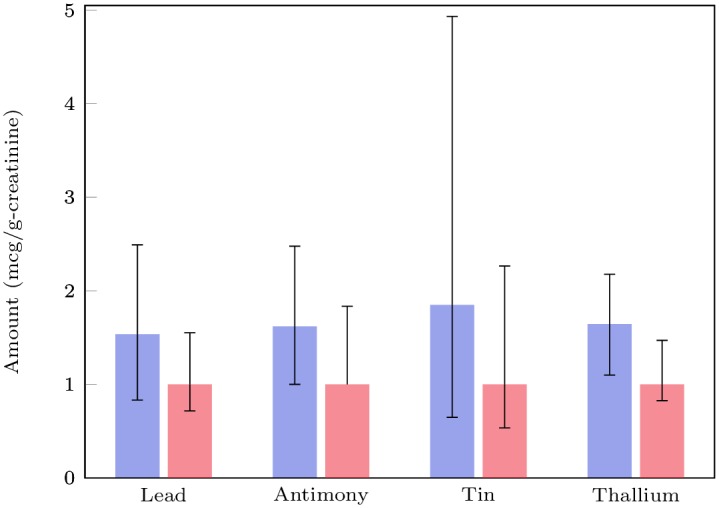
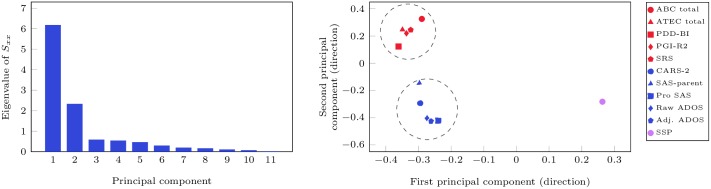
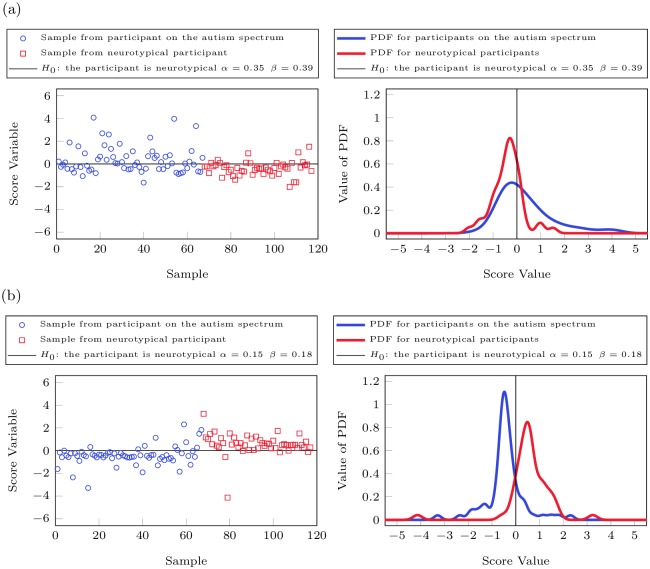
Average excretion levels of several toxic metals (lead, tin, thallium, antimony) were significantly higher in the ASD group. However, ASD classification using univariate statistics proved difficult due to large variability, but nonlinear multivariate statistical analysis significantly improved ASD classification with Type I/II errors of 15% and 18%, respectively. These results clearly indicate that the urinary toxic metal excretion profiles of participants in the ASD group were significantly different from those of the neurotypical participants. Similarly, nonlinear methods determined a significantly stronger association between the behavioral measures and toxic metal excretion. The association was strongest for the Aberrant Behavior Checklist (including subscales on Irritability, Stereotypy, Hyperactivity, and Inappropriate Speech), but significant associations were found for UTM with all eleven autism-related assessments with cross-validation R2 values ranging from 0.12-0.48.
此前有多项研究探讨了有毒金属与自闭症之间可能存在的关联,其中超过半数的研究表明,自闭症谱系障碍(ASD)患者体内的有毒金属含量有所不同。此外,多项研究发现这些含量与ASD的严重程度相关。
为了进一步探究这些问题,本文对该领域的一个数据集进行了迄今为止最详细的统计分析。收集了67名患有ASD的儿童和成人以及50名年龄和性别相仿的神经典型对照者的晨尿样本。对样本进行分析,以确定10种尿中有毒金属(UTM)的含量。使用11种行为指标对自闭症相关症状进行评估。仅根据UTM数据,采用统计分析来区分ASD谱系中的参与者和神经典型参与者。分析还包括使用线性和非线性分析来研究自闭症严重程度与有毒金属排泄数据之间的关联。采用“留一法”交叉验证以确保结果的统计独立性。
ASD组中几种有毒金属(铅、锡、铊、锑)的平均排泄水平显著更高。然而,由于变异性较大,使用单变量统计进行ASD分类存在困难,但非线性多变量统计分析显著改善了ASD分类,I型/II型错误分别为15%和18%。这些结果清楚地表明,ASD组参与者的尿中有毒金属排泄谱与神经典型参与者的排泄谱显著不同。同样,非线性方法确定行为指标与有毒金属排泄之间存在显著更强的关联。对于异常行为检查表(包括关于易怒、刻板行为、多动和不当言语的子量表),这种关联最为强烈,但在所有11项与自闭症相关的评估中,均发现UTM与之存在显著关联,交叉验证R2值范围为0.12 - 0.48。