Blanchette Cassandra R, Thackeray Andrea, Perrat Paola N, Hekimi Siegfried, Bénard Claire Y
Department of Neurobiology, UMass Medical School, Worcester, Massachusetts, United States of America.
Department of Biology, McGill University, Montreal, Canada.
PLoS Genet. 2017 Jan 9;13(1):e1006525. doi: 10.1371/journal.pgen.1006525. eCollection 2017 Jan.
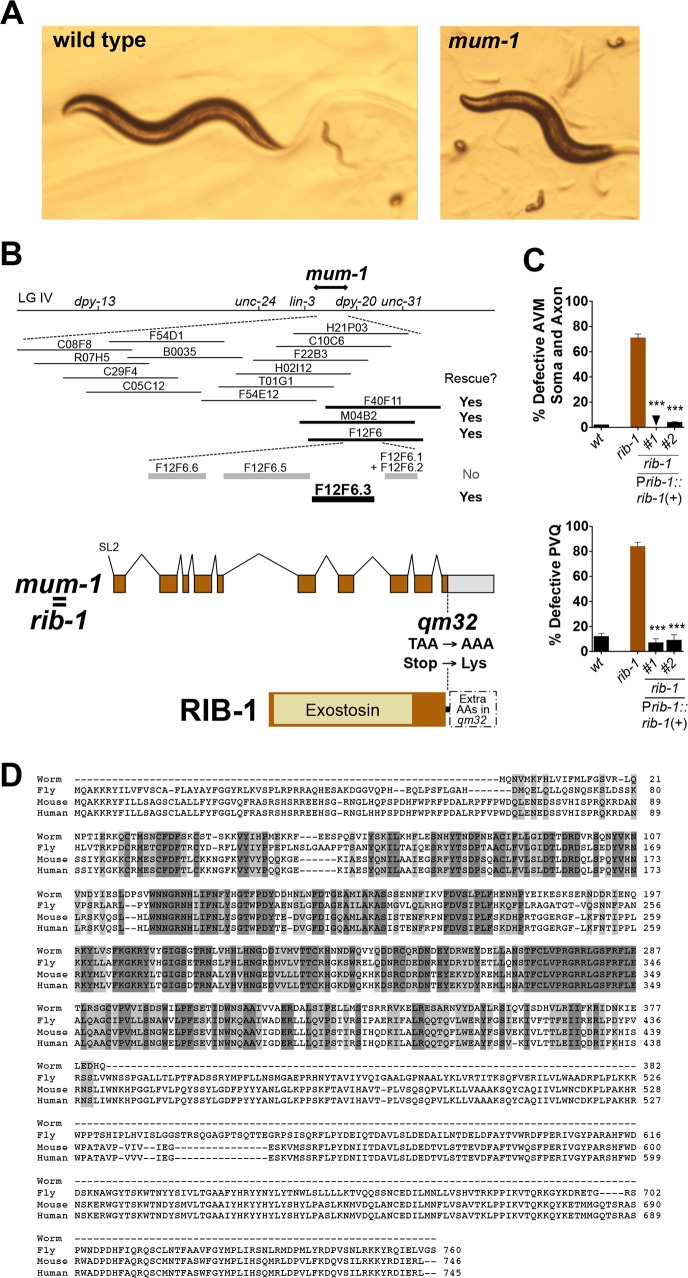
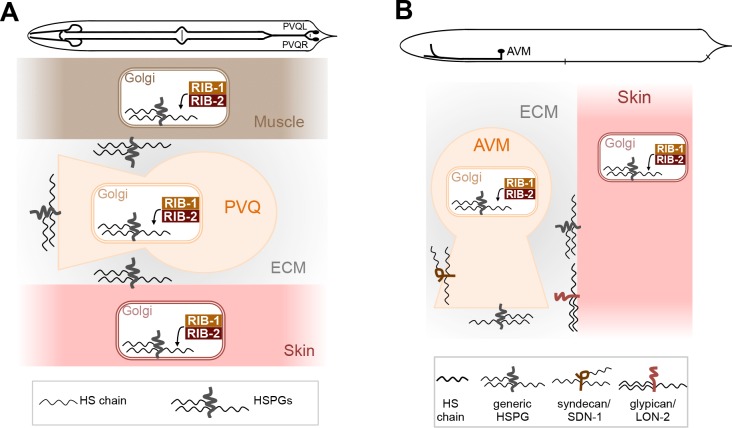
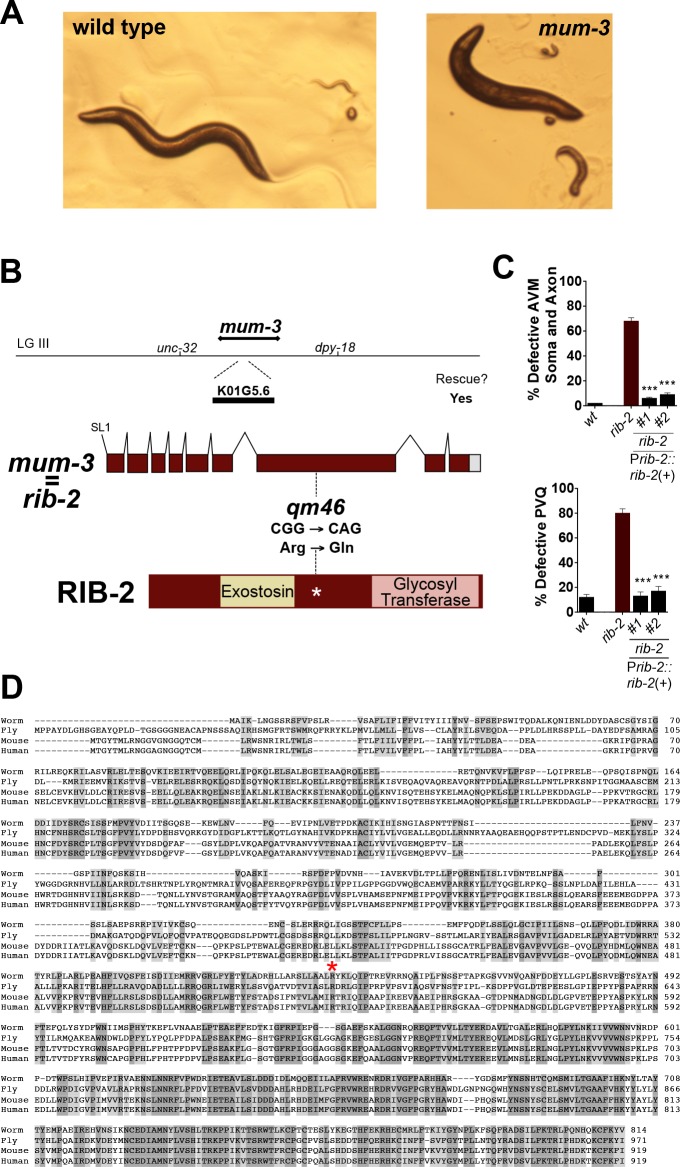
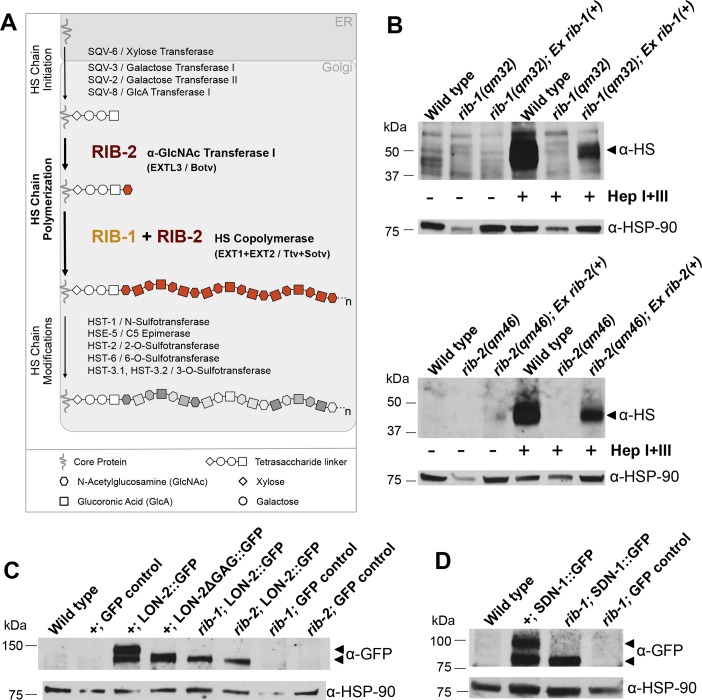
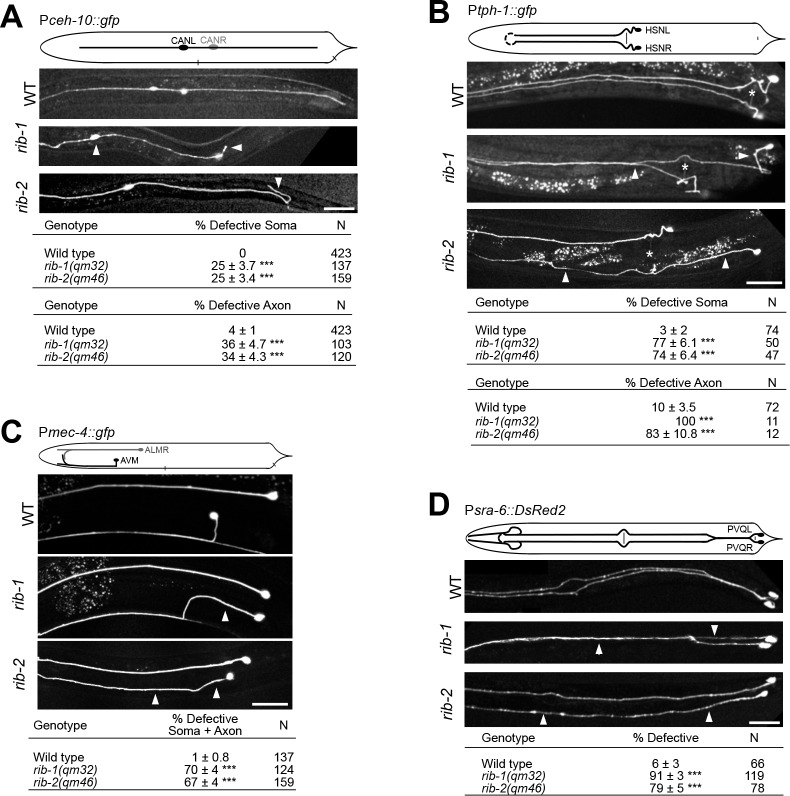
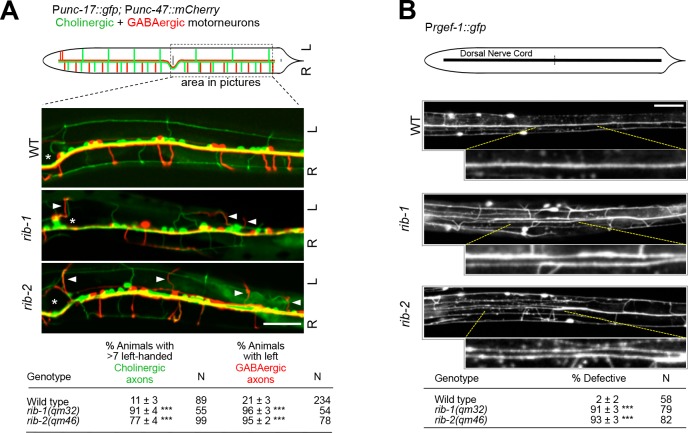
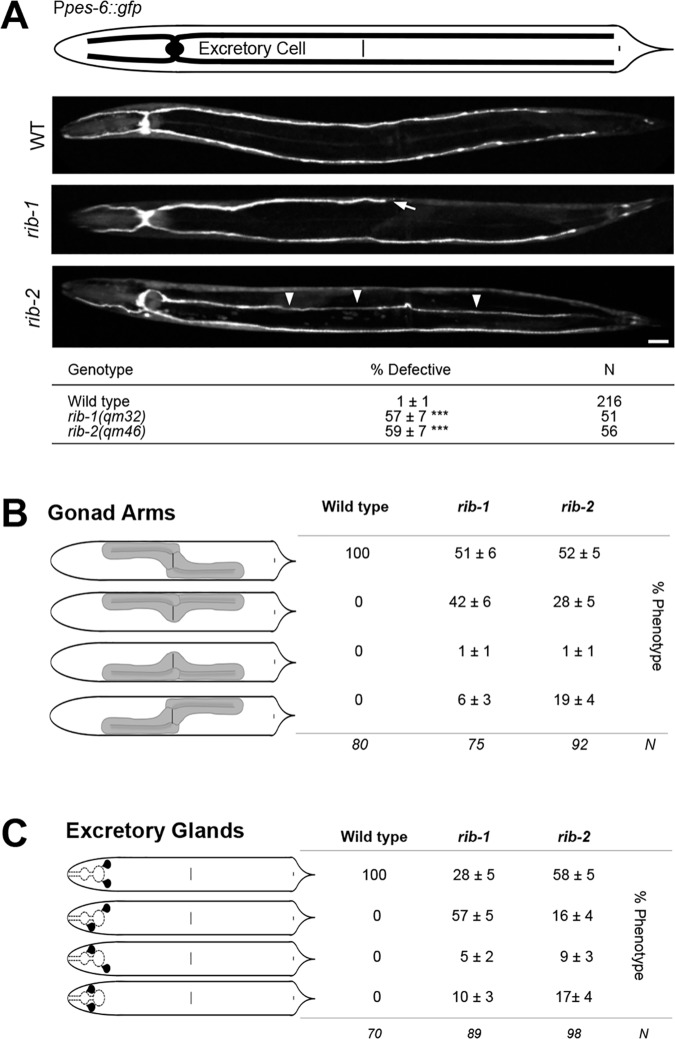
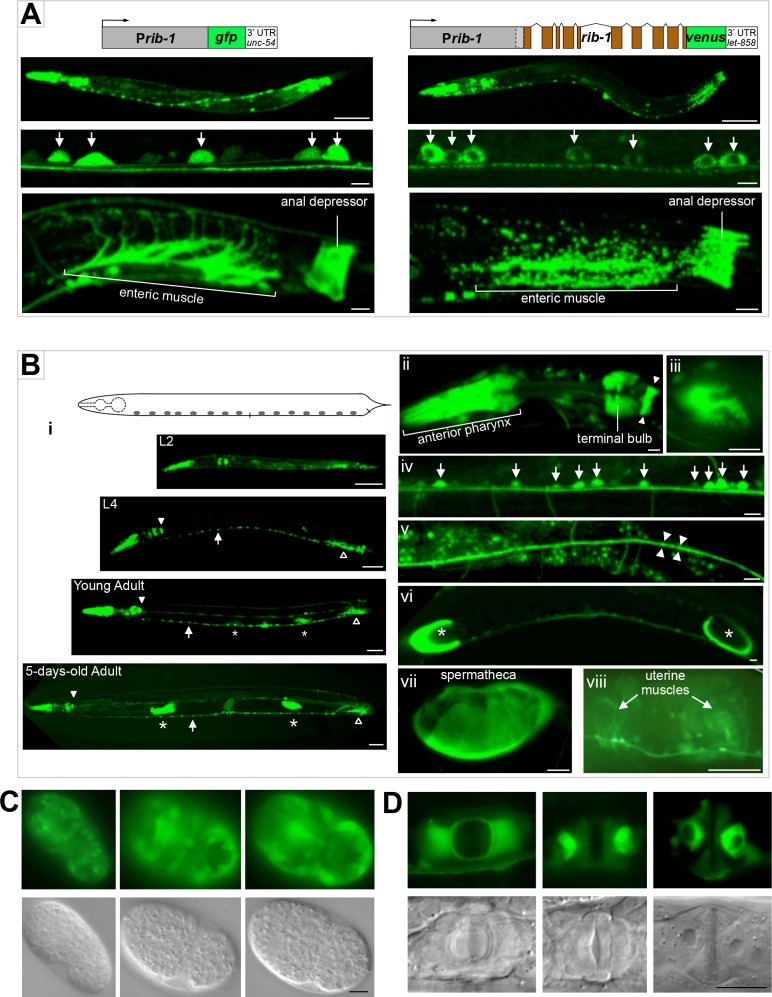
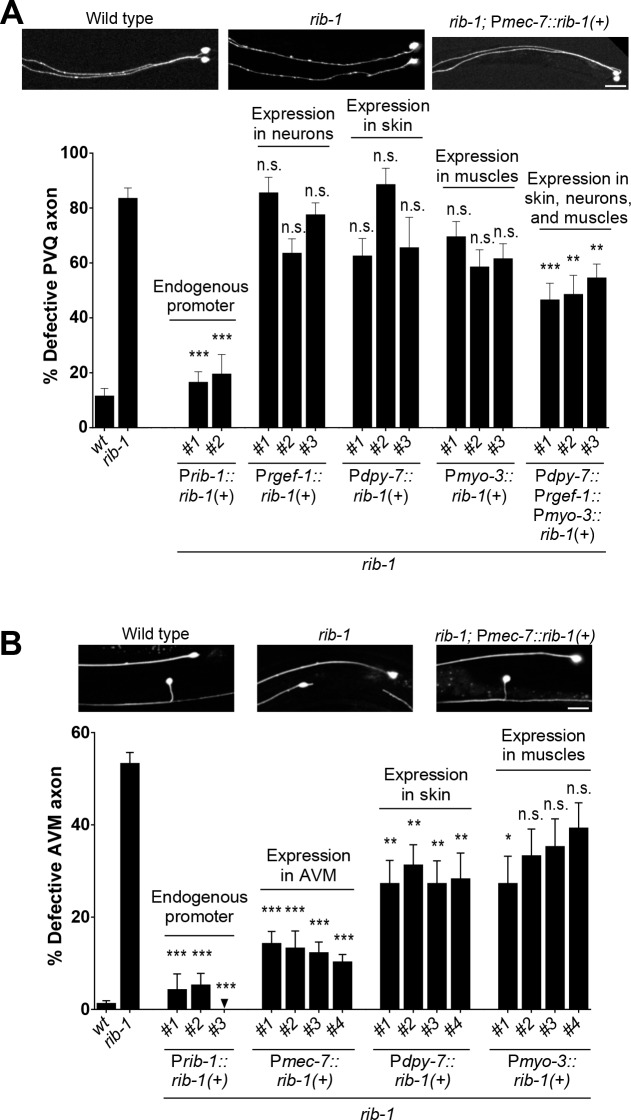
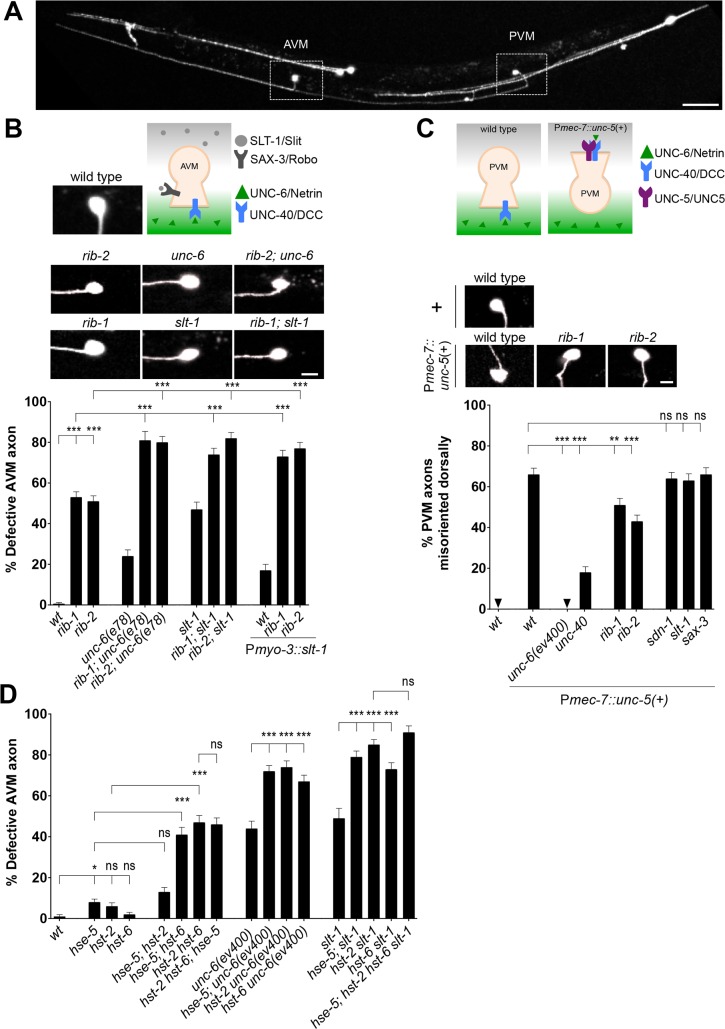
The regulation of cell migration is essential to animal development and physiology. Heparan sulfate proteoglycans shape the interactions of morphogens and guidance cues with their respective receptors to elicit appropriate cellular responses. Heparan sulfate proteoglycans consist of a protein core with attached heparan sulfate glycosaminoglycan chains, which are synthesized by glycosyltransferases of the exostosin (EXT) family. Abnormal HS chain synthesis results in pleiotropic consequences, including abnormal development and tumor formation. In humans, mutations in either of the exostosin genes EXT1 and EXT2 lead to osteosarcomas or multiple exostoses. Complete loss of any of the exostosin glycosyltransferases in mouse, fish, flies and worms leads to drastic morphogenetic defects and embryonic lethality. Here we identify and study previously unavailable viable hypomorphic mutations in the two C. elegans exostosin glycosyltransferases genes, rib-1 and rib-2. These partial loss-of-function mutations lead to a severe reduction of HS levels and result in profound but specific developmental defects, including abnormal cell and axonal migrations. We find that the expression pattern of the HS copolymerase is dynamic during embryonic and larval morphogenesis, and is sustained throughout life in specific cell types, consistent with HSPGs playing both developmental and post-developmental roles. Cell-type specific expression of the HS copolymerase shows that HS elongation is required in both the migrating neuron and neighboring cells to coordinate migration guidance. Our findings provide insights into general principles underlying HSPG function in development.
细胞迁移的调控对动物发育和生理过程至关重要。硫酸乙酰肝素蛋白聚糖塑造形态发生素和导向信号与其各自受体的相互作用,以引发适当的细胞反应。硫酸乙酰肝素蛋白聚糖由一个带有连接的硫酸乙酰肝素糖胺聚糖链的蛋白质核心组成,这些链由外切异麦芽糖基转移酶(EXT)家族的糖基转移酶合成。异常的HS链合成会导致多效性后果,包括发育异常和肿瘤形成。在人类中,外切异麦芽糖基转移酶基因EXT1和EXT2中的任何一个发生突变都会导致骨肉瘤或多发性外生骨疣。在小鼠、鱼类、果蝇和蠕虫中,任何一种外切异麦芽糖基转移酶糖基转移酶的完全缺失都会导致严重的形态发生缺陷和胚胎致死。在这里,我们鉴定并研究了秀丽隐杆线虫的两种外切异麦芽糖基转移酶基因rib-1和rib-2中以前无法获得的可行的低表达突变。这些部分功能丧失突变导致HS水平严重降低,并导致深刻但特定的发育缺陷,包括异常的细胞和轴突迁移。我们发现HS共聚合酶的表达模式在胚胎和幼虫形态发生过程中是动态的,并在特定细胞类型中终生维持,这与HSPG在发育和发育后都发挥作用一致。HS共聚合酶的细胞类型特异性表达表明,迁移神经元和邻近细胞都需要HS延伸来协调迁移导向。我们的发现为HSPG在发育中功能的一般原则提供了见解。