Romero Morales Carlos, Calvo Lobo César, Rodríguez Sanz David, Sanz Corbalán Irene, Ruiz Ruiz Beatriz, López López Daniel
Physical Therapy & Health Science Research Group, Physiotherapy Department, Faculty of Health, Exercise and Sport, Universidad Europea de Madrid, Villaviciosa de Odón, Madrid, España.
Departamento de Fisioterapia, Centro Superior de Estudios Universitarios La Salle, Universidad Autónoma de Madrid, Spain.
PeerJ. 2017 Jan 3;5:e2820. doi: 10.7717/peerj.2820. eCollection 2017.
New reliable devices for range of motion (ROM) measures in older adults are necessary to improve knowledge about the functional capability in this population. Dorsiflexion ROM limitation is associated with ankle injuries, foot pain, lower limb disorders, loss of balance, gait control disorders and fall risk in older adults. The aim of the present study was to assess the validity and reliability of the Leg Motion device for measuring ankle dorsiflexion ROM in older adults.
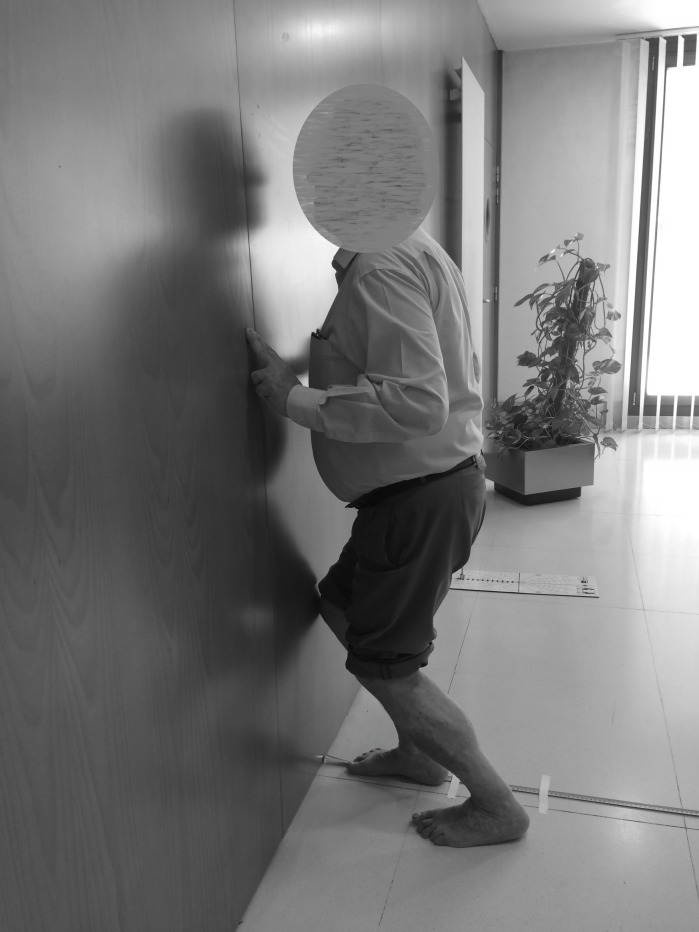
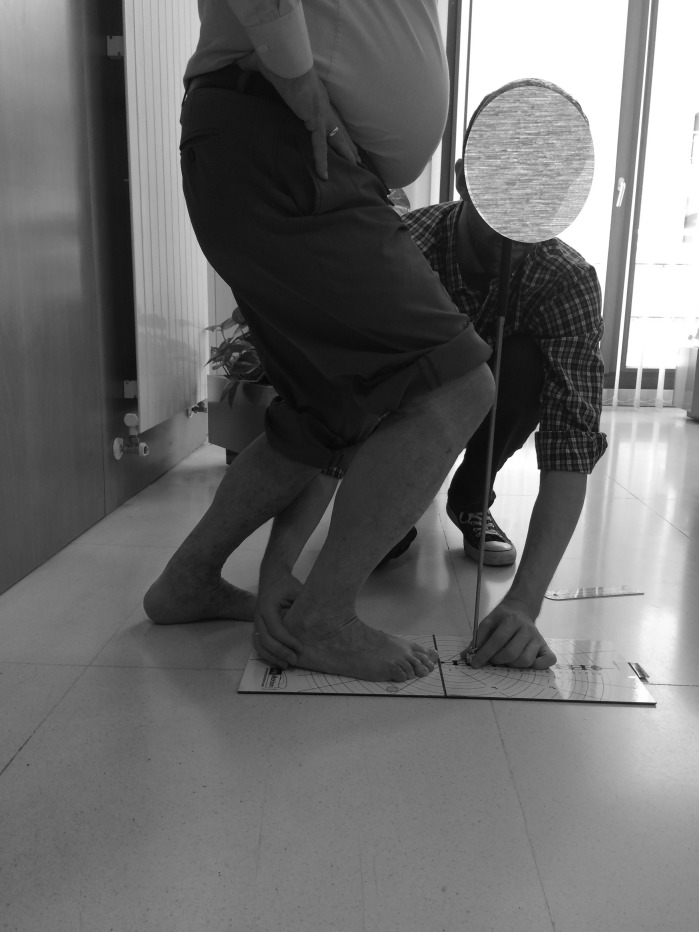
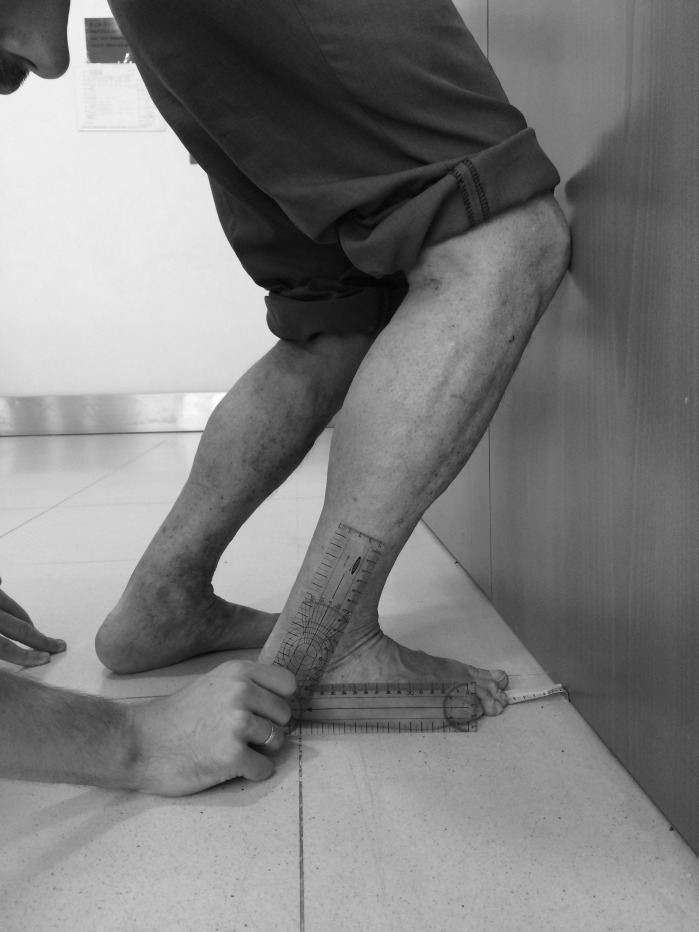
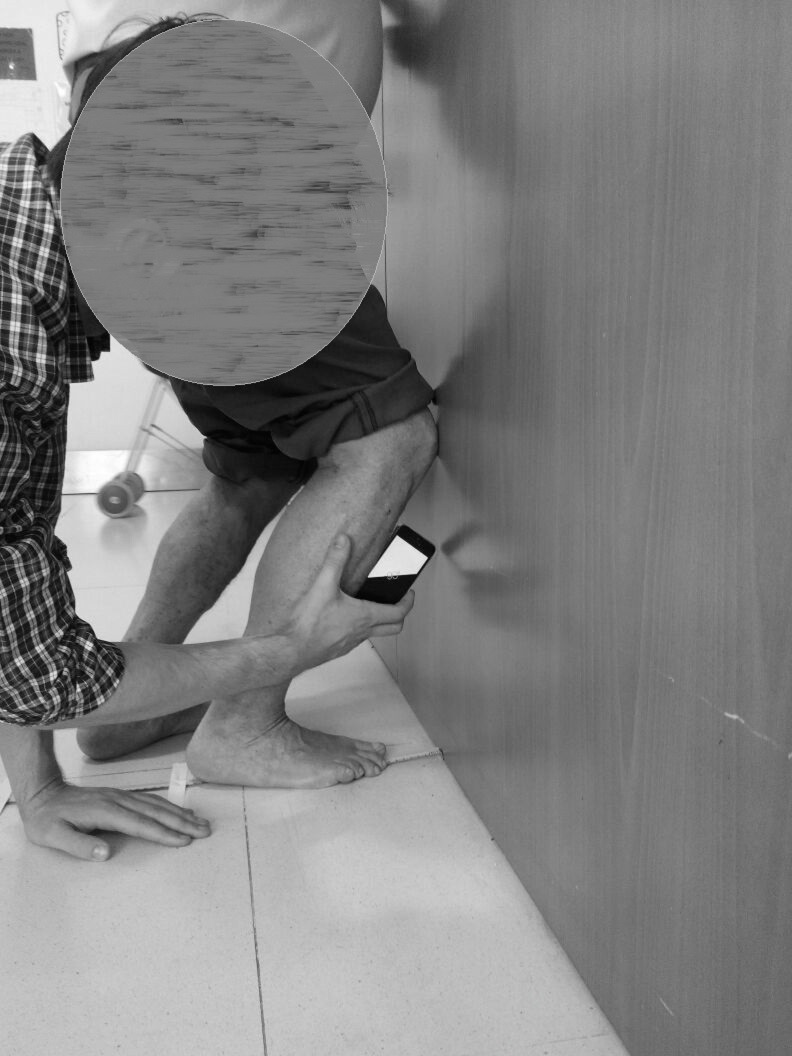
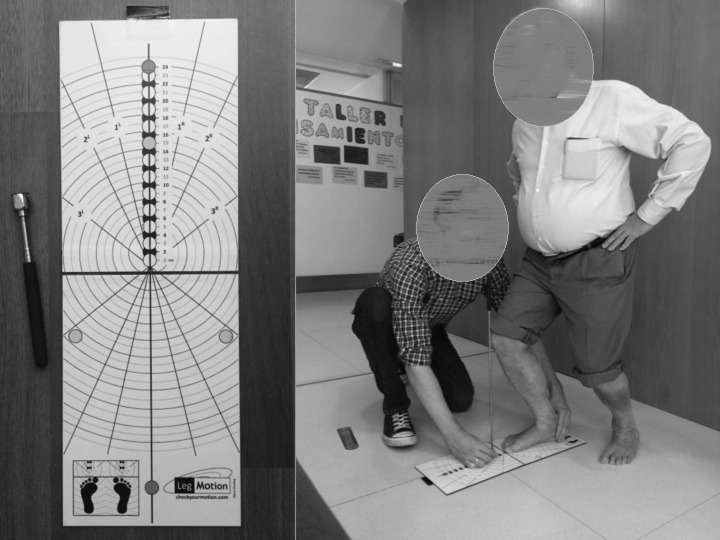
Adescriptive repeated-measures study was designed to test the reliability of Leg Motion in thirty-three healthy elderly patients older than 65 years. The subjects had to meet the following inclusion and exclusion criteria in their medical records: older than 65 years; no lower extremity injury for at least one year prior to evaluation (meniscopathy, or fractures) and any chronic injuries (e.g., osteoarthritis); no previous hip, knee or ankle surgery; no neuropathic alterations and no cognitive conditions (e.g., Alzheimer's disease or dementia). Participants were recruited through the person responsible for the physiotherapist area from a nursing center. The subjects were evaluated in two different sessions at the same time of day, and there was a break of two weeks between sessions. To test the validity of the Leg Motion system, the participants were measured in a weight-bearing lunge position using a classic goniometer with 1° increments, a smartphone with an inclinometer standard app (iPhone 5S) with 1° increments and a measuring tape that could measure 0.1 cm. All testing was performed while the patients were barefoot. The researcher had ten years of experience as a physiotherapist using goniometer, tape measure and inclinometer devices.
Mean values and standard deviations were as follows: Leg Motion (right 5.15 ± 3.08; left 5.19 ± 2.98), tape measure (right 5.12 ± 3.08; left 5.12 ± 2.80), goniometer (right 45.87° ± 4.98; left 44.50° ± 5.54) and inclinometer app (right 46.53° ± 4.79; left 45.27° ± 5.19). The paired -test showed no significant differences between the limbs or between the test and re-test values. The test re-test reliability results for Leg Motion were as follows: the standard error of the measurement ranged from 0.29 to 0.43 cm, the minimal detectable difference ranged from 0.79 to 1.19 cm, and the intraclass correlation coefficients (ICC) values ranged from 0.97 to 0.98.
The results of the present study indicated that the Leg Motion device is a valid, reliable, accessible and portable tool as an alternative to the classic weight-bearing lunge test for measuring ankle dorsiflexion ROM in older adults.
需要新的可靠设备来测量老年人的关节活动范围(ROM),以增进对该人群功能能力的了解。背屈ROM受限与老年人的脚踝损伤、足部疼痛、下肢疾病、平衡能力丧失、步态控制障碍及跌倒风险相关。本研究的目的是评估Leg Motion设备测量老年人脚踝背屈ROM的有效性和可靠性。
设计了一项描述性重复测量研究,以测试Leg Motion在33名65岁以上健康老年患者中的可靠性。受试者的病历必须符合以下纳入和排除标准:年龄超过65岁;评估前至少一年无下肢损伤(半月板病变或骨折)及任何慢性损伤(如骨关节炎);既往无髋、膝或踝关节手术史;无神经病变及认知障碍(如阿尔茨海默病或痴呆)。参与者通过护理中心物理治疗区域负责人招募。受试者在一天中的同一时间分两次进行评估,两次评估之间间隔两周。为测试Leg Motion系统的有效性,让参与者在负重弓步姿势下进行测量,使用分度值为1°的经典角度计、带有分度值为1°的测斜仪标准应用程序的智能手机(iPhone 5S)以及能精确到0.1厘米的卷尺。所有测试均在患者赤脚时进行。研究人员有十年使用角度计、卷尺和测斜仪设备的物理治疗经验。
平均值和标准差如下:Leg Motion(右侧5.15±3.08;左侧5.19±2.98),卷尺(右侧5.12±3.08;左侧5.12±2.80),角度计(右侧45.87°±4.98;左侧44.50°±5.54),测斜仪应用程序(右侧46.53°±4.79;左侧45.27°±5.19)。配对t检验显示,两侧之间以及测试值与复测值之间均无显著差异。Leg Motion的重测可靠性结果如下:测量标准误差范围为0.29至0.43厘米,最小可检测差异范围为0.79至1.19厘米,组内相关系数(ICC)值范围为0.97至0.98。
本研究结果表明,Leg Motion设备是一种有效、可靠、易于使用且便携的工具,可替代经典的负重弓步试验来测量老年人的脚踝背屈ROM。