Sacco G, Turpin J M, Marteu A, Sakarovitch C, Teboul B, Boscher L, Brocker P, Robert P, Guerin O
Memory Center, Claude Pompidou Institut, Department of Geriatrics, University Hospital of Nice, Nice, France ; Centre d'Innovation et d'Usages en Santé (CIU-S), University Hospital of Nice, Cimiez Hospital, Nice, France ; CoBTeK Cognition Behaviour Technology EA 7276, Research Center Edmond and Lily Safra, Nice Sophia-Antipolis University, Nice, France.
CoBTeK Cognition Behaviour Technology EA 7276, Research Center Edmond and Lily Safra, Nice Sophia-Antipolis University, Nice, France ; Rehabilitation Unit, Department of Geriatrics, University Hospital of Nice, Cimiez Hospital, Nice, France.
Clin Interv Aging. 2015 Feb 23;10:491-7. doi: 10.2147/CIA.S70452. eCollection 2015.
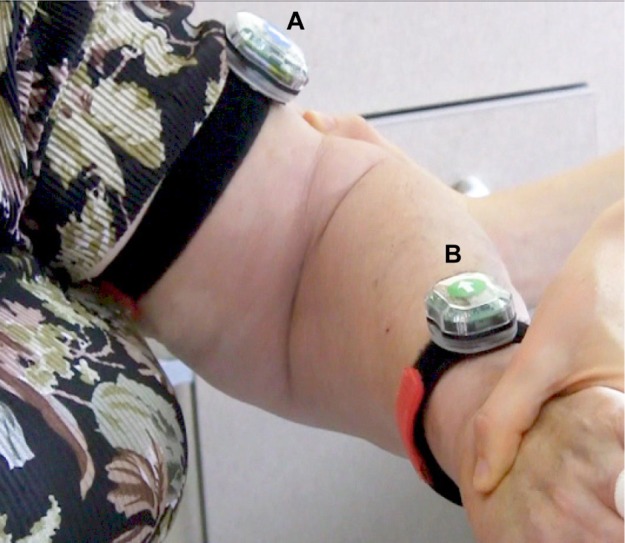
Musculoskeletal system deterioration among the aging is a major reason for loss of autonomy and directly affects the quality of life of the elderly. Articular evaluation is part of physiotherapeutic assessment and helps in establishing a precise diagnosis and deciding appropriate therapy. Reference instruments are valid but not easy to use for some joints. The main goal of our study was to determine reliability and intertester reproducibility of the MP-BV, an inertial sensor (the MotionPod(®) [MP]) combined with specific software (BioVal [BV]), for elbow passive range-of-motion measurements in geriatrics.
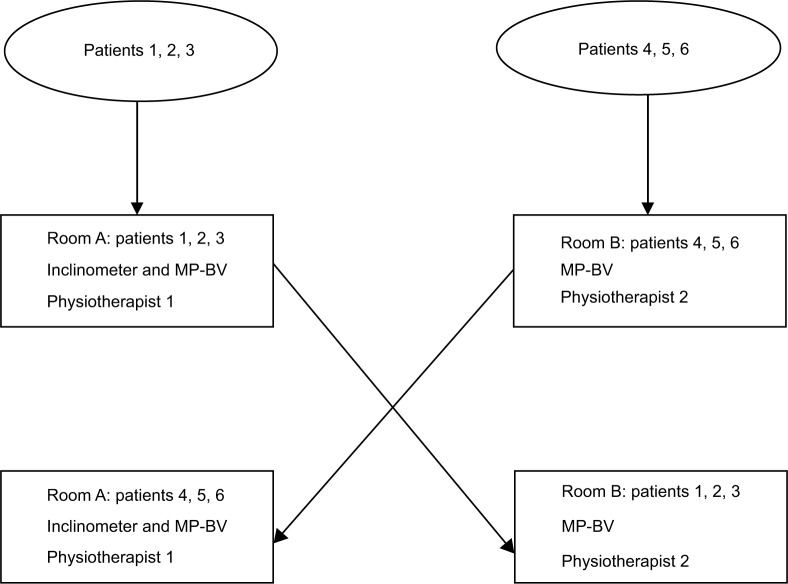
This open, monocentric, randomized study compared inertial sensor to inclinometer in patients hospitalized in an acute, post-acute, and long-term-care gerontology unit.
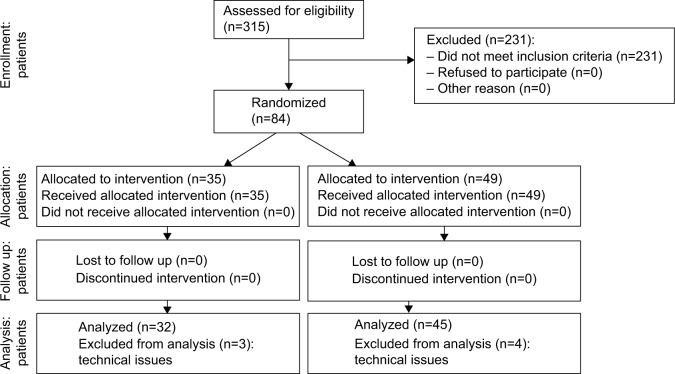
Seventy-seven patients (mean age 83.5±6.4 years, sex ratio 1.08 [male/female]) were analyzed. The MP-BV was reliable for each of the three measurements (flexion, pronation, and supination) for 24.3% (CI 95% 13.9-32.8) of the patients. Separately, the percentages of reliable measures were 59.7% (49.2-70.5) for flexion, 68.8% (58.4-79.5) for pronation, and 62.3% (51.2-73.1) for supination. The intraclass correlation coefficients were 0.15 (0.07-0.73), 0.46 (0.27-0.98), and 0.50 (0.31-40 0.98) for flexion, pronation, and supination, respectively.
This study shows the convenience of the MP-BV in terms of ease of use and of export of measured data. However, this instrument seems less reliable and valuable compared to the reference instruments used to measure elbow range of motion in gerontology.
衰老过程中肌肉骨骼系统的退化是导致自主性丧失的主要原因,直接影响老年人的生活质量。关节评估是物理治疗评估的一部分,有助于进行准确诊断并确定合适的治疗方案。参考仪器虽有效,但对某些关节而言使用并不简便。我们研究的主要目的是确定用于老年患者肘部被动活动范围测量的MP-BV(一种惯性传感器(MotionPod(®) [MP])与特定软件(BioVal [BV])相结合)的可靠性和测试者间的可重复性。
这项开放性、单中心、随机研究将惯性传感器与倾角仪在急性、亚急性和长期护理老年病科住院患者中进行了比较。
对77例患者(平均年龄83.5±6.4岁,性别比1.08 [男性/女性])进行了分析。对于24.3%(95%置信区间13.9 - 32.8)的患者,MP-BV在三项测量(屈曲、旋前和旋后)中的每一项上都是可靠的。单独来看,可靠测量的百分比在屈曲时为59.7%(49.2 - 70.5),旋前时为68.8%(58.4 - 79.5),旋后时为62.3%(51.2 - 73.1)。屈曲、旋前和旋后的组内相关系数分别为0.15(0.07 - 0.73)、0.46(0.27 - 0.98)和0.50(0.31 - 0.98)。
本研究表明MP-BV在使用便利性和测量数据导出方面具有优势。然而,与用于测量老年患者肘部活动范围的参考仪器相比,该仪器的可靠性和价值似乎较低。