Girard Catherine, Tromas Nicolas, Amyot Marc, Shapiro B Jesse
Centre for Northern Studies, Département de sciences biologiques, Université de Montréal, Montreal, Quebec, Canada.
Département de sciences biologiques, Université de Montréal, Montreal, Quebec, Canada.
mSphere. 2017 Jan 4;2(1). doi: 10.1128/mSphere.00297-16. eCollection 2017 Jan-Feb.
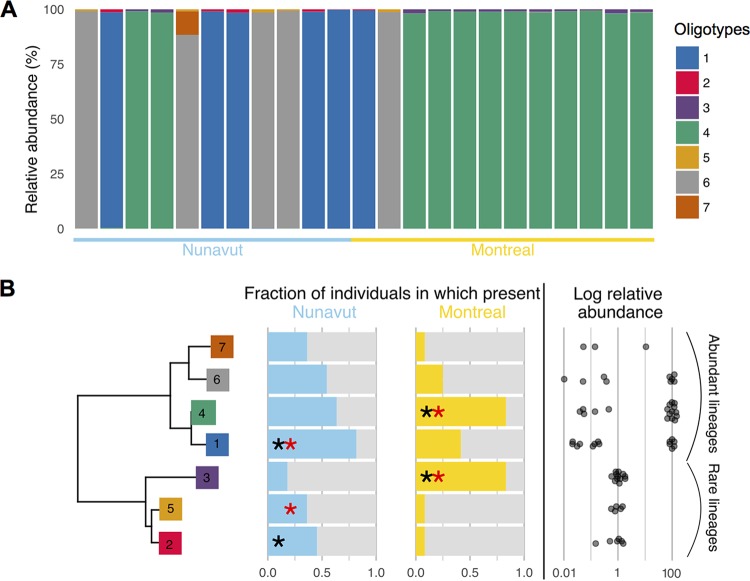
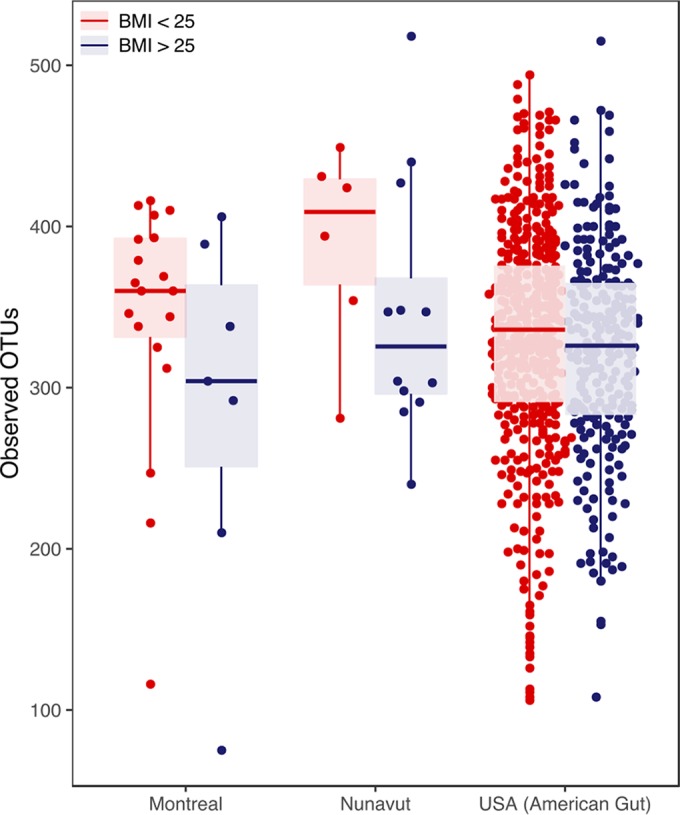
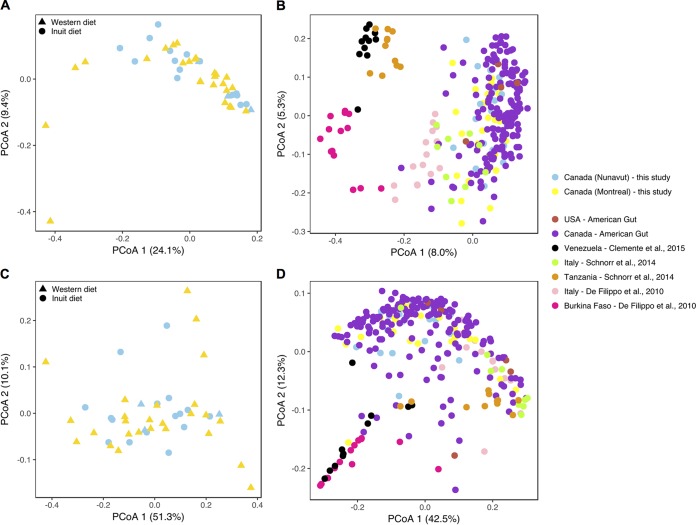
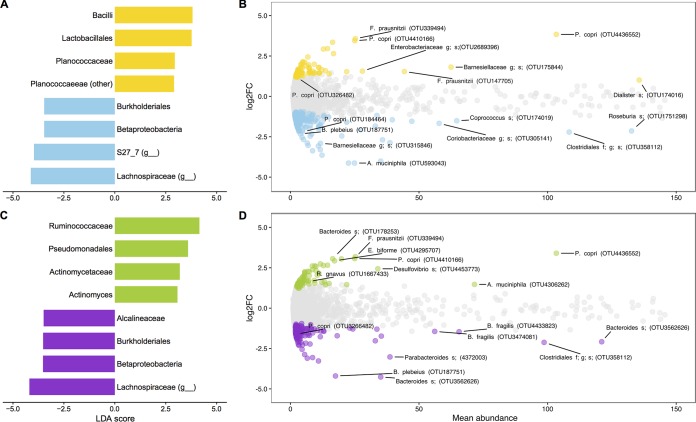
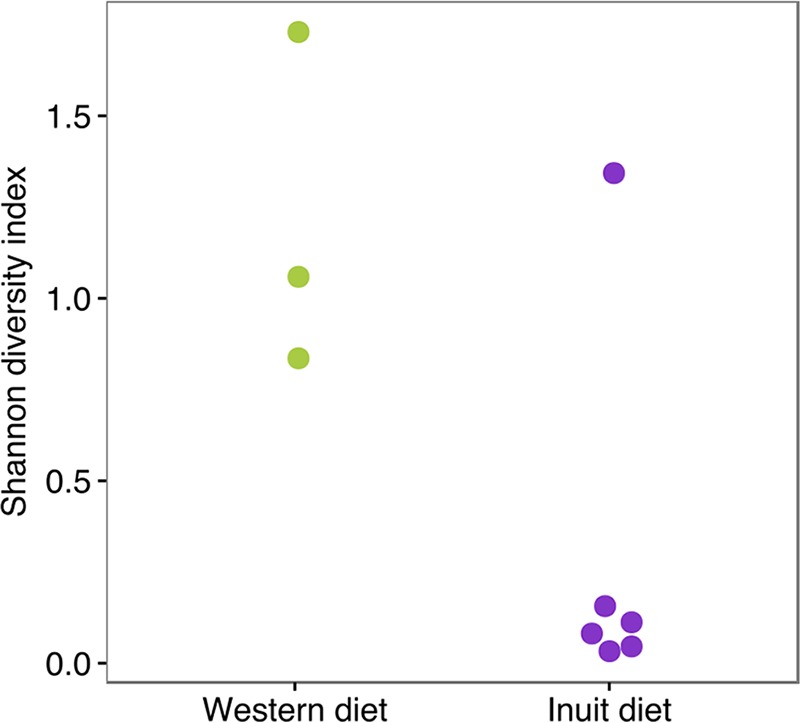
Diet is a major determinant of community composition in the human gut microbiome, and "traditional" diets have been associated with distinct and highly diverse communities, compared to Western diets. However, most traditional diets studied have been those of agrarians and hunter-gatherers consuming fiber-rich diets. In contrast, the Inuit of the Canadian Arctic have been consuming a traditional diet low in carbohydrates and rich in animal fats and protein for thousands of years. We hypothesized that the Inuit diet and lifestyle would be associated with a distinct microbiome. We used deep sequencing of the 16S rRNA gene to compare the gut microbiomes of Montrealers with a Western diet to those of the Inuit consuming a range of traditional and Western diets. At the overall microbial community level, the gut microbiomes of Montrealers and Inuit were indistinguishable and contained similar levels of microbial diversity. However, we observed significant differences in the relative abundances of certain microbial taxa down to the subgenus level using oligotyping. For example, spp., which have been previously associated with high-fiber diets, were enriched in Montrealers and among the Inuit consuming a Western diet. The gut microbiomes of Inuit consuming a traditional diet also had significantly less genetic diversity within the genus, suggesting that a low-fiber diet might not only select against but also reduce its diversity. Other microbes, such as , were associated with geography as well as diet, suggesting limited dispersal to the Arctic. Our report provides a snapshot of the Inuit microbiome as Western-like in overall community structure but distinct in the relative abundances and diversity of certain genera and strains. Non-Western populations have been shown to have distinct gut microbial communities shaped by traditional diets. The hitherto-uncharacterized microbiome of the Inuit may help us to better understand health risks specific to this population such as diabetes and obesity, which increase in prevalence as many Inuit transition to a Western diet. Here we show that even Inuit consuming a mostly traditional diet have a broadly Western-like microbiome. This suggests that similarities between the Inuit diet and the Western diet (low fiber, high fat) may lead to a convergence of community structures and diversity. However, certain species and strains of microbes have significantly different levels of abundance and diversity in the Inuit, possibly driven by differences in diet. Furthermore, the Inuit diet provides an exception to the correlation between traditional diets and high microbial diversity, potentially due to their transitioning diet. Knowledge of the Inuit microbiome may provide future resources for interventions and conservation of Inuit heritage.
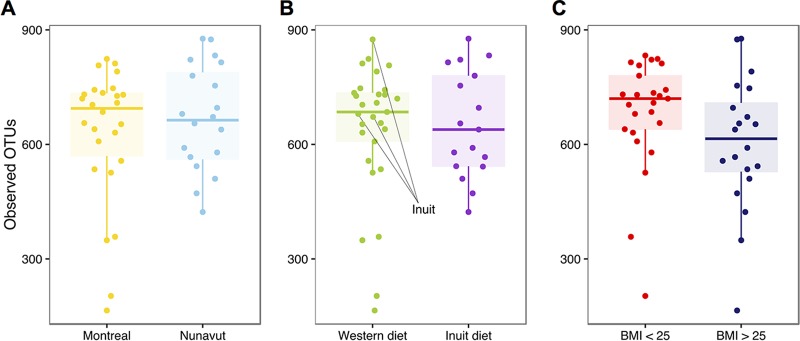
饮食是人类肠道微生物群落组成的主要决定因素,与西方饮食相比,“传统”饮食与独特且高度多样的群落相关。然而,大多数被研究的传统饮食是富含纤维饮食的农民和狩猎采集者的饮食。相比之下,加拿大北极地区的因纽特人几千年来一直食用碳水化合物含量低、富含动物脂肪和蛋白质的传统饮食。我们假设因纽特人的饮食和生活方式与独特的微生物群落相关。我们使用16S rRNA基因深度测序,将食用西方饮食的蒙特利尔人的肠道微生物群落与食用一系列传统饮食和西方饮食的因纽特人的肠道微生物群落进行比较。在整体微生物群落水平上,蒙特利尔人和因纽特人的肠道微生物群落难以区分,且含有相似水平的微生物多样性。然而,我们使用寡核苷酸分型观察到某些微生物分类群直至亚属水平的相对丰度存在显著差异。例如,先前与高纤维饮食相关的某菌属在蒙特利尔人以及食用西方饮食的因纽特人中富集。食用传统饮食的因纽特人的肠道微生物群落在该菌属内的遗传多样性也显著更低,这表明低纤维饮食可能不仅会淘汰该菌属,还会降低其多样性。其他微生物,如某菌,与地理位置以及饮食都有关联,这表明其向北极地区的传播有限。我们的报告呈现了因纽特人微生物群落的概况,其整体群落结构类似西方,但某些菌属和菌株的相对丰度及多样性有所不同。非西方人群已被证明具有受传统饮食塑造的独特肠道微生物群落。因纽特人迄今未被描述的微生物群落可能有助于我们更好地理解该人群特有的健康风险,如糖尿病和肥胖症,随着许多因纽特人转向西方饮食,这些疾病的患病率正在上升。在这里我们表明,即使是食用大部分传统饮食的因纽特人也具有大致类似西方的微生物群落。这表明因纽特人饮食与西方饮食(低纤维、高脂肪)之间的相似性可能导致群落结构和多样性趋同。然而,某些微生物物种和菌株在因纽特人中的丰度和多样性水平存在显著差异,这可能是由饮食差异驱动的。此外,因纽特人的饮食为传统饮食与高微生物多样性之间的相关性提供了一个例外,这可能是由于他们正在转变的饮食。了解因纽特人的微生物群落可能为因纽特人遗产的干预和保护提供未来的资源。