Department of Microbiology and Genetics, Spanish-Portuguese Institute for Agricultural Research (CIALE), University of Salamanca, Salamanca, Spain.
Department of Phytopathology, Federal University of Viçosa, Viçosa Minas Gerais, Brazil.
Sci Rep. 2017 Jan 10;7:40216. doi: 10.1038/srep40216.
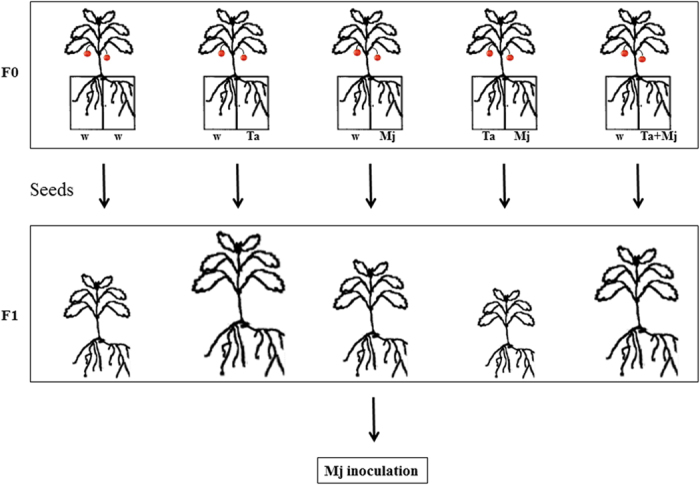
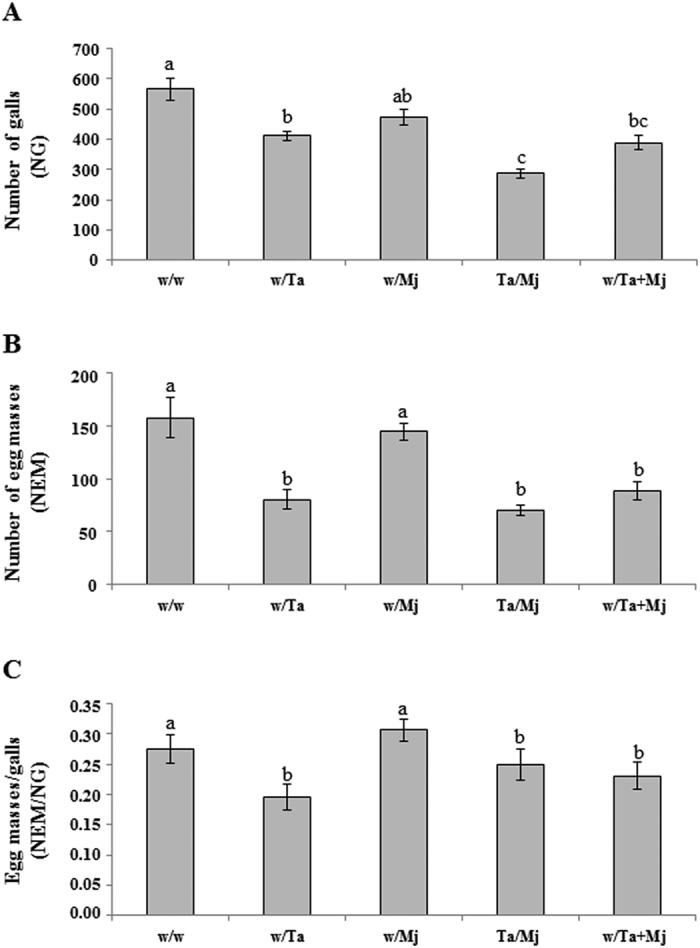
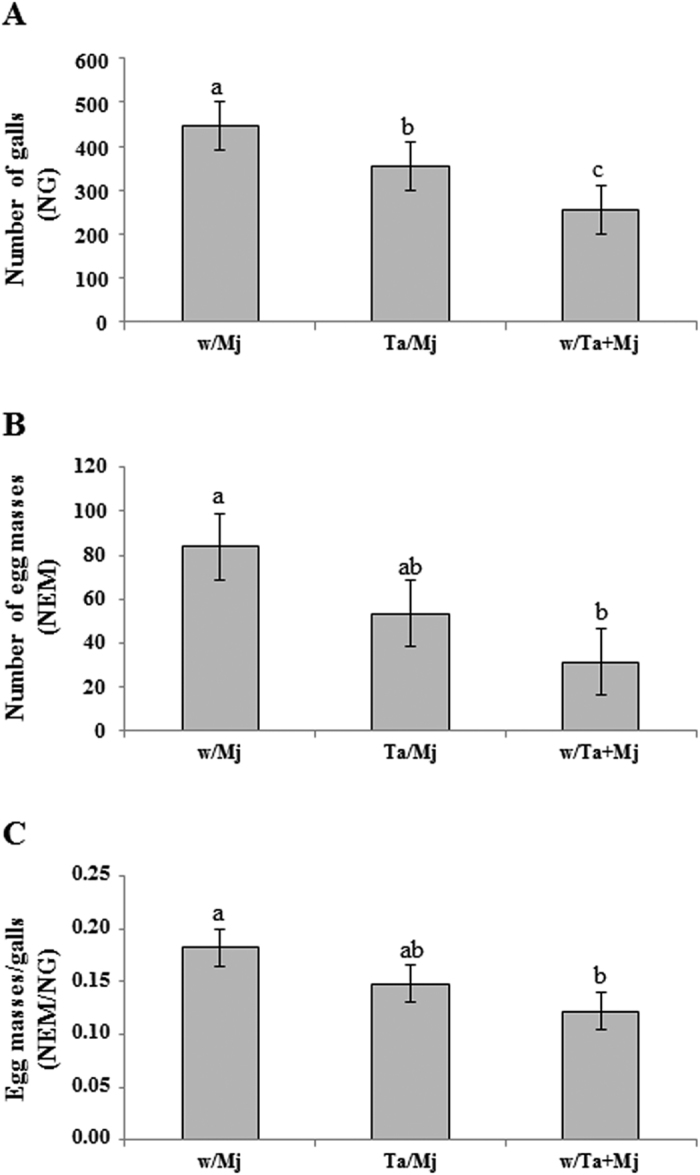
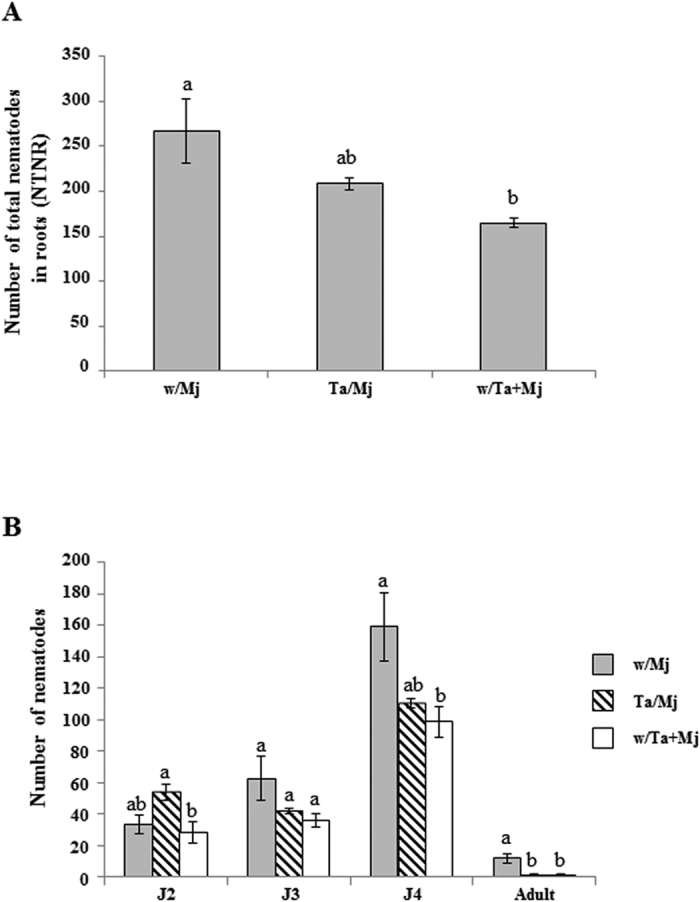
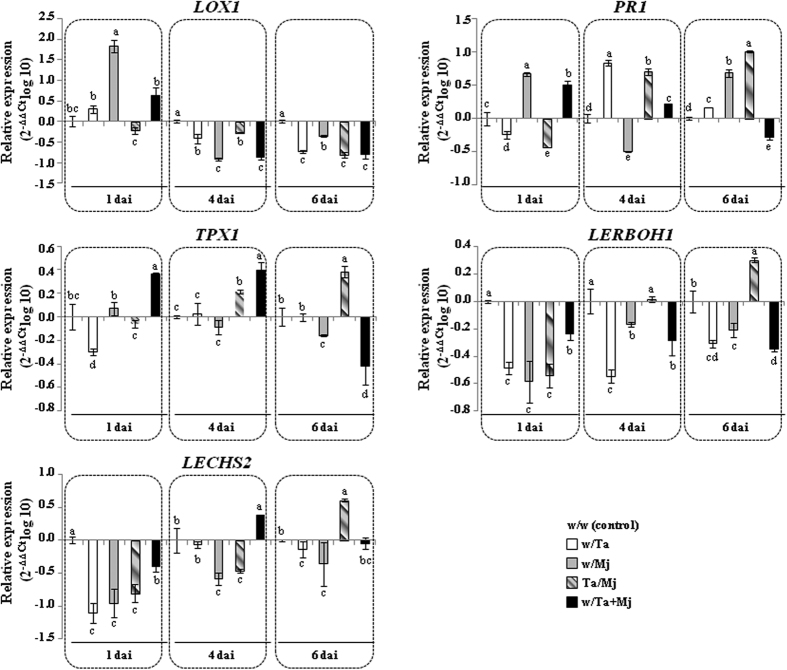
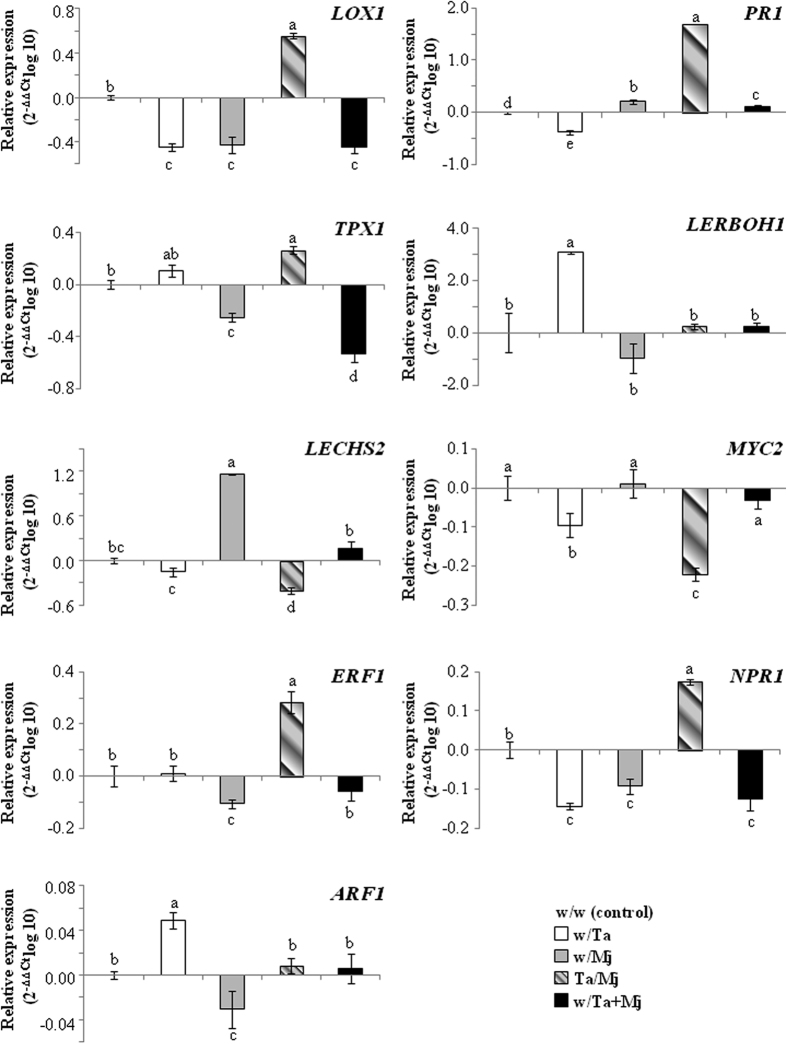
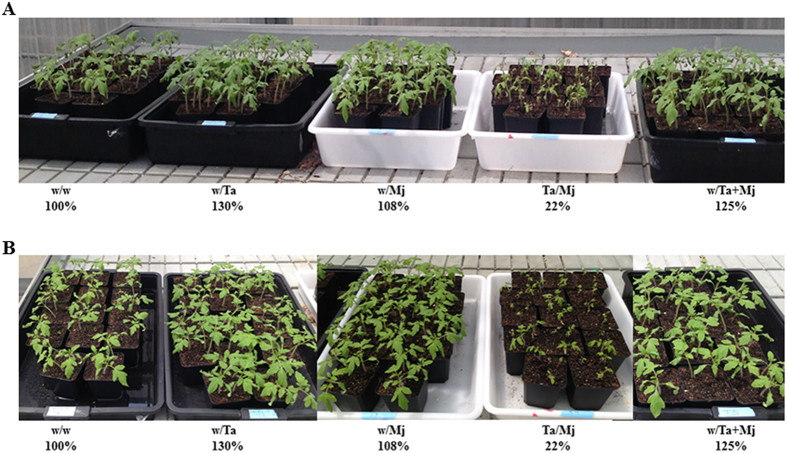
Root-knot nematodes (RKN) are major crop pathogens worldwide. Trichoderma genus fungi are recognized biocontrol agents and a direct activity of Trichoderma atroviride (Ta) against the RKN Meloidogyne javanica (Mj), in terms of 42% reduction of number of galls (NG), 60% of number of egg masses and 90% of number of adult nematodes inside the roots, has been observed in tomato grown under greenhouse conditions. An in vivo split-root designed experiment served to demonstrate that Ta induces systemic resistance towards Mj, without the need for the organisms to be in direct contact, and significantly reduces NG (20%) and adult nematodes inside tomato roots (87%). The first generation (F1) of Ta-primed tomato plants inherited resistance to RKN; although, the induction of defenses occurred through different mechanisms, and in varying degrees, depending on the Ta-Mj interaction. Plant growth promotion induced by Ta was inherited without compromising the level of resistance to Mj, as the progeny of Ta-primed plants displayed increased size and resistance to Mj without fitness costs. Gene expression results from the defense inductions in the offspring of Ta-primed plants, suggested that an auxin-induced reactive oxygen species production promoted by Ta may act as a major defense strategy during plant growth.
根结线虫(RKN)是全球主要的作物病原体。木霉属真菌被认为是生物防治剂,在温室条件下种植的番茄中观察到,淡紫拟青霉(Ta)对 RKN 爪哇根结线虫(Mj)具有直接活性,其导致根结数量减少 42%,卵块数量减少 60%,根内成虫数量减少 90%。体内裂根设计实验表明,Ta 诱导了对 Mj 的系统抗性,而无需生物体直接接触,并显著减少了根结数量(20%)和根内的成年线虫(87%)。第一代(F1)经 Ta 处理的番茄植株继承了对 RKN 的抗性;尽管如此,防御的诱导是通过不同的机制,并且在不同程度上取决于 Ta-Mj 相互作用。Ta 诱导的植物生长促进作用是遗传的,而不会影响对 Mj 的抗性水平,因为 Ta 处理过的植物的后代显示出增加的大小和对 Mj 的抗性,而没有适应度成本。Ta 处理过的植物后代防御诱导的基因表达结果表明,Ta 诱导的生长素诱导的活性氧产生可能是植物生长过程中的主要防御策略。