García-Merino Jose Angel, de Lucas Beatriz, Herrera-Rocha Karen, Moreno-Pérez Diego, Montalvo-Lominchar Maria Gregoria, Fernández-Romero Arantxa, Santiago Catalina, Pérez-Ruiz Margarita, Larrosa Mar
MAS Microbiota Group, Faculty of Biomedical and Health Sciences, Universidad Europea de Madrid, Villaviciosa de Odón, 28670 Madrid, Spain.
Research Group on Functional Foods and Nutraceuticals, TecNM/Instituto Tecnológico de Durango, Felipe Pescador 1830 Ote., Durango 34080, Mexico.
Antioxidants (Basel). 2022 Aug 4;11(8):1522. doi: 10.3390/antiox11081522.
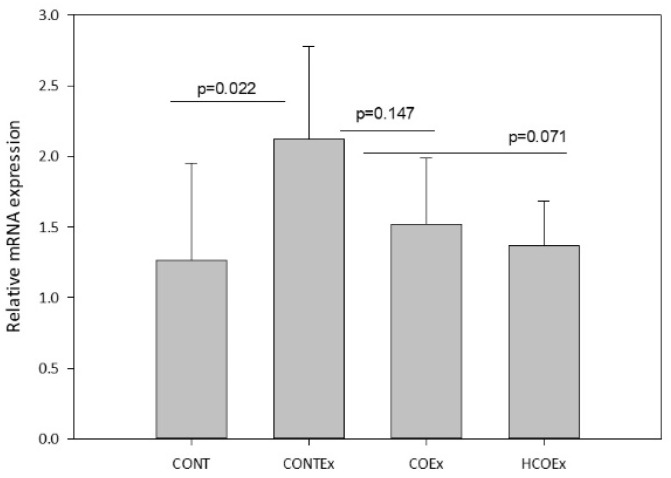
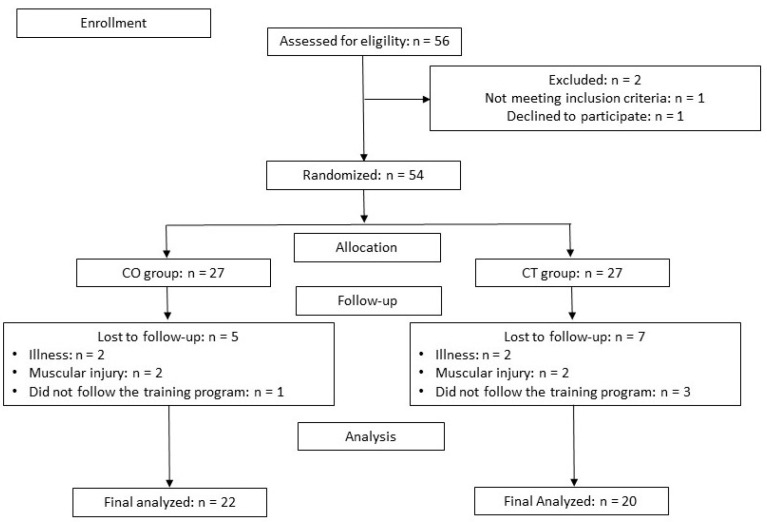
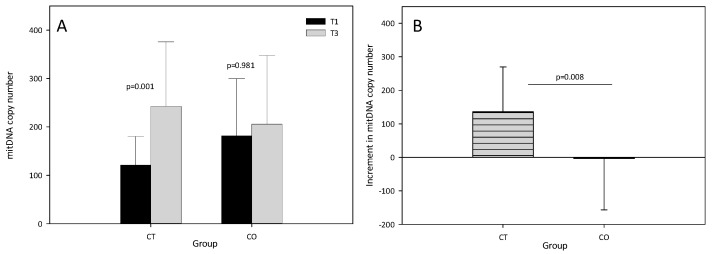
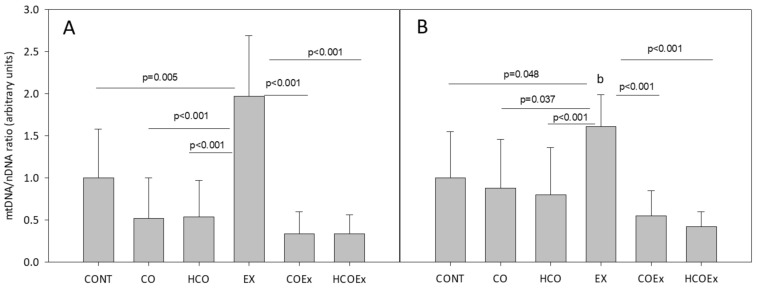
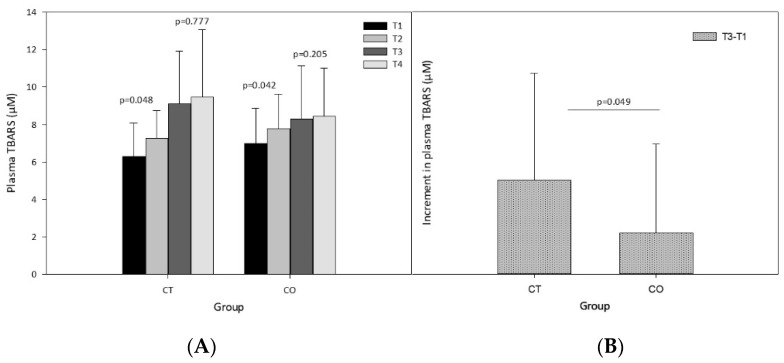
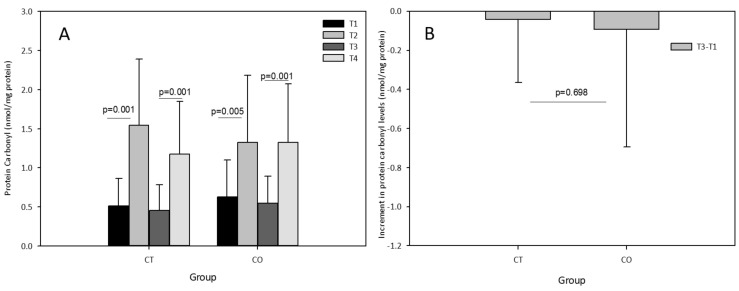
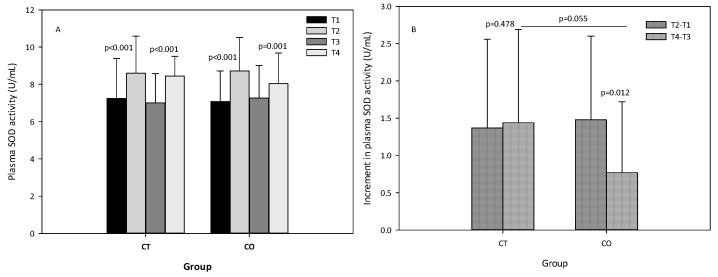
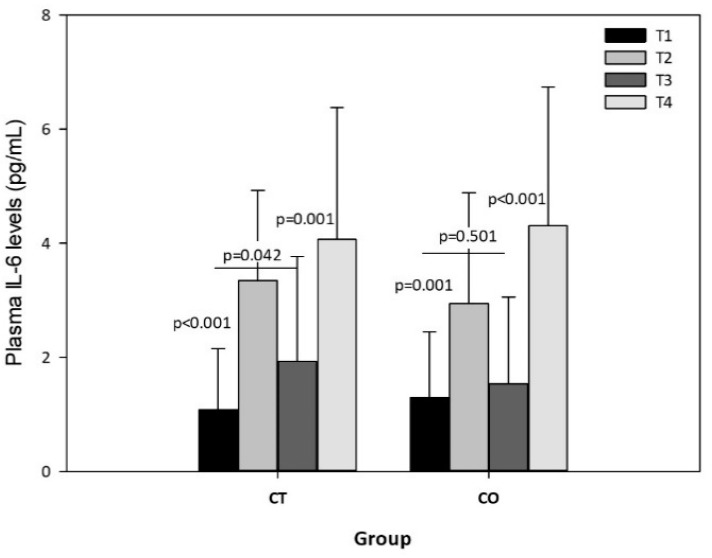
The potential role of cocoa supplementation in an exercise context remains unclear. We describe the effects of flavanol-rich cocoa supplementation during training on exercise performance and mitochondrial biogenesis. Forty-two male endurance athletes at the beginning of the training season received either 5 g of cocoa (425 mg of flavanols) or maltodextrin (control) daily for 10 weeks. Two different doses of cocoa (equivalent to 5 g and 15 g per day of cocoa for a 70 kg person) were tested in a mouse exercise training study. In the athletes, while both groups had improved exercise performance, the maximal aerobic speed increased only in the control group. A mitochondrial DNA analysis revealed that the control group responded to training by increasing the mitochondrial load whereas the cocoa group showed no increase. Oxidative stress was lower in the cocoa group than in the control group, together with lower interleukin-6 levels. In the muscle of mice receiving cocoa, we corroborated an inhibition of mitochondrial biogenesis, which might be mediated by the decrease in the expression of nuclear factor erythroid-2-related factor 2. Our study shows that supplementation with flavanol-rich cocoa during the training period inhibits mitochondrial biogenesis adaptation through the inhibition of reactive oxygen species generation without impacting exercise performance.
在运动环境中补充可可的潜在作用仍不明确。我们描述了在训练期间补充富含黄烷醇的可可对运动表现和线粒体生物发生的影响。42名男性耐力运动员在训练季开始时,连续10周每天服用5克可可(425毫克黄烷醇)或麦芽糖糊精(对照组)。在一项小鼠运动训练研究中测试了两种不同剂量的可可(相当于70公斤体重的人每天服用5克和15克可可)。在运动员中,虽然两组的运动表现都有所改善,但最大有氧速度仅在对照组中增加。线粒体DNA分析显示,对照组通过增加线粒体负荷对训练做出反应,而可可组则没有增加。可可组的氧化应激低于对照组,白细胞介素-6水平也较低。在接受可可的小鼠肌肉中,我们证实了线粒体生物发生受到抑制,这可能是由核因子红细胞2相关因子2表达的降低介导的。我们的研究表明,在训练期间补充富含黄烷醇的可可会通过抑制活性氧的产生来抑制线粒体生物发生适应,而不会影响运动表现。