Pulit Sara L, Karaderi Tugce, Lindgren Cecilia M
Department of Neurology, Brain Center Rudolf Magnus, University Medical Center Utrecht, Utrecht, The Netherlands.
Department of Biological Sciences, Faculty of Arts and Sciences, Eastern Mediterranean University, Famagusta, Cyprus.
Biosci Rep. 2017 Feb 3;37(1). doi: 10.1042/BSR20160184. Print 2017 Feb 28.
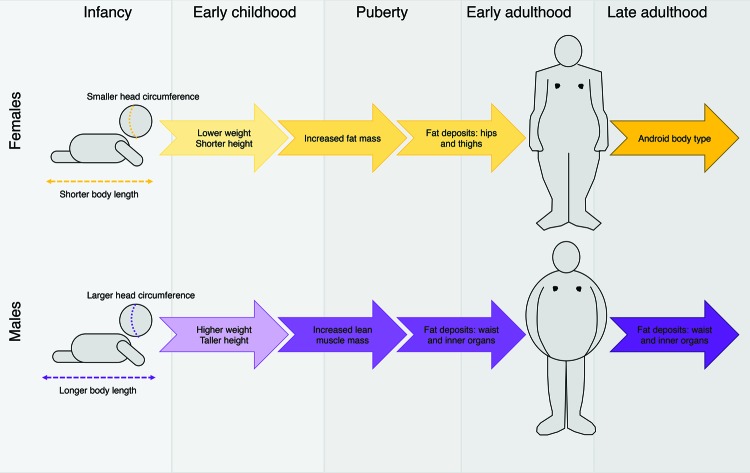
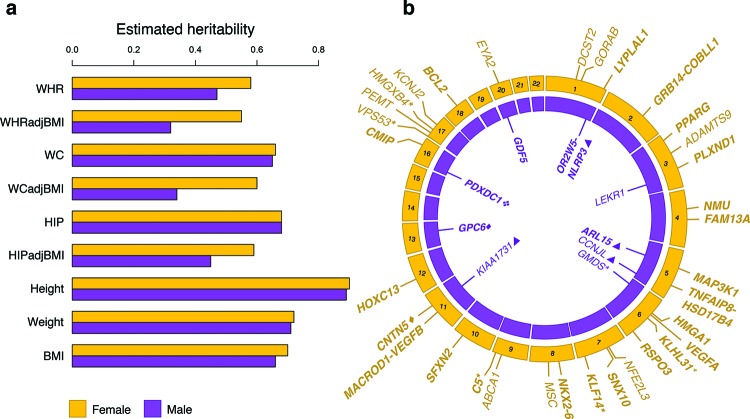
Obesity is a chronic condition associated with increased morbidity and mortality and is a risk factor for a number of other diseases including type 2 diabetes and cardiovascular disease. Obesity confers an enormous, costly burden on both individuals and public health more broadly. Body fat distribution is a heritable trait and a well-established predictor of adverse metabolic outcomes. Body fat distribution is distinct from overall obesity in measurement, but studies of body fat distribution can yield insights into the risk factors for and causes of overall obesity. Sexual dimorphism in body fat distribution is present throughout life. Though sexual dimorphism is subtle in early stages of life, it is attenuated in puberty and during menopause. This phenomenon could be, at least in part, due to the influence of sex hormones on the trait. Findings from recent large genome-wide association studies (GWAS) for various measures of body fat distribution (including waist-to-hip ratio, hip or waist circumference, trunk fat percentage and the ratio of android and gynoid fat percentage) emphasize the strong sexual dimorphism in the genetic regulation of fat distribution traits. Importantly, sexual dimorphism is not observed for overall obesity (as assessed by body mass index or total fat percentage). Notably, the genetic loci associated with body fat distribution, which show sexual dimorphism, are located near genes that are expressed in adipose tissues and/or adipose cells. Considering the epidemiological and genetic evidence, sexual dimorphism is a prominent feature of body fat distribution. Research that specifically focuses on sexual dimorphism in fat distribution can provide novel insights into human physiology and into the development of obesity and its comorbidities, as well as yield biological clues that will aid in the improvement of disease prevention and treatment.
肥胖是一种与发病率和死亡率增加相关的慢性疾病,是包括2型糖尿病和心血管疾病在内的许多其他疾病的危险因素。肥胖给个人和更广泛的公共卫生带来了巨大的、代价高昂的负担。体脂分布是一种可遗传的特征,也是不良代谢结果的公认预测指标。体脂分布在测量上与总体肥胖不同,但对体脂分布的研究可以深入了解总体肥胖的危险因素和成因。体脂分布的性别二态性在一生中都存在。虽然性别二态性在生命早期很细微,但在青春期和绝经期间会减弱。这种现象至少部分可能是由于性激素对该特征的影响。最近针对各种体脂分布测量指标(包括腰臀比、臀围或腰围、躯干脂肪百分比以及男性型和女性型脂肪百分比的比率)进行的大规模全基因组关联研究(GWAS)结果强调了脂肪分布特征遗传调控中强烈的性别二态性。重要的是,总体肥胖(通过体重指数或总脂肪百分比评估)未观察到性别二态性。值得注意的是,与体脂分布相关的基因位点显示出性别二态性,它们位于在脂肪组织和/或脂肪细胞中表达的基因附近。考虑到流行病学和遗传学证据,性别二态性是体脂分布的一个突出特征。专门关注脂肪分布性别二态性的研究可以为人类生理学、肥胖及其合并症的发展提供新的见解,也可以提供有助于改善疾病预防和治疗的生物学线索。