Li Jingzhen, Liu Yuhang, Nie Zedong, Qin Wenjian, Pang Zengyao, Wang Lei
Shenzhen Institutes of Advanced Technology, Chinese Academy of Science, Shenzhen 518055, China.
Sensors (Basel). 2017 Jan 10;17(1):125. doi: 10.3390/s17010125.
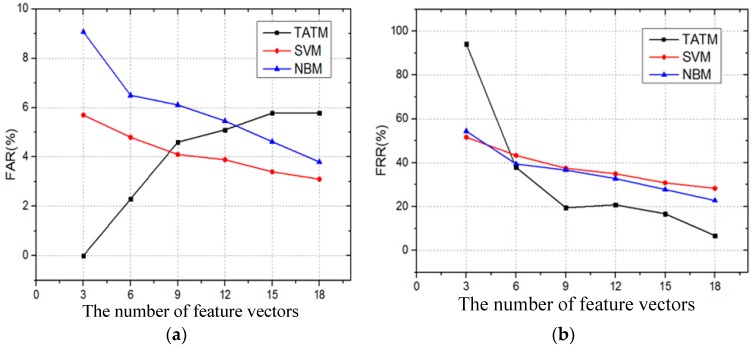
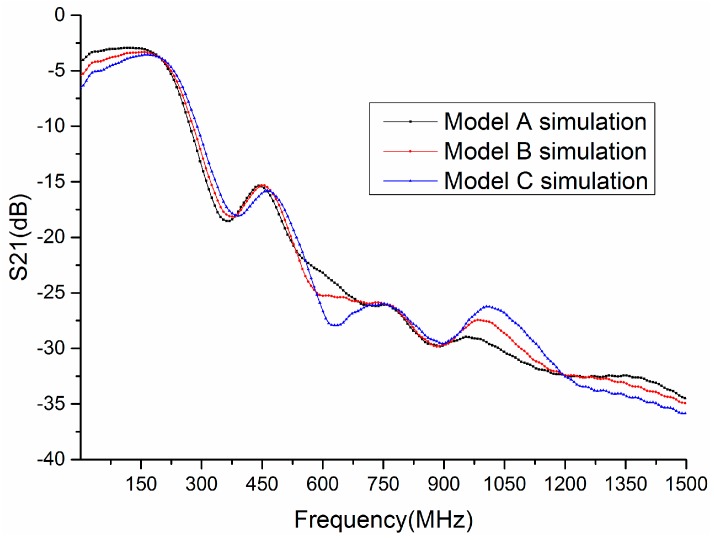
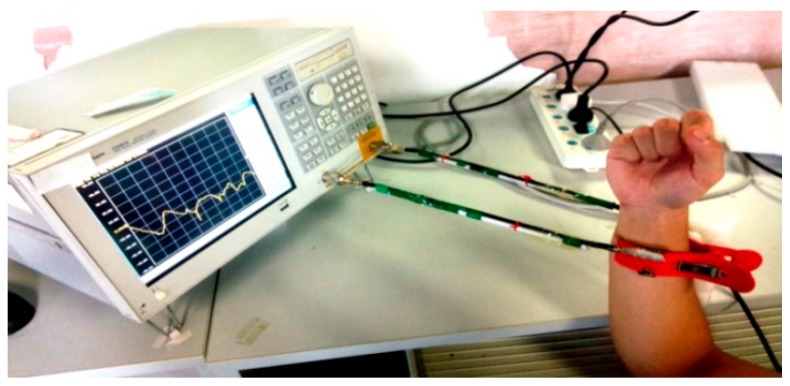
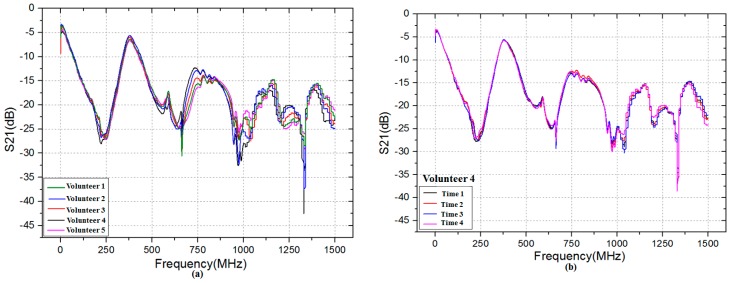
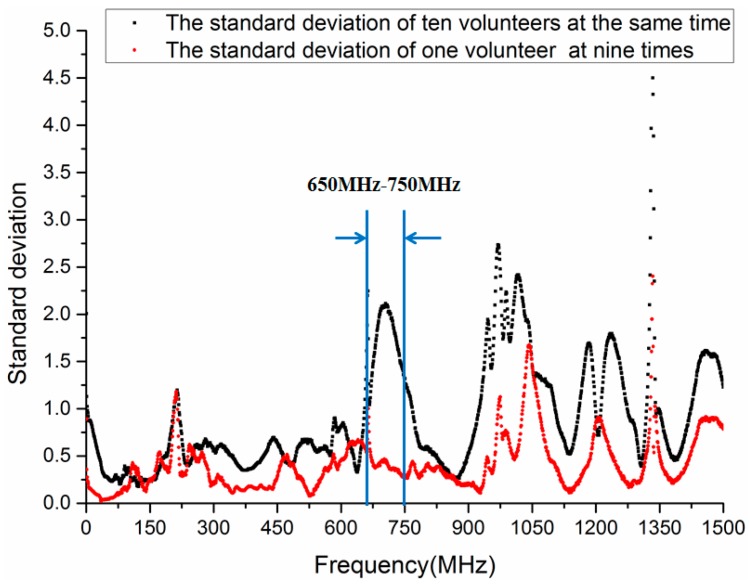
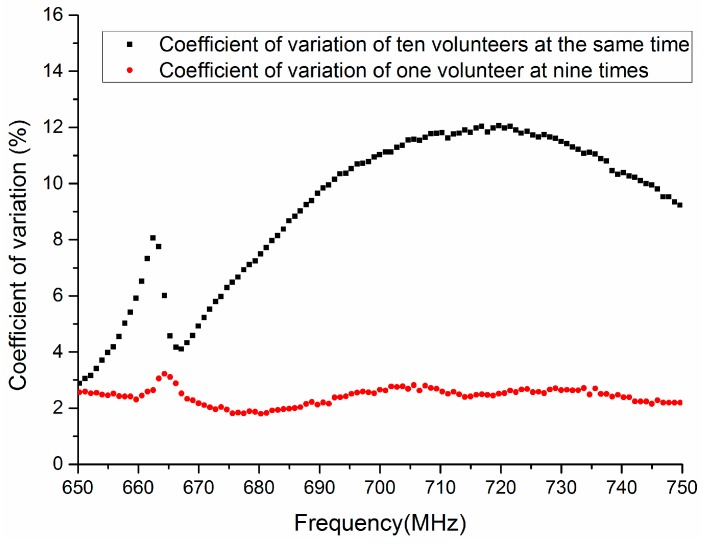
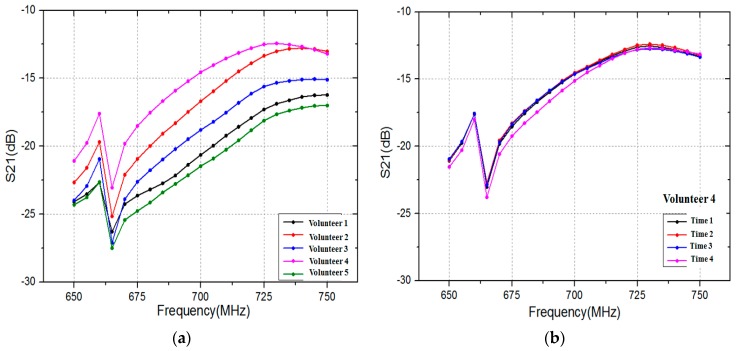
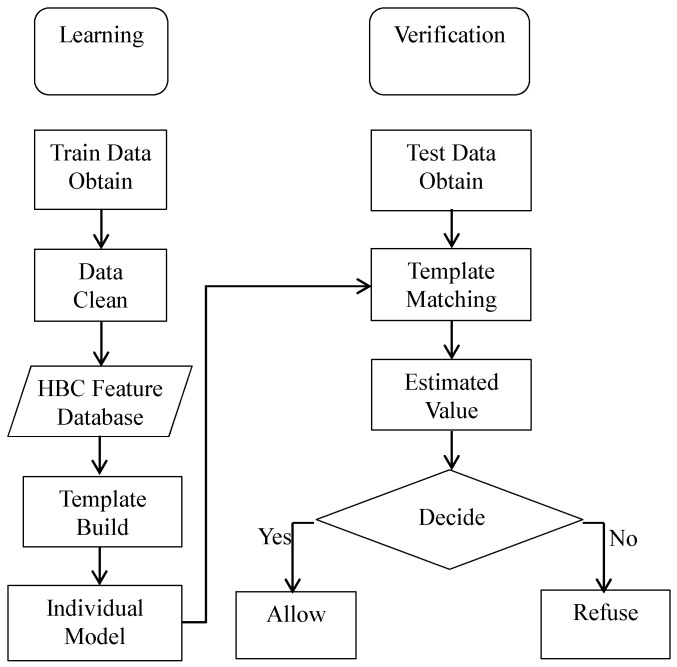
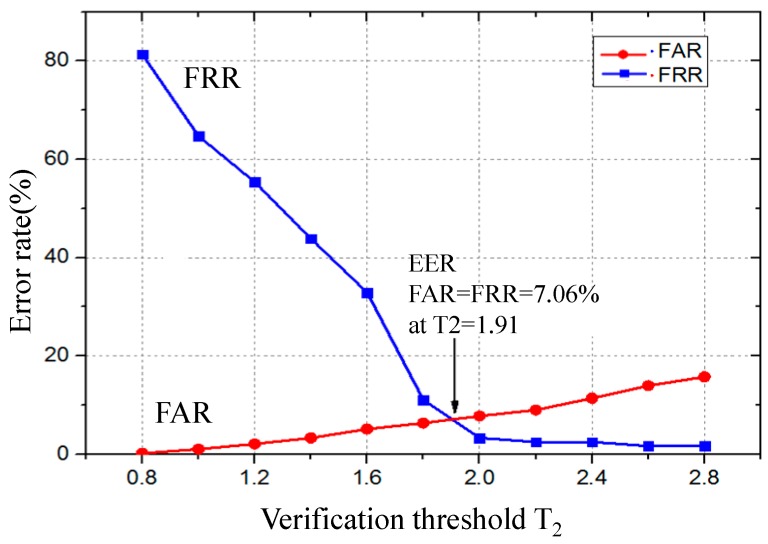
In this paper, an approach to biometric verification based on human body communication (HBC) is presented for wearable devices. For this purpose, the transmission gain S21 of volunteer's forearm is measured by vector network analyzer (VNA). Specifically, in order to determine the chosen frequency for biometric verification, 1800 groups of data are acquired from 10 volunteers in the frequency range 0.3 MHz to 1500 MHz, and each group includes 1601 sample data. In addition, to achieve the rapid verification, 30 groups of data for each volunteer are acquired at the chosen frequency, and each group contains only 21 sample data. Furthermore, a threshold-adaptive template matching (TATM) algorithm based on weighted Euclidean distance is proposed for rapid verification in this work. The results indicate that the chosen frequency for biometric verification is from 650 MHz to 750 MHz. The false acceptance rate (FAR) and false rejection rate (FRR) based on TATM are approximately 5.79% and 6.74%, respectively. In contrast, the FAR and FRR were 4.17% and 37.5%, 3.37% and 33.33%, and 3.80% and 34.17% using K-nearest neighbor (KNN) classification, support vector machines (SVM), and naive Bayesian method (NBM) classification, respectively. In addition, the running time of TATM is 0.019 s, whereas the running times of KNN, SVM and NBM are 0.310 s, 0.0385 s, and 0.168 s, respectively. Therefore, TATM is suggested to be appropriate for rapid verification use in wearable devices.
本文提出了一种基于人体通信(HBC)的可穿戴设备生物特征验证方法。为此,使用矢量网络分析仪(VNA)测量志愿者前臂的传输增益S21。具体而言,为了确定用于生物特征验证的选定频率,在0.3 MHz至1500 MHz频率范围内从10名志愿者获取了1800组数据,每组包含1601个样本数据。此外,为了实现快速验证,在选定频率下为每位志愿者获取30组数据,每组仅包含21个样本数据。此外,本文还提出了一种基于加权欧几里得距离的阈值自适应模板匹配(TATM)算法用于快速验证。结果表明,用于生物特征验证的选定频率为650 MHz至750 MHz。基于TATM的误识率(FAR)和拒识率(FRR)分别约为5.79%和6.74%。相比之下,使用K近邻(KNN)分类、支持向量机(SVM)和朴素贝叶斯方法(NBM)分类时,FAR和FRR分别为4.17%和37.5%、3.37%和33.33%、3.80%和34.17%。此外,TATM的运行时间为0.019 s,而KNN、SVM和NBM的运行时间分别为0.310 s、0.0385 s和0.168 s。因此,建议TATM适用于可穿戴设备的快速验证。