Mitra Ileena, Lavillaureix Alinoë, Yeh Erika, Traglia Michela, Tsang Kathryn, Bearden Carrie E, Rauen Katherine A, Weiss Lauren A
Department of Psychiatry, University of California San Francisco, San Francisco, California, United States of America.
Institute for Human Genetics, University of California San Francisco, San Francisco, California, United States of America.
PLoS Genet. 2017 Jan 11;13(1):e1006516. doi: 10.1371/journal.pgen.1006516. eCollection 2017 Jan.
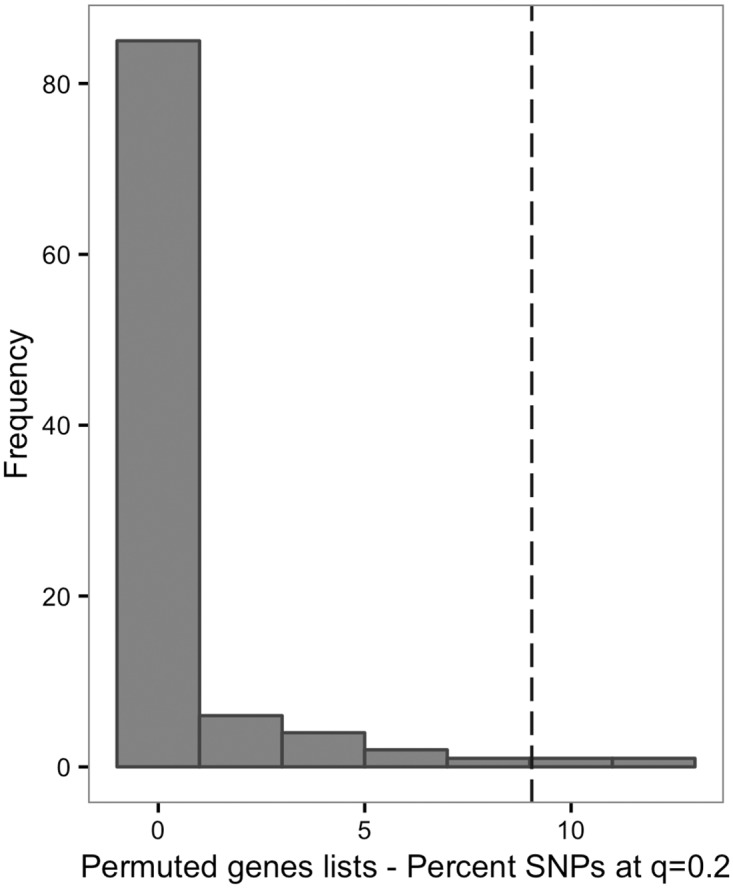
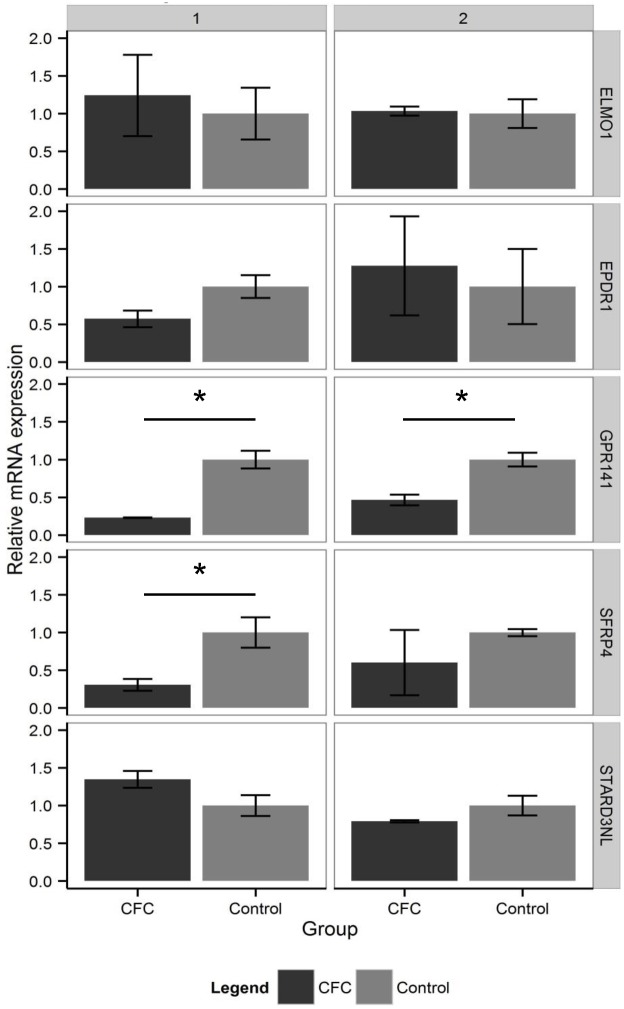
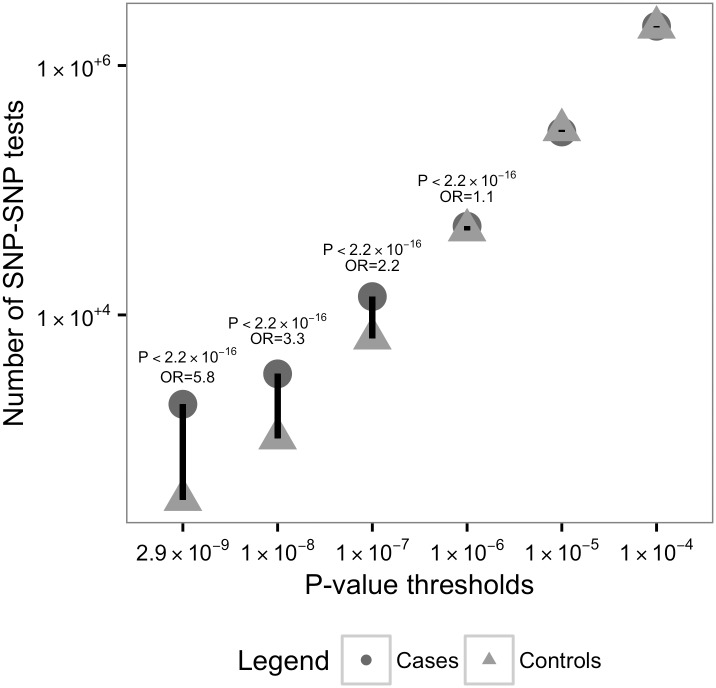
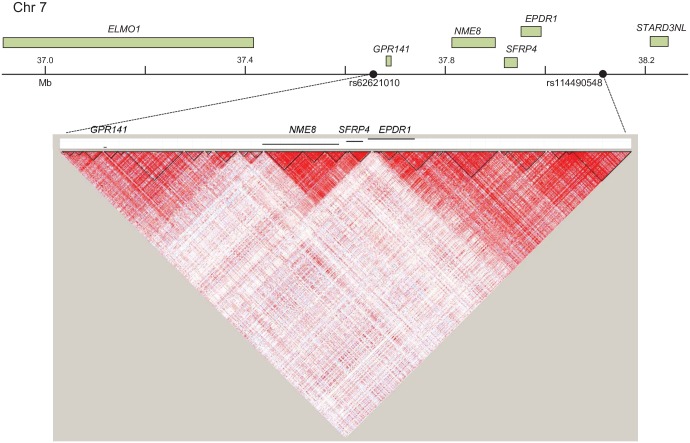
Although gene-gene interaction, or epistasis, plays a large role in complex traits in model organisms, genome-wide by genome-wide searches for two-way interaction have limited power in human studies. We thus used knowledge of a biological pathway in order to identify a contribution of epistasis to autism spectrum disorders (ASDs) in humans, a reverse-pathway genetic approach. Based on previous observation of increased ASD symptoms in Mendelian disorders of the Ras/MAPK pathway (RASopathies), we showed that common SNPs in RASopathy genes show enrichment for association signal in GWAS (P = 0.02). We then screened genome-wide for interactors with RASopathy gene SNPs and showed strong enrichment in ASD-affected individuals (P < 2.2 x 10⁻¹⁶), with a number of pairwise interactions meeting genome-wide criteria for significance. Finally, we utilized quantitative measures of ASD symptoms in RASopathy-affected individuals to perform modifier mapping via GWAS. One top region overlapped between these independent approaches, and we showed dysregulation of a gene in this region, GPR141, in a RASopathy neural cell line. We thus used orthogonal approaches to provide strong evidence for a contribution of epistasis to ASDs, confirm a role for the Ras/MAPK pathway in idiopathic ASDs, and to identify a convergent candidate gene that may interact with the Ras/MAPK pathway.
尽管基因-基因相互作用(即上位性)在模式生物的复杂性状中起很大作用,但在全基因组范围内搜索双向相互作用在人类研究中的效能有限。因此,我们利用生物通路的知识,采用逆向通路遗传方法来确定上位性对人类自闭症谱系障碍(ASD)的影响。基于先前在Ras/MAPK通路的孟德尔疾病(RASopathies)中观察到的ASD症状增加,我们发现RASopathy基因中的常见单核苷酸多态性(SNP)在全基因组关联研究(GWAS)中显示出关联信号富集(P = 0.02)。然后,我们在全基因组范围内筛选与RASopathy基因SNP的相互作用因子,发现在受ASD影响的个体中有强烈富集(P < 2.2×10^-16),许多成对相互作用符合全基因组显著性标准。最后,我们利用受RASopathy影响个体中ASD症状的定量测量通过GWAS进行修饰基因定位。在这些独立方法之间有一个顶级区域重叠,我们在一个RASopathy神经细胞系中显示了该区域的一个基因GPR141的失调。因此,我们使用正交方法为上位性对ASD的影响提供有力证据,确认Ras/MAPK通路在特发性ASD中的作用,并鉴定出一个可能与Ras/MAPK通路相互作用的趋同候选基因。