Mi Jiandui, Zhou Jianwei, Huang Xiaodan, Long Ruijun
School of Life Sciences, State Key Laboratory of Grassland Agro-Ecosystem, International Centre for Tibetan Ecosystem Management, Lanzhou University, Lanzhou, Gansu, China.
School of Public Health, Lanzhou University, Lanzhou, Gansu, China.
PLoS One. 2017 Jan 11;12(1):e0170044. doi: 10.1371/journal.pone.0170044. eCollection 2017.
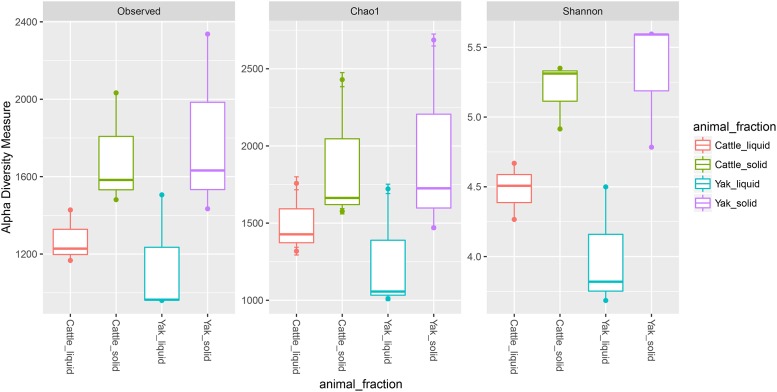
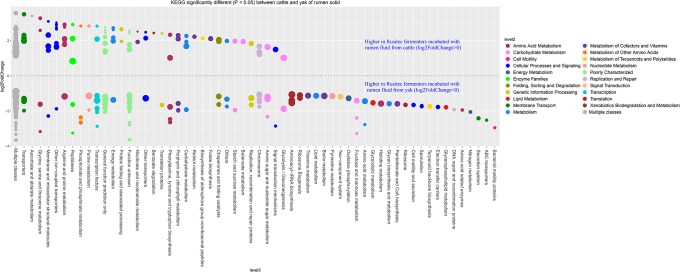
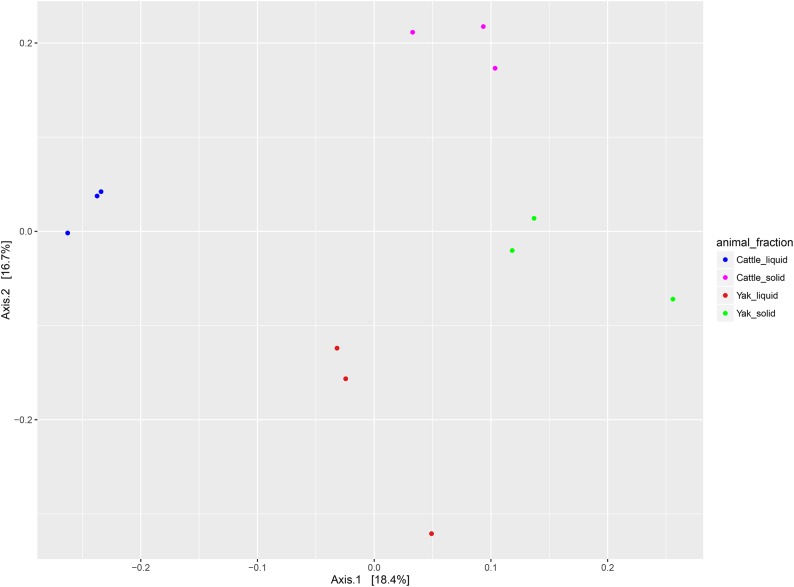
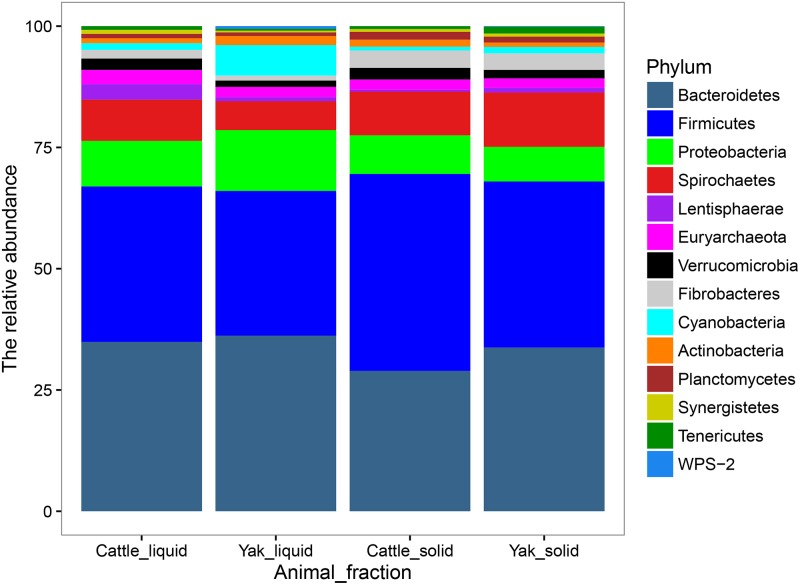
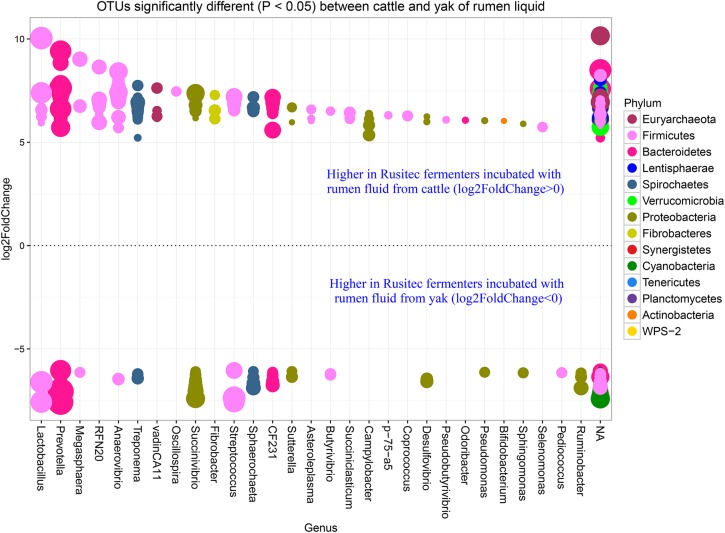
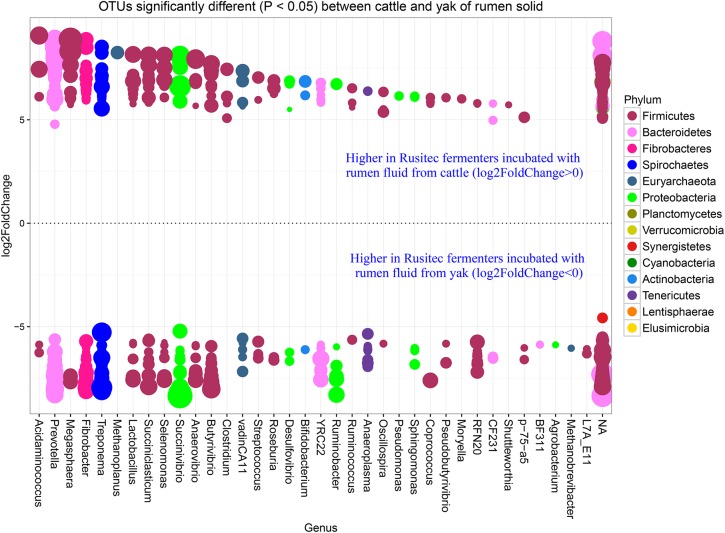
Globally methane (CH4) emissions from ruminant livestock account for 29% of total CH4 emissions. Inherited variation about CH4 emissions of different animal species might provide new opportunity for manipulating CH4 production. Six rumen-simulating fermenters (Rusitec) were set up for this study lasting for 16 d. The diet consisted of forage to concentrate ratio of 50:50 with barley straw as the forage. Treated vessels were supplied with rumen fluid from yak or cattle (3 vessels per animal species). Microbial growth was measured using 15N as a marker. The microbial community structure from liquid- and solid-fraction of each vessel was determined based on the 16S rRNA genes targeting both bacteria and archaea with MiSeq platform. CH4 yield was lower when the inoculum used from yak than that from cattle (0.26 and 0.33 mmol CH4/g dry matter intake, respectively). Lower H2 production was observed in Rusitec fermenters with rumen fluid from yak compare with that from cattle (0.28 and 0.86 mmol/d, respectively). The apparent digestibility of neutral detergent fiber, the isovalerate percentage with respect to the total amount of volatile fatty acids, the hydrogen recovery, and the proportion of liquid-associated microbial nitrogen derived from ammonia-nitrogen were higher in Rusitec fermenters incubated with rumen fluid from cattle than that from yak. The relative abundances of methanogens were no difference between two animal species. We hypothesize that more H2 production contributes to the higher methane emissions in cattle compare with yak.
在全球范围内,反刍家畜的甲烷(CH₄)排放量占CH₄总排放量的29%。不同动物物种CH₄排放的遗传变异可能为控制CH₄产生提供新机会。本研究设置了6个瘤胃模拟发酵罐(Rusitec),持续16天。日粮由粗饲料与精饲料比例为50:50组成,以大麦秸秆作为粗饲料。处理过的容器分别接种牦牛或牛的瘤胃液(每种动物3个容器)。使用¹⁵N作为标记物测量微生物生长。基于MiSeq平台,针对细菌和古菌的16S rRNA基因,确定每个容器液体和固体部分的微生物群落结构。与使用牛瘤胃液相比,使用牦牛瘤胃液时CH₄产量较低(分别为0.26和0.33 mmol CH₄/克干物质摄入量)。与使用牛瘤胃液的Rusitec发酵罐相比,使用牦牛瘤胃液的发酵罐中H₂产量较低(分别为0.28和0.86 mmol/天)。在接种牛瘤胃液的Rusitec发酵罐中,中性洗涤纤维的表观消化率、异戊酸占挥发性脂肪酸总量的百分比、氢气回收率以及来自氨氮的与液体相关的微生物氮比例均高于接种牦牛瘤胃液的发酵罐。两种动物的产甲烷菌相对丰度没有差异。我们推测,与牦牛相比,牛产生更多的H₂导致其甲烷排放量更高。