Malatesta Manuela
Department of Neuroscience, Biomedicine and Movement, Anatomy and Histology Section, University of Verona.
Eur J Histochem. 2016 Dec 9;60(4):2751. doi: 10.4081/ejh.2016.2751.
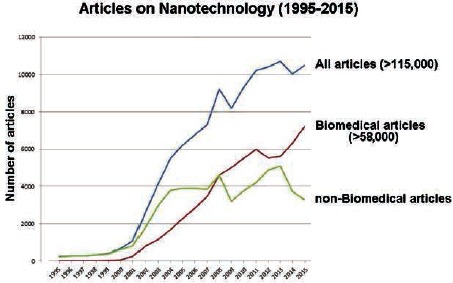
During the last twenty years, the research in nanoscience and nanotechnology has dramatically increased and, in the last decade, the interest has progressively been oriented towards biomedical applications, giving rise to a new field termed nanomedicine. Transmis - sion electron microscopy is a valuable technique not only for the thorough physico-chemical characterization of newly synthesized nanoparticulates, but especially to explore the effects of nanocomposites on biological systems, providing essential information for the development of efficient therapeutic and diagnostic strategies. Thus, for the progress of nanotechnology in the biomedical field, experts in cell biology, histochemistry and ultramicroscopy should always support the chemists, physicists and pharmacologists engaged in the synthesis and characterization of innovative nanoconstructs.
在过去二十年中,纳米科学与纳米技术的研究急剧增加,并且在过去十年里,研究兴趣逐渐转向生物医学应用,从而催生了一个名为纳米医学的新领域。透射电子显微镜不仅是对新合成纳米颗粒进行全面物理化学表征的宝贵技术,而且对于探索纳米复合材料对生物系统的影响尤其重要,可为开发高效治疗和诊断策略提供重要信息。因此,为了纳米技术在生物医学领域的发展,细胞生物学、组织化学和超微显微镜领域的专家应始终支持从事新型纳米结构合成与表征的化学家、物理学家和药理学家。