Hey Ying-Ying, Quah Benjamin, O'Neill Helen C
Research School of Biology, Australian National University, Canberra, ACT, Australia.
Clem Jones Research Centre for Regenerative Medicine, Bond University, Gold Coast, Queensland, Australia.
BMC Immunol. 2017 Jan 11;18(1):4. doi: 10.1186/s12865-016-0186-4.
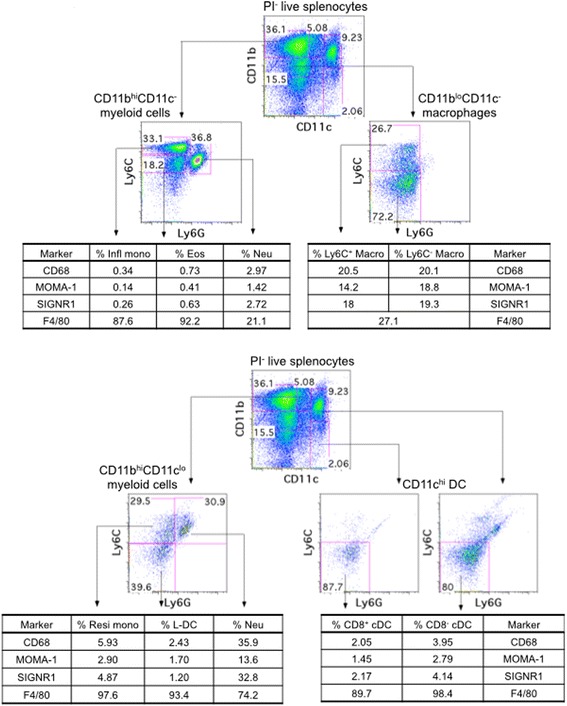
The spleen is an important site for hematopoiesis. It supports development of myeloid cells from bone marrow-derived precursors entering from blood. Myeloid subsets in spleen are not well characterised although dendritic cell (DC) subsets are clearly defined in terms of phenotype, development and functional role. Recently a novel dendritic-like cell type in spleen named 'L-DC' was distinguished from other known dendritic and myeloid cells by its distinct phenotype and developmental origin. That study also redefined splenic eosinophils as well as resident and inflammatory monocytes in spleen.
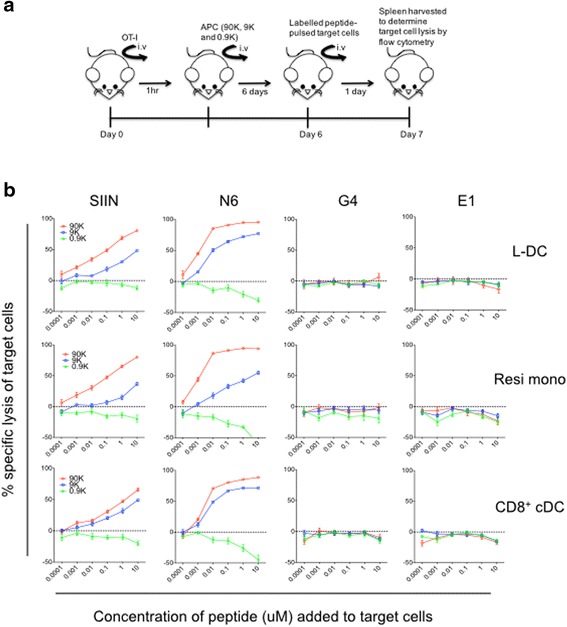
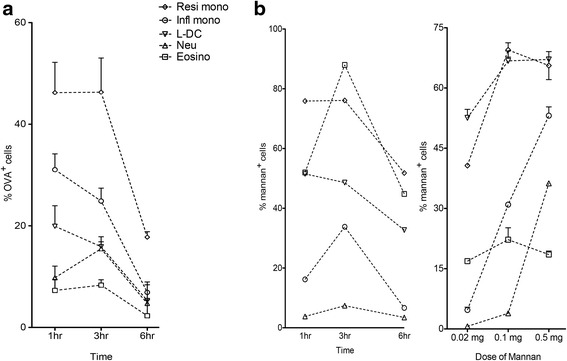
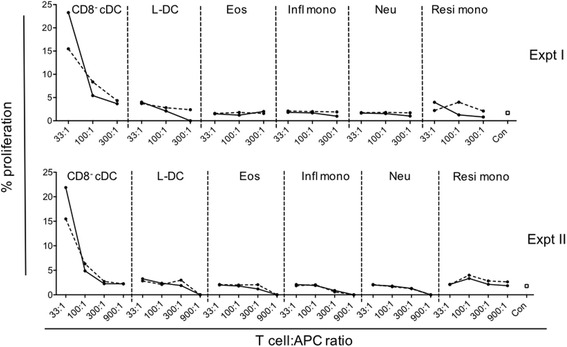
L-DC are shown to be distinct from known splenic macrophages and monocyte subsets. Using a new flow cytometric procedure, it has been possible to identify and isolate L-DC in order to assess their functional competence and ability to activate T cells both in vivo and in vitro. L-DC are readily accessible to antigen given intravenously through receptor-mediated endocytosis. They are also capable of CD8 T cell activation through antigen cross presentation, with subsequent induction of cytotoxic effector T cells. L-DC are MHCII cells and unable to activate CD4 T cells, a property which clearly distinguishes them from conventional DC. The myeloid subsets of resident monocytes, inflammatory monocytes, neutrophils and eosinophils, were found to have varying capacities to take up antigen, but were uniformly unable to activate either CD4 T cells or CD8 T cells.
The results presented here demonstrate that L-DC in spleen are distinct from other myeloid cells in that they can process antigen for CD8 T cell activation and induction of cytotoxic effector function, while both L-DC and myeloid subsets remain unable to activate CD4 T cells. The L-DC subset in spleen is therefore distinct as an antigen presenting cell.
脾脏是造血的重要场所。它支持从血液进入的骨髓来源前体的髓系细胞发育。尽管树突状细胞(DC)亚群在表型、发育和功能作用方面已明确界定,但脾脏中的髓系亚群尚未得到充分表征。最近,脾脏中一种名为“L-DC”的新型树突状样细胞因其独特的表型和发育起源而与其他已知的树突状和髓系细胞区分开来。该研究还重新定义了脾脏中的嗜酸性粒细胞以及驻留和炎性单核细胞。
L-DC被证明与已知的脾脏巨噬细胞和单核细胞亚群不同。使用一种新的流式细胞术程序,已能够识别和分离L-DC,以评估它们在体内和体外激活T细胞的功能能力。通过受体介导的内吞作用,静脉注射的抗原很容易被L-DC摄取。它们还能够通过抗原交叉呈递激活CD8 T细胞,随后诱导细胞毒性效应T细胞。L-DC是MHCII细胞,无法激活CD4 T细胞,这一特性将它们与传统DC明显区分开来。发现驻留单核细胞、炎性单核细胞、中性粒细胞和嗜酸性粒细胞的髓系亚群具有不同的摄取抗原能力,但均无法激活CD4 T细胞或CD8 T细胞。
此处呈现的结果表明,脾脏中的L-DC与其他髓系细胞不同,因为它们可以处理抗原以激活CD8 T细胞并诱导细胞毒性效应功能,而L-DC和髓系亚群均无法激活CD4 T细胞。因此,脾脏中的L-DC亚群作为一种抗原呈递细胞是独特的。