Department of Animal Science and Technology, Beijing Agricultural College\Beijing Key Laboratory of Traditional Chinese Veterinary Medicine (TCVM), Beijing, 102206, People's Republic of China.
Beijing Key Laboratory of Dairy Cow Nutrition, Beijing Agricultural College, Beijing, 102206, China.
BMC Complement Altern Med. 2017 Jan 11;17(1):38. doi: 10.1186/s12906-016-1520-3.
Mastitis gives rise to big financial burden to farm industry (mainly dairy production) and public health. Its incidence is currently high and therefore, highly effective treatments for therapy, especially with natural products are required. Taraxacum officinale has been reported to use for anti-inflammation. However, its effect on endothelium during mastitis has not been reported.
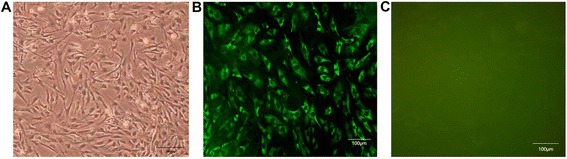
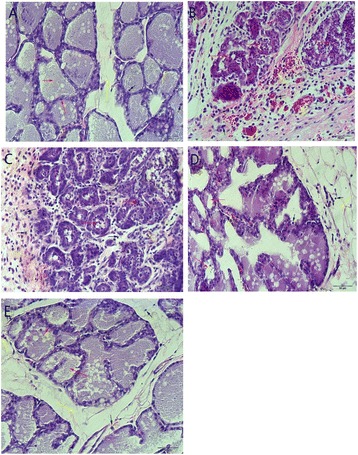
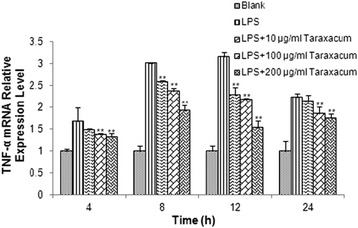
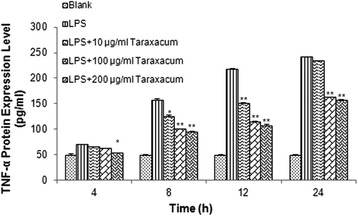
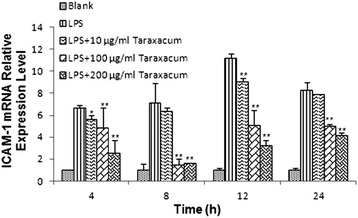
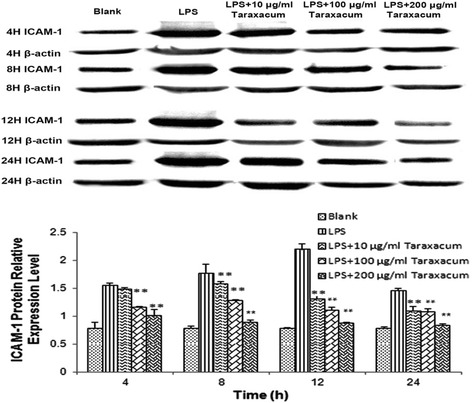
We firstly established inflammation experimental model of rat mammary microvascular endothelial cells (RMMVECs). We evaluated the effects of dandelion leaf aqueous extracts (DAE) on LPS-induced production of inflammatory mediators in RMMVECs by enzyme-linked immunosorbent assay and Western blot. We treated RMMVECs with 1 μg/ml LPS for 4 h and then incubated with 10, 100 and 200 μg/mL DAE for 4, 8, 12 and 24 h. The expression (mRNA and protein level) of targets (tumor necrosis factor-alpha (TNF- α) and Intracellular Adhesion Molecule 1 (ICAM1) was analyzed by employing real-time PCR and Western blots. The in vivo anti-inflammatory effect of DAE on mastitis within an Staphylococcus aureus-induced mouse model was also determined.
The obtained results showed that dandelion extracts at the concentration of 100 and 200 μg/mL could significantly inhibit both TNF-α and ICAM-1 expression in all time points checked while 10 μg/mL of dandelion only suppress both expression at 8 and 12 h post-treatment. The in vivo tests showed that the DAE inhibited the expression of TNF-α and ICAM-1 in a time-dependent manner.
All results suggest that the endothelium may use as as a possible target of dandelion for anti-inflammation.
乳腺炎给农场产业(主要是奶牛养殖业)和公共卫生带来了巨大的经济负担。其发病率目前很高,因此,需要寻找高效的治疗方法,特别是使用天然产物的治疗方法。蒲公英已被报道用于抗炎。然而,其在乳腺炎中对血管内皮的作用尚未报道。
我们首先建立了大鼠乳腺微血管内皮细胞(RMMVEC)炎症实验模型。通过酶联免疫吸附试验和 Western blot 评估蒲公英叶水提物(DAE)对 LPS 诱导的 RMMVEC 炎症介质产生的影响。我们用 1μg/ml LPS 处理 RMMVEC 4 h,然后用 10、100 和 200μg/ml DAE 孵育 4、8、12 和 24 h。采用实时 PCR 和 Western blot 分析靶标(肿瘤坏死因子-α(TNF-α)和细胞间黏附分子 1(ICAM1)的表达(mRNA 和蛋白水平)。还通过金黄色葡萄球菌诱导的小鼠模型确定 DAE 对乳腺炎的体内抗炎作用。
结果表明,蒲公英提取物在 100 和 200μg/ml 的浓度下能显著抑制 TNF-α和 ICAM-1 在所有检查时间点的表达,而 10μg/ml 的蒲公英仅在处理后 8 和 12 h 抑制这两种表达。体内试验表明,DAE 能以时间依赖性方式抑制 TNF-α和 ICAM-1 的表达。
所有结果均表明,血管内皮可能是蒲公英抗炎的潜在靶点。