Elf Marie, Flink Maria, Nilsson Marie, Tistad Malin, von Koch Lena, Ytterberg Charlotte
School of Education, Health and Social Studies, Dalarna University, Falun, Sweden.
Department of Neurobiology, Care Sciences and Society, Karolinska Institutet, Huddinge, Stockholm, Sweden.
BMC Health Serv Res. 2017 Jan 11;17(1):24. doi: 10.1186/s12913-016-1957-6.
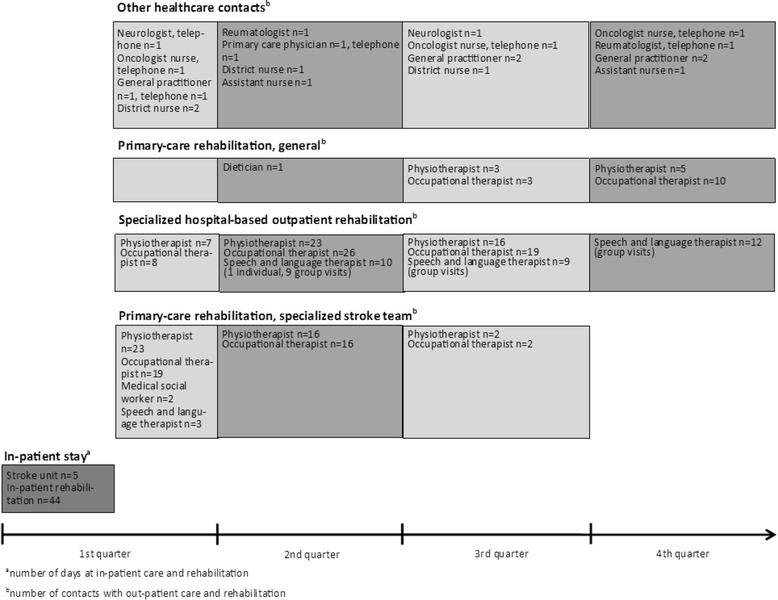
There is a trend towards value-based health service, striving to cut costs while generating value for the patient. The overall objective comprises higher-quality health services and improved patient safety and cost efficiency. The approach could align with patient-centred care, as it entails a focus on the patient's experience of her or his entire cycle of care, including the use of well-defined outcome measurements. Challenges arise when the approach is applied to health services for people living with long-term complex conditions that require support from various healthcare services. The aim of this work is to critically discuss the value-based approach and its implications for patients with long-term complex conditions. Two cases from clinical practice and research form the foundation for our reasoning, illustrating several challenges regarding value-based health services for people living with long-term complex conditions.
Achieving value-based health services that provide the health outcomes that matter to patients and providing greater patient-centredness will place increased demands on the healthcare system. Patients and their informal caregivers must be included in the development and establishment of outcome measures. The outcome measures must be standardized to allow evaluation of specific conditions at an aggregated level, but they must also be sensitive enough to capture each patient's individual needs and goals. Healthcare systems that strive to establish value-based services must collaborate beyond the organizational boundaries to create clear patient trajectories in order to avoid fragmentation. The shift towards value-based health services has the potential to align healthcare-service delivery with patient-centred care if serious efforts to take the patient's perspective into account are made. This is especially challenging in fragmented healthcare systems and for patients with long-term- and multi-setting-care needs.
当前存在一种基于价值的卫生服务趋势,即在努力为患者创造价值的同时削减成本。总体目标包括提供更高质量的卫生服务、提高患者安全性和成本效益。这种方法可能与以患者为中心的护理相一致,因为它需要关注患者在整个护理周期中的体验,包括使用明确界定的结果测量指标。当这种方法应用于为患有长期复杂疾病且需要各种医疗服务支持的人群提供的卫生服务时,就会出现挑战。本研究的目的是批判性地讨论基于价值的方法及其对患有长期复杂疾病患者的影响。来自临床实践和研究的两个案例构成了我们推理的基础,说明了为患有长期复杂疾病的人群提供基于价值的卫生服务所面临的若干挑战。
实现能够提供对患者至关重要的健康结果且更以患者为中心的基于价值的卫生服务,将对医疗系统提出更高要求。患者及其非正式护理人员必须纳入结果测量指标的制定和确立过程。结果测量指标必须标准化,以便在汇总层面评估特定疾病,但它们也必须足够敏感,以捕捉每个患者的个体需求和目标。努力建立基于价值的服务的医疗系统必须超越组织边界进行协作,以创建清晰的患者就医轨迹,从而避免服务碎片化。如果认真努力考虑患者的观点,向基于价值的卫生服务转变有可能使医疗服务提供与以患者为中心的护理保持一致。这在碎片化的医疗系统中以及对于有长期和多场景护理需求的患者来说尤其具有挑战性。