The Research Center for Medicine and Social Development, Collaborative Innovation Center of Social Risks Governance in Health, School of Public Health and Management, Chongqing Medical University, Chongqing, 400016, China.
Int J Equity Health. 2017 Jan 11;16(1):10. doi: 10.1186/s12939-016-0507-5.
With the depth development of health care system reform in China, emergency medical services (EMS) is confronted with challenges as well as opportunities. This study aimed to analyze the equity of China's EMS needs, utilization, and resources distribution, and put forward proposal to improve the equity.
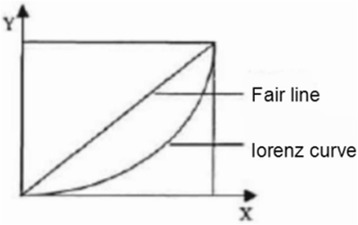
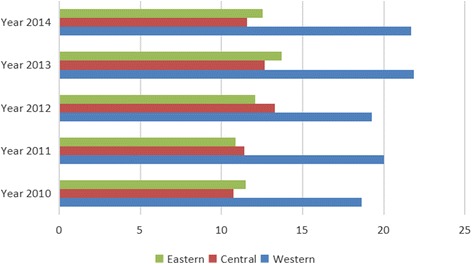
Three emergency needs indicators (mortality rate of cardiovascular and cerebrovascular diseases, harm, and digestive system disease), two utilization indicators (emergency outpatient visits and rate of utilization) and one resource allocation indicator (number of EMS facilities) were collected after the review of the China Statistical Yearbook and the National Disease Surveillance System. Next, EMS related indicators were compared among 31 provinces from the eastern, central, and western regions of the country. Concentration Index (CI) were used to measure the equity of EMS needs and utilization among the western, central, and eastern regions. The Gini coefficient of demographic and geographic distribution of facilities represented the equity of resource allocation.
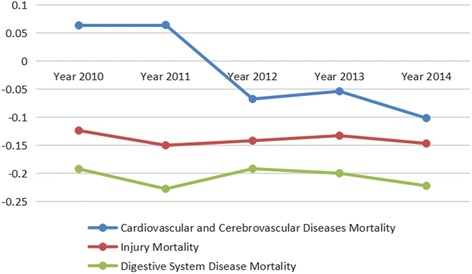
During 2010-2014, the CI of cardiovascular and cerebrovascular disease mortality changed from positive to negative, which indicates that the concentrated trend transferred from richer regions to the poorer area. Injury mortality (CI: range from - 0.1241to -0.1504) and digestive disease mortality (CI: range from - 0.1921 to - 0.2279) consistently concentrated in the poorer region, and the inequity among regions became more obviously year-by-year. The utilization of EMS (CI: range from 0.1074 to 0.0824) showed an improvement; however, the inequity reduced gradually. The EMS facilities distribution by population (Gini coefficient: range from 0.0922 to 0.1200) showed high equitability but the EMS facilities distribution by geography (Gini coefficient: range from 0.0922 to 0.1200) suggested a huge gap between regions because the Gini coefficients were greater than 0.5 in the past 5 years.
There are some inequities of needs, utilization, and resource allocation in the China EMS. The government needs to stick to the principle of increasing investment in poorer regions, perfecting ambulance configuration and improving health workers' professional skills to improve the equity and quality of EMS.
随着中国医疗卫生体制改革的深入,急诊医疗服务(EMS)面临着机遇和挑战。本研究旨在分析中国 EMS 需求、利用和资源配置的公平性,并提出改善公平性的建议。
通过查阅《中国统计年鉴》和《全国疾病监测系统》,收集了心血管疾病死亡率、伤害率和消化系统疾病死亡率三个急诊需求指标、急诊门诊量和利用率两个利用指标以及 EMS 设施数量一个资源配置指标。然后,比较了来自中国东部、中部和西部地区的 31 个省份的 EMS 相关指标。使用集中指数(CI)来衡量西部地区、中部地区和东部地区 EMS 需求和利用的公平性。设施人口分布的基尼系数代表资源配置的公平性。
2010-2014 年期间,心血管疾病死亡率的 CI 从正值变为负值,这表明集中趋势从较富裕地区转移到了较贫困地区。伤害死亡率(CI:范围从-0.1241 到-0.1504)和消化疾病死亡率(CI:范围从-0.1921 到-0.2279)持续集中在较贫困地区,地区间的不平等程度逐年加剧。EMS 的利用(CI:范围从 0.1074 到 0.0824)有所改善,但公平性逐渐降低。按人口分布的 EMS 设施(基尼系数:范围从 0.0922 到 0.1200)显示出较高的公平性,但按地理分布的 EMS 设施(基尼系数:范围从 0.0922 到 0.1200)表明地区之间存在巨大差距,因为过去 5 年的基尼系数都大于 0.5。
中国 EMS 存在需求、利用和资源配置方面的不公平现象。政府需要坚持向贫困地区增加投资的原则,完善救护车配置,提高卫生工作者的专业技能,提高 EMS 的公平性和质量。