From the *Department of Technical Communication, Science & Healthcare, Texas Tech University, Lubbock, TX; and †GE Healthcare, Technology and Medical Innovation Organization, Waukesha; ‡GE Healthcare, Ultrasound Business, Wauwatosa; and §GE Healthcare, Medical Affairs, Waukesha, WI.
Reg Anesth Pain Med. 2017 Mar/Apr;42(2):223-232. doi: 10.1097/AAP.0000000000000549.
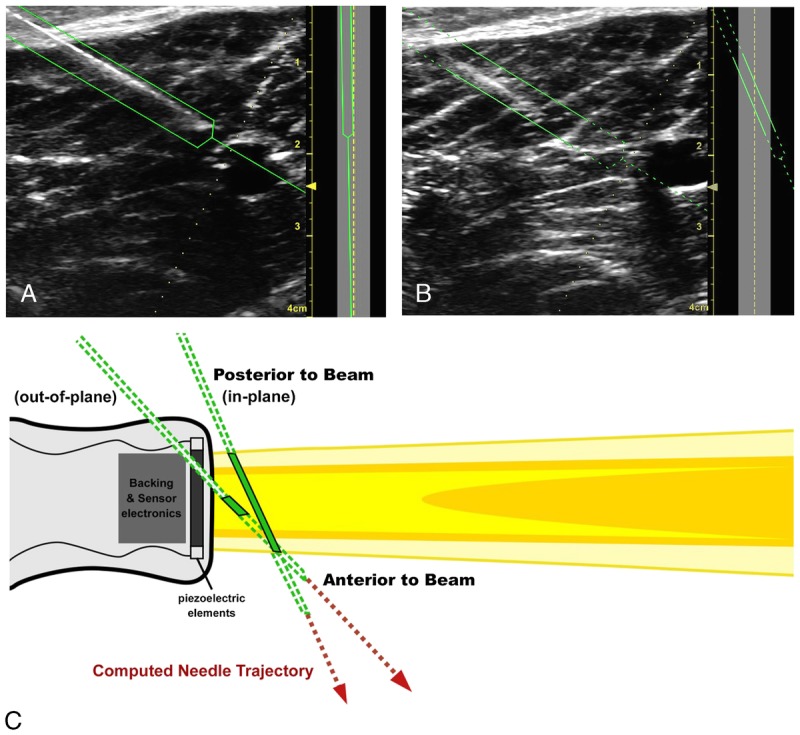
Ultrasound-guided regional anesthesia facilitates an approach to sensitive targets such as nerve clusters without contact or inadvertent puncture. We compared accuracy of needle placement with a novel passive magnetic ultrasound needle guidance technology (NGT) versus conventional ultrasound (CU) with echogenic needles.
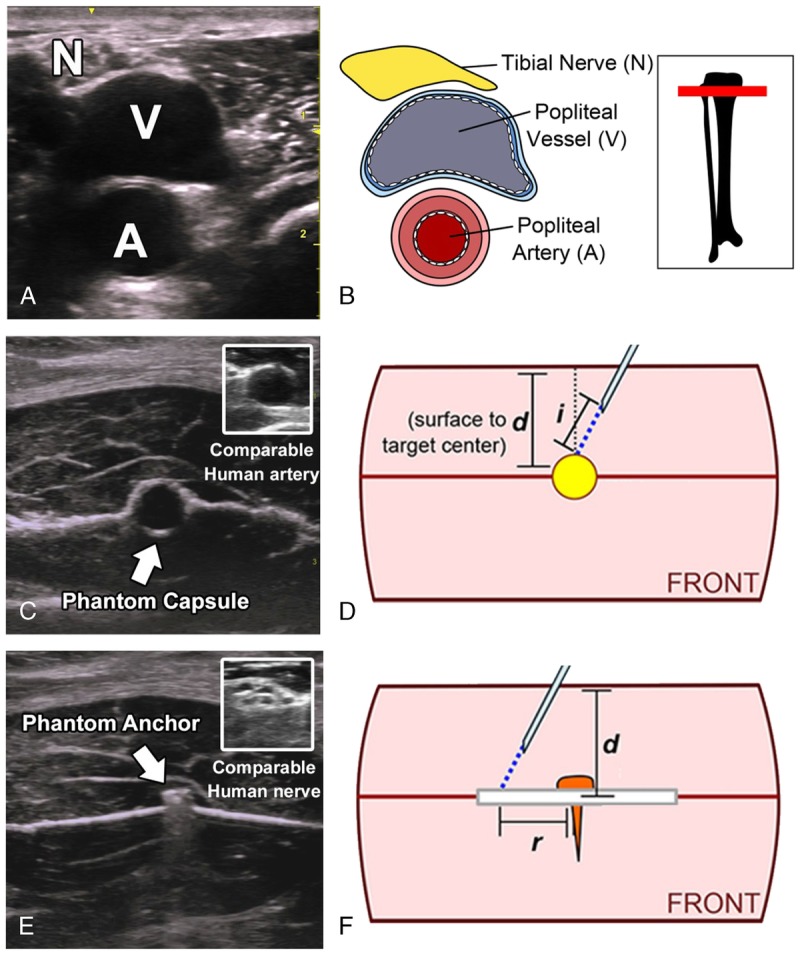
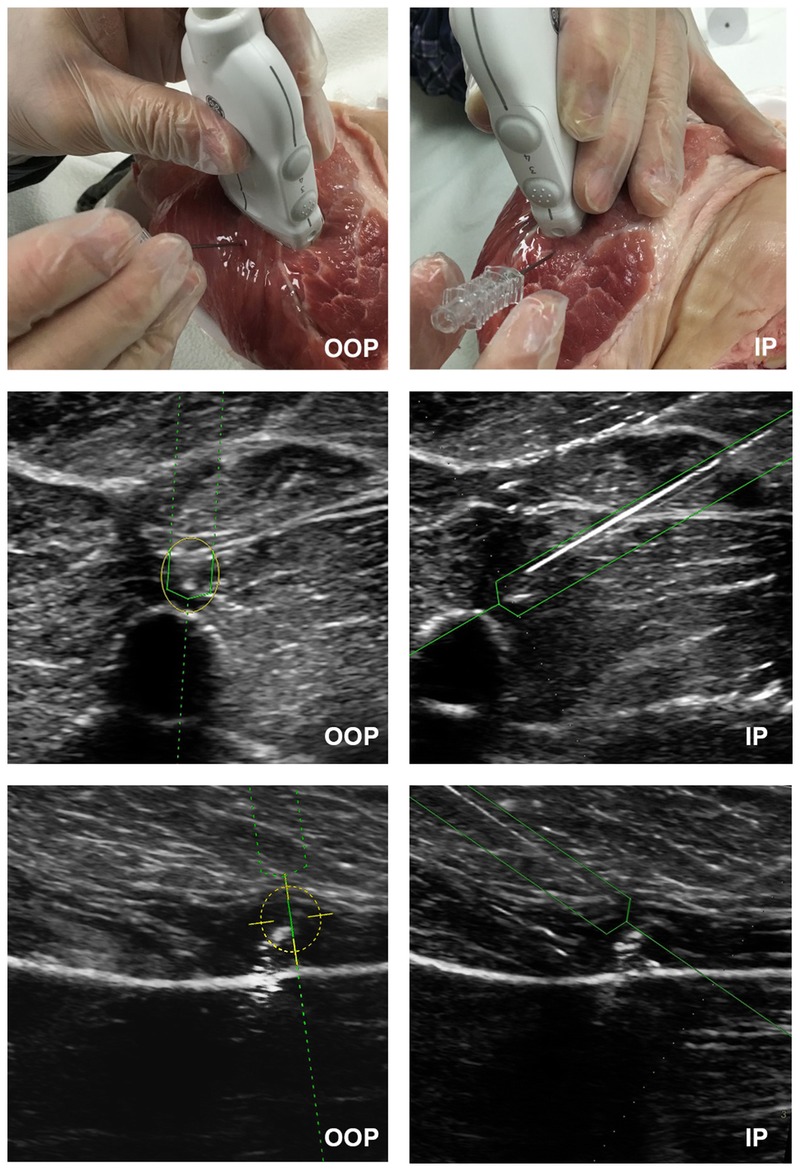
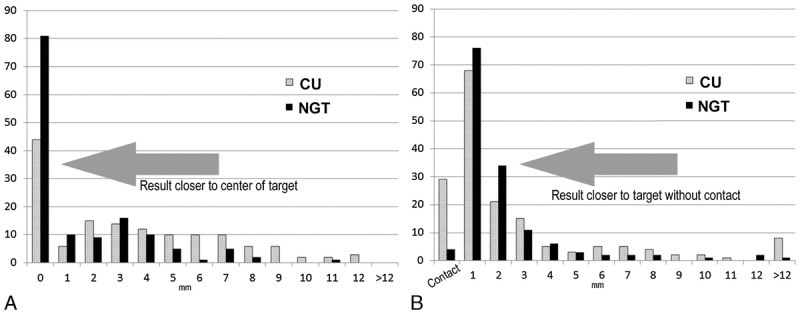
Sixteen anesthesiologists and 19 residents performed a series of 16 needle insertion tasks each, 8 using NGT (n = 280) and 8 using CU (n = 280), in high-fidelity porcine phantoms. Tasks were stratified based on aiming to contact (target-contact) or place in close proximity with (target-proximity) targets, needle gauge (no. 18/no. 22), and in-plane (IP) or out-of-plane (OOP) approach. Distance to the target, task completion by aim, number of passes, and number of tasks completed on the first pass were reported.
Needle guidance technology significantly improved distance, task completion, number of passes, and completion on the first pass compared with CU for both IP and OOP approaches (P ≤ 0.001). Average NGT distance to target was lower by 57.1% overall (n = 560, 1.5 ± 2.4 vs 3.5 ± 3.7 mm), 38.5% IP (n = 140, 1.6 ± 2.6 vs 2.6 ± 2.8 mm), and 68.2% OOP (n = 140, 1.4 ± 2.2 vs 4.4 ± 4.3 mm) (all P ≤ 0.01). Subgroup analyses revealed accuracy gains were largest among target-proximity tasks performed by residents and for OOP approaches. Needle guidance technology improved first-pass completion from 214 (76.4%) per 280 to 249 (88.9%) per 280, a significant improvement of 16.4% (P = 0.001).
Passive magnetic NGT can improve accuracy of needle procedures, particularly among OOP procedures requiring close approach to sensitive targets, such as nerve blocks in anesthesiology practice.
超声引导下的区域麻醉有利于接近神经丛等敏感目标,而无需接触或意外穿刺。我们比较了新型被动式磁超声引导技术(NGT)与传统超声(CU)引导下使用超声增强针的准确性。
16 名麻醉医师和 19 名住院医师每人进行了一系列 16 次针插入任务,8 次使用 NGT(n=280),8 次使用 CU(n=280),在高保真度的猪模型中进行。任务根据接触目标(目标接触)或接近目标(目标接近)、针规(18 号/22 号)以及平面内(IP)或平面外(OOP)方法进行分层。报告了到达目标的距离、按目标完成任务的情况、穿刺次数和首次通过完成的任务数量。
与 CU 相比,NGT 在 IP 和 OOP 两种方法中均显著提高了距离、任务完成情况、穿刺次数和首次通过的完成率(P≤0.001)。整体上,NGT 到达目标的平均距离降低了 57.1%(n=560,1.5±2.4 毫米比 3.5±3.7 毫米),IP 降低了 38.5%(n=140,1.6±2.6 毫米比 2.6±2.8 毫米),OOP 降低了 68.2%(n=140,1.4±2.2 毫米比 4.4±4.3 毫米)(均 P≤0.01)。亚组分析显示,在接近目标的任务中,准确性提高最大的是住院医师完成的任务,OOP 方法也是如此。NGT 技术使首次通过完成率从 280 次中的 214 次(76.4%)提高到 280 次中的 249 次(88.9%),提高了 16.4%(P=0.001)。
被动式磁 NGT 可提高针操作的准确性,尤其是在接近神经丛等敏感目标的 OOP 操作中,例如在麻醉实践中进行神经阻滞。