Jonas Eric, Kording Konrad Paul
Department of Electrical Engineering and Computer Science, University of California, Berkeley, Berkeley, California, United States of America.
Department of Physical Medicine and Rehabilitation, Northwestern University and Rehabilitation Institute of Chicago, Chicago, Illinois, United States of America.
PLoS Comput Biol. 2017 Jan 12;13(1):e1005268. doi: 10.1371/journal.pcbi.1005268. eCollection 2017 Jan.
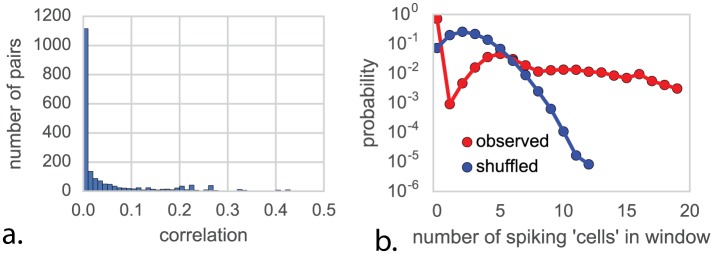
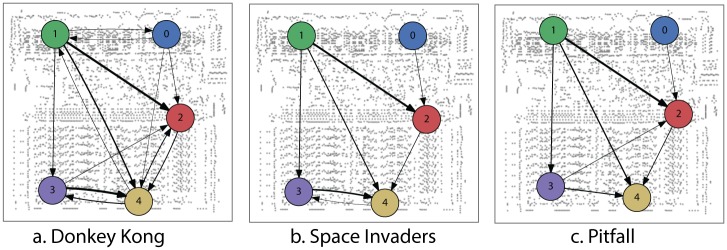
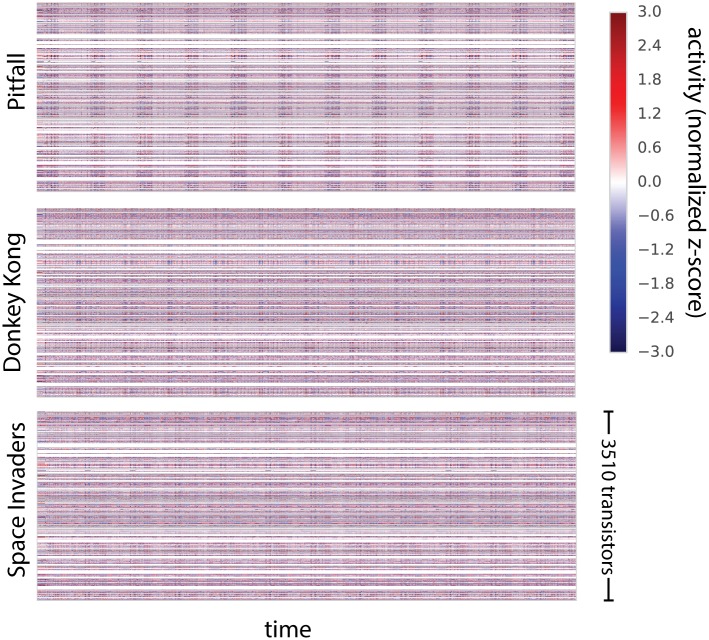
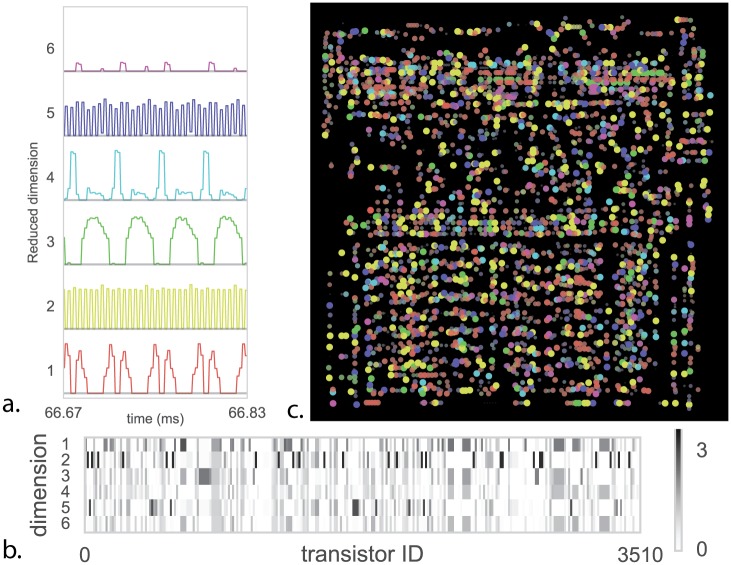
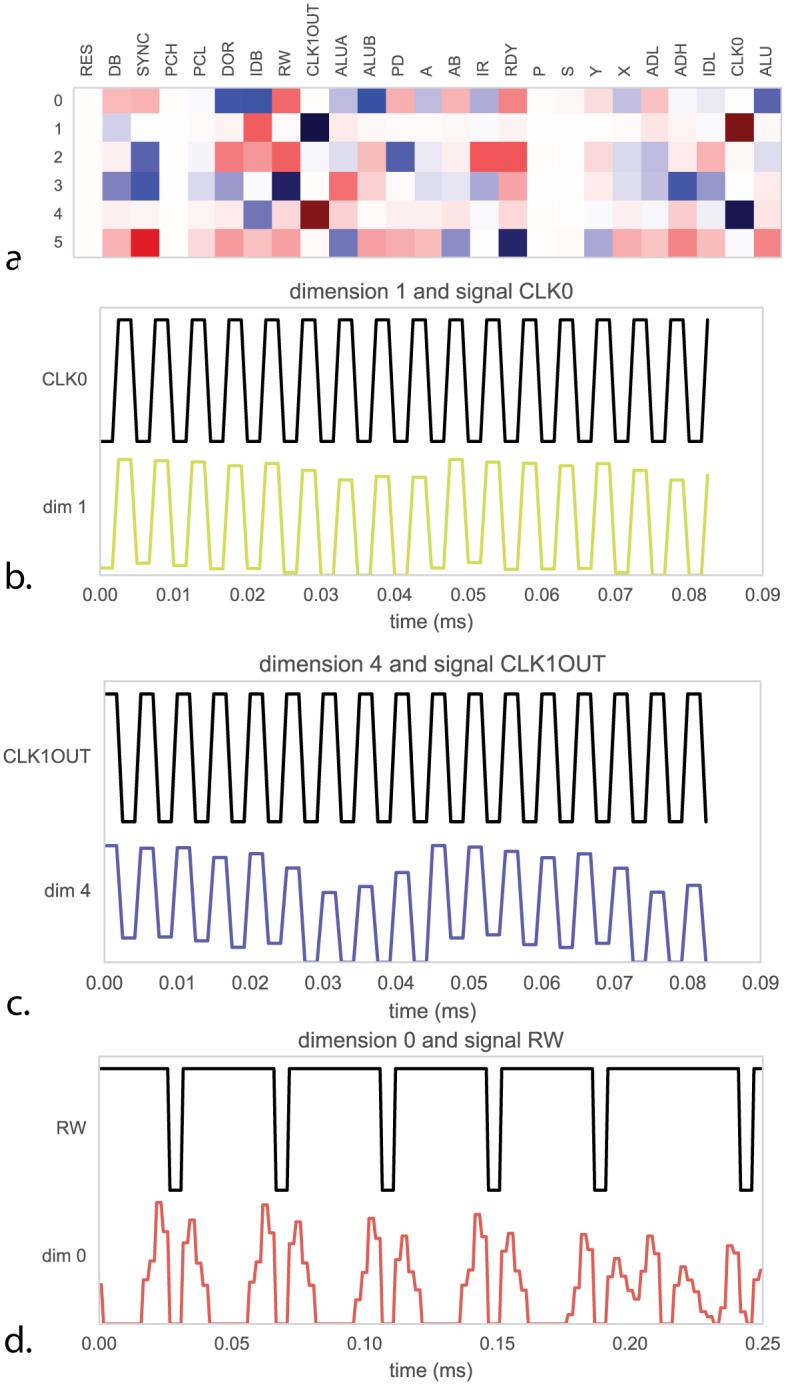
There is a popular belief in neuroscience that we are primarily data limited, and that producing large, multimodal, and complex datasets will, with the help of advanced data analysis algorithms, lead to fundamental insights into the way the brain processes information. These datasets do not yet exist, and if they did we would have no way of evaluating whether or not the algorithmically-generated insights were sufficient or even correct. To address this, here we take a classical microprocessor as a model organism, and use our ability to perform arbitrary experiments on it to see if popular data analysis methods from neuroscience can elucidate the way it processes information. Microprocessors are among those artificial information processing systems that are both complex and that we understand at all levels, from the overall logical flow, via logical gates, to the dynamics of transistors. We show that the approaches reveal interesting structure in the data but do not meaningfully describe the hierarchy of information processing in the microprocessor. This suggests current analytic approaches in neuroscience may fall short of producing meaningful understanding of neural systems, regardless of the amount of data. Additionally, we argue for scientists using complex non-linear dynamical systems with known ground truth, such as the microprocessor as a validation platform for time-series and structure discovery methods.
神经科学领域有一种普遍的观点,即我们主要受数据限制,并且在先进的数据分析算法的帮助下,生成大规模、多模态和复杂的数据集将能让我们对大脑处理信息的方式有根本性的洞察。这些数据集目前还不存在,而且即便存在,我们也无法评估算法生成的洞察是否足够甚至正确。为了解决这个问题,我们在这里将经典微处理器作为一种模式生物,并利用我们对其进行任意实验的能力,来探究神经科学中常用的数据分析方法能否阐明其处理信息的方式。微处理器属于那些复杂的人工信息处理系统,我们对其从整体逻辑流程、逻辑门到晶体管动态等各个层面都有所了解。我们发现,这些方法揭示了数据中有趣的结构,但并没有有意义地描述微处理器中信息处理的层次结构。这表明,无论数据量有多少,神经科学目前的分析方法可能都无法对神经系统产生有意义的理解。此外,我们主张科学家使用具有已知真实情况的复杂非线性动力系统,比如微处理器,作为时间序列和结构发现方法的验证平台。