Wang Zhihai, Liao Kui, Zuo Wenqi, Liu Xueliang, Qiu Zhili, Gong Zhitao, Liu Chuan, Zeng Quan, Qian Yi, Jiang Liang, Bu Youquan, Hong Suling, Hu Guohua
Department of Otorhinolaryngology, The First Affiliated Hospital of Chongqing Medical UniversityChongqingP.R. China.
Department of Oncology, The First Affiliated Hospital of Chongqing Medical UniversityChongqingP.R. China.
Oncol Res. 2017 Jan 2;25(1):123-136. doi: 10.3727/096504016X14732772150226.
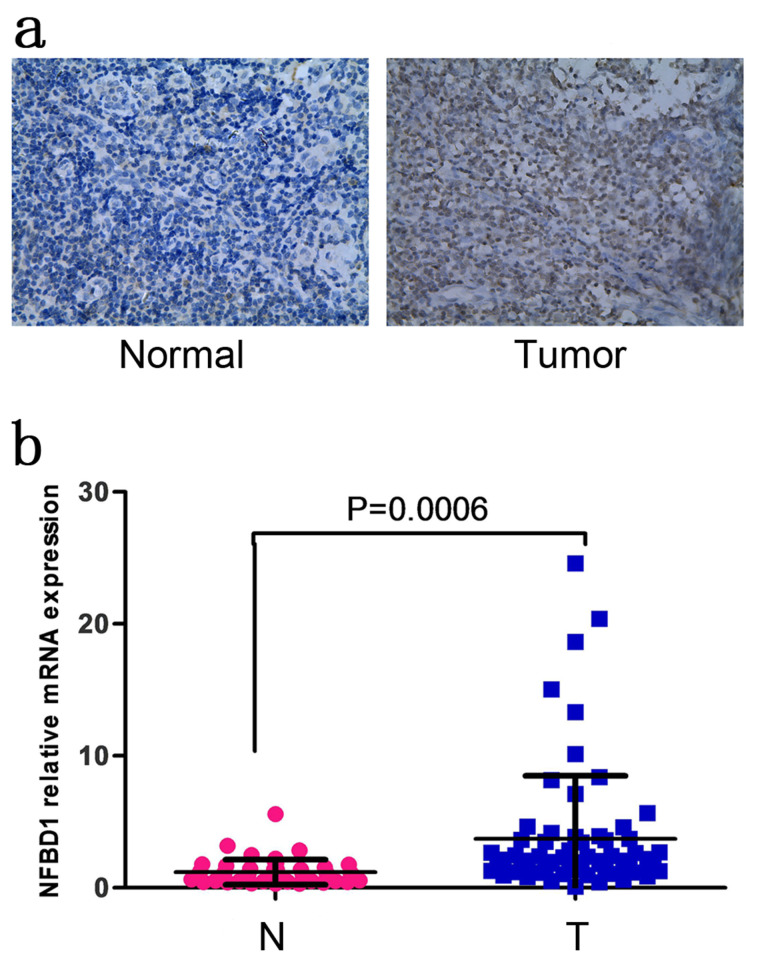
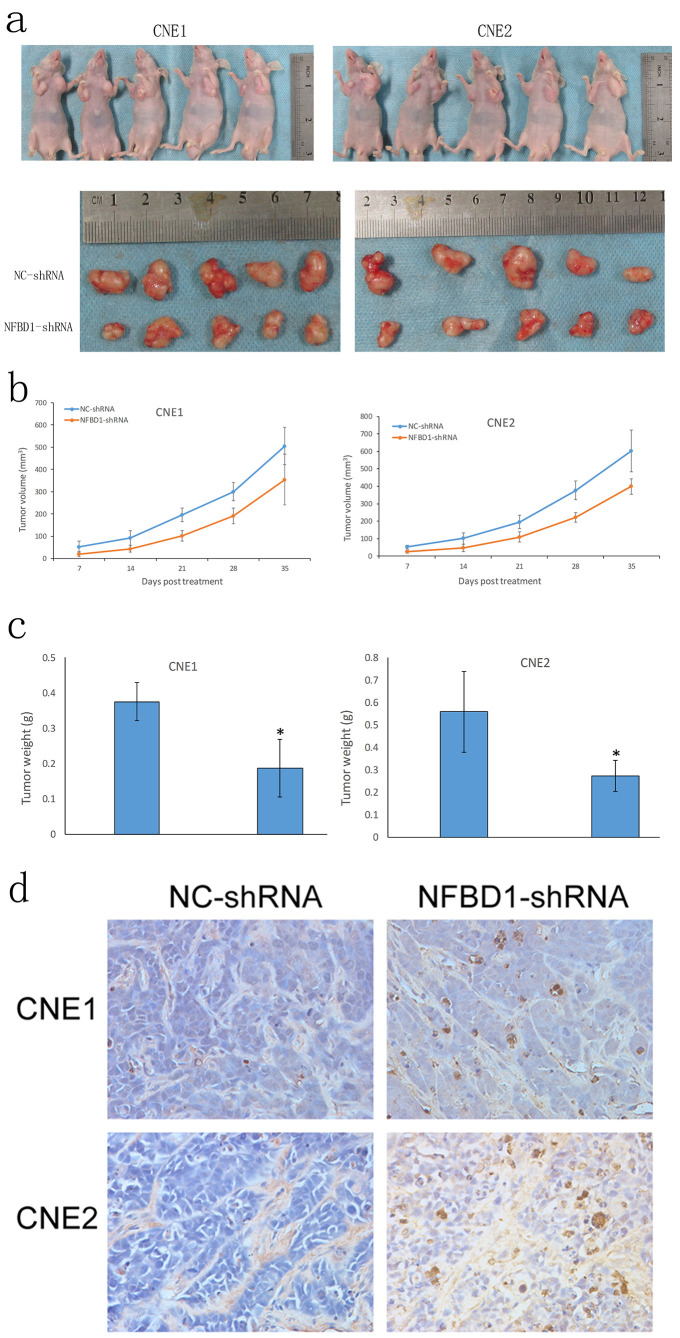
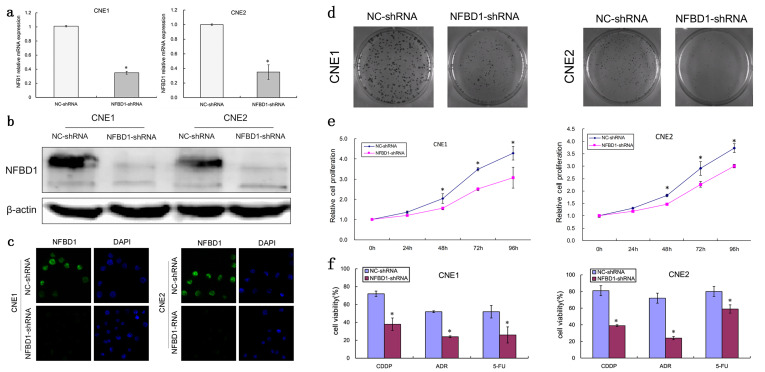
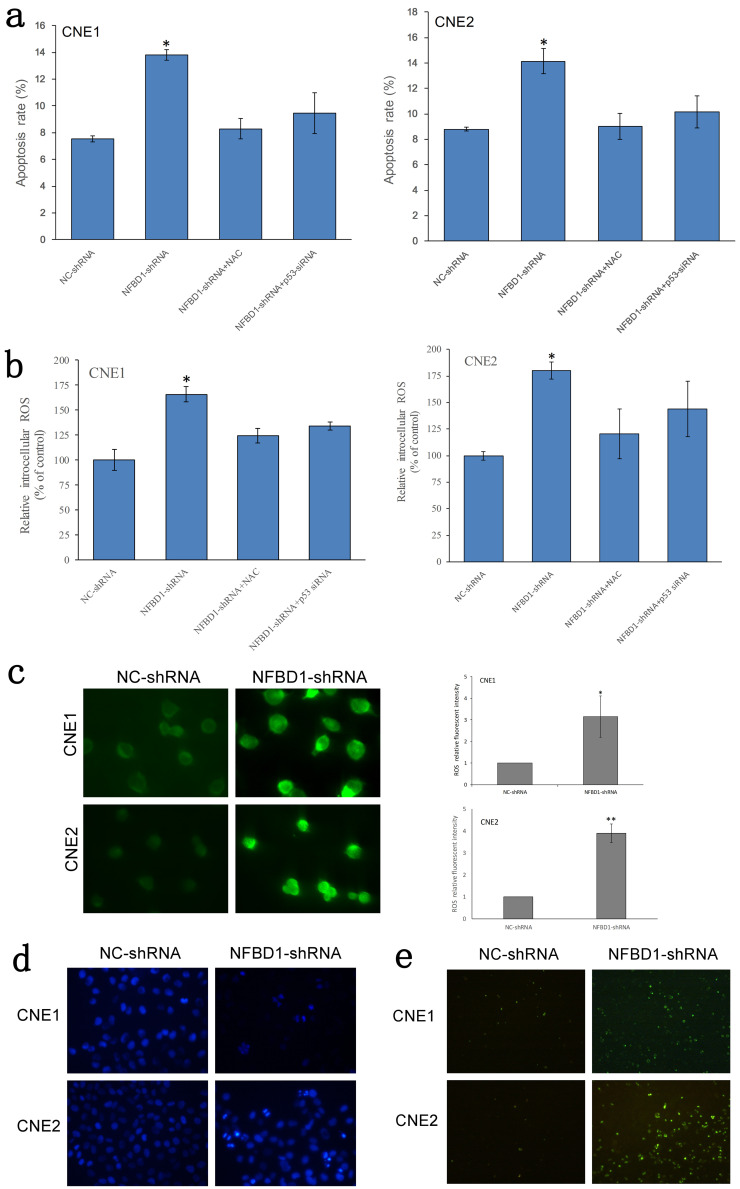
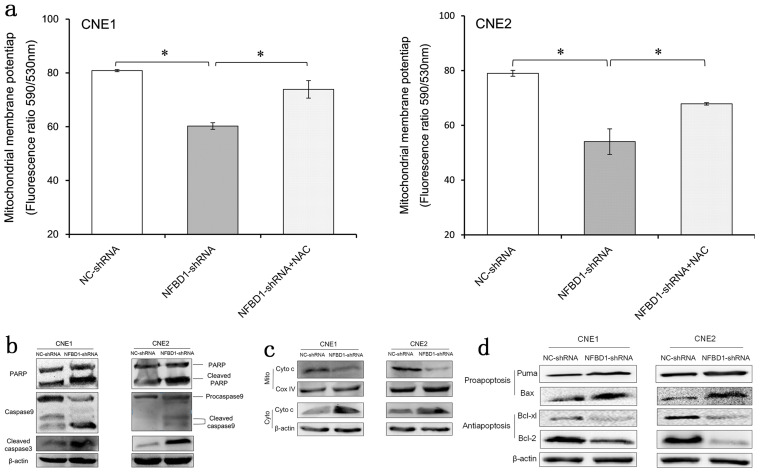
NFBD1, a signal amplifier of the p53 pathway, is vital for protecting cells from p53-mediated apoptosis and the early phase of DNA damage response under normal culture conditions. Here we investigated its expression in patients with nasopharyngeal carcinoma (NPC), and we describe the biological functions of the NFBD1 gene. We found that NFBD1 mRNA and protein were more highly expressed in NPC tissues than in nontumorous tissues. To investigate the function of NFBD1, we created NFBD1-depleted NPC cell lines that exhibited decreased cellular proliferation and colony formation, an increase in their rate of apoptosis, and an enhanced sensitivity to chemotherapeutic agents compared with in vitro controls. However, N-acetyl cysteine (NAC) and downregulation of p53 expression could partially reverse the apoptosis caused by the loss of NFBD1. Further analysis showed that loss of NFBD1 resulted in increased production of intracellular reactive oxygen species (ROS) depending on p53, which subsequently triggered the mitochondrial apoptotic pathway. Using a xenograft model in nude mice, we showed that silencing NFBD1 also significantly inhibited tumor growth and led to apoptosis. Taken together, our data suggest that inhibition of NFBD1 in NPC could be therapeutically useful.
NFBD1是p53信号通路的一个信号放大器,在正常培养条件下对于保护细胞免受p53介导的凋亡以及DNA损伤反应的早期阶段至关重要。在此,我们研究了其在鼻咽癌(NPC)患者中的表达,并描述了NFBD1基因的生物学功能。我们发现,NFBD1 mRNA和蛋白在NPC组织中的表达高于非肿瘤组织。为了研究NFBD1的功能,我们构建了NFBD1缺失的NPC细胞系,与体外对照相比,这些细胞系表现出细胞增殖和集落形成减少、凋亡率增加以及对化疗药物的敏感性增强。然而,N - 乙酰半胱氨酸(NAC)和p53表达下调可部分逆转因NFBD1缺失导致的凋亡。进一步分析表明,NFBD1缺失导致依赖p53的细胞内活性氧(ROS)生成增加,随后触发线粒体凋亡途径。利用裸鼠异种移植模型,我们发现沉默NFBD1也显著抑制肿瘤生长并导致凋亡。综上所述,我们的数据表明,抑制NPC中的NFBD1可能具有治疗价值。