Tsutsui Kazuyoshi, Ubuka Takayoshi
Laboratory of Integrative Brain Sciences, Department of Biology and Center for Medical Life Science, Waseda University , Tokyo , Japan.
Laboratory of Integrative Brain Sciences, Department of Biology and Center for Medical Life Science, Waseda University, Tokyo, Japan; Jeffrey Cheah School of Medicine and Health Sciences, Brain Research Institute Monash Sunway, Monash University Malaysia, Bandar Sunway, Malaysia.
Front Endocrinol (Lausanne). 2016 Dec 27;7:170. doi: 10.3389/fendo.2016.00170. eCollection 2016.
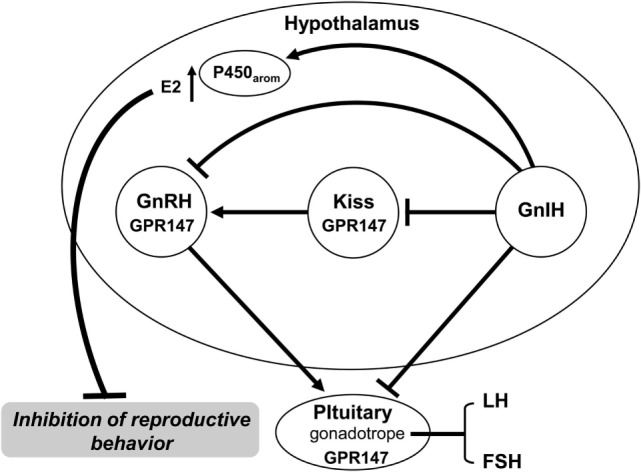
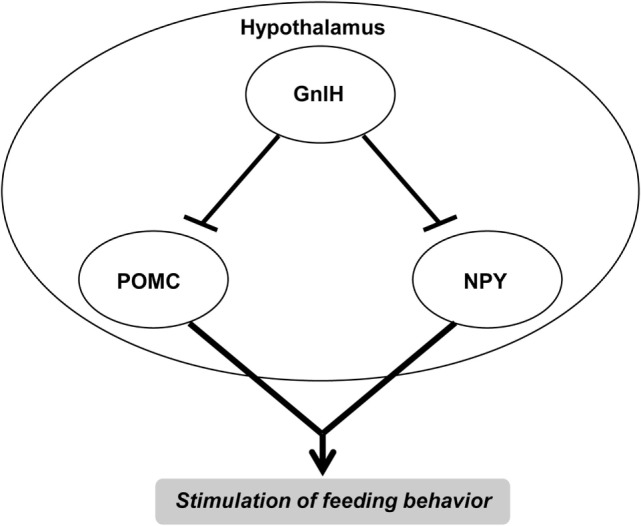
In 2000, Tsutsui and colleagues discovered a neuropeptide gonadotropin-inhibitory hormone (GnIH) that inhibits gonadotropin release in birds. Subsequently, extensive studies during the last 15 years have demonstrated that GnIH is a key neurohormone that regulates reproduction in vertebrates, acting in the brain and on the pituitary to modulate reproduction and reproductive behavior. On the other hand, deprivation of food and other metabolic challenges inhibit the reproductive axis as well as sexual motivation. Interestingly, recent studies have further indicated that GnIH controls feeding behavior in vertebrates, such as in birds and mammals. This review summarizes the discovery of GnIH and its conservation in vertebrates and the neuroendocrine control of feeding behavior and reproductive behavior by GnIH.
2000年,津木井及其同事发现了一种神经肽——促性腺激素抑制激素(GnIH),它能抑制鸟类促性腺激素的释放。随后,在过去15年里的大量研究表明,GnIH是调节脊椎动物生殖的关键神经激素,作用于大脑和垂体以调节生殖和生殖行为。另一方面,食物匮乏和其他代谢挑战会抑制生殖轴以及性动机。有趣的是,最近的研究进一步表明,GnIH控制脊椎动物(如鸟类和哺乳动物)的摄食行为。本综述总结了GnIH的发现及其在脊椎动物中的保守性,以及GnIH对摄食行为和生殖行为的神经内分泌控制。