MEMS Research Lab., Department of Mechanical Engineering, College of Engineering, San Diego State University, 5500 Campanile Drive, San Diego, CA 92182-1323, USA.
Center for Sensorimotor Neural Engineering (CSNE), Box 37, 1414 NE 42nd St., Suite 204, Seattle, WA 98105-6271, USA.
Sci Rep. 2017 Jan 13;7:40332. doi: 10.1038/srep40332.
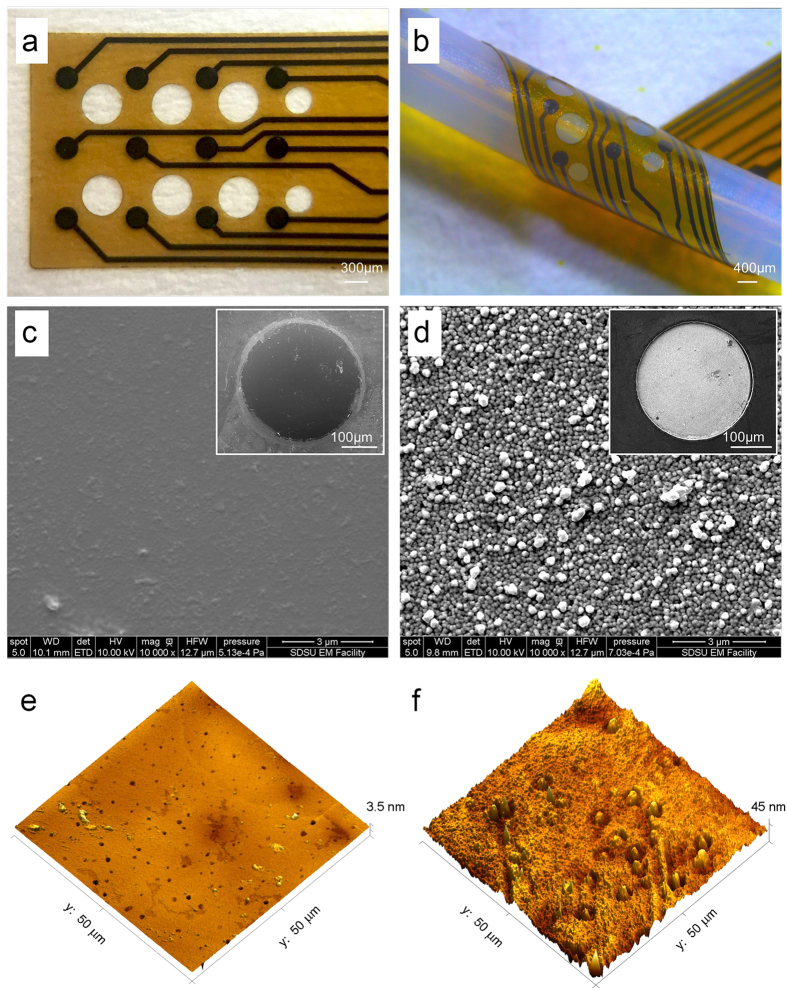
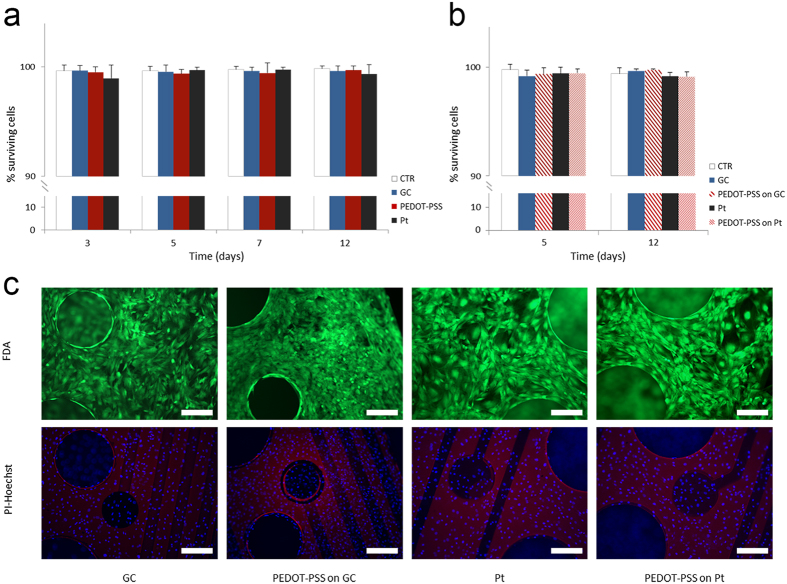
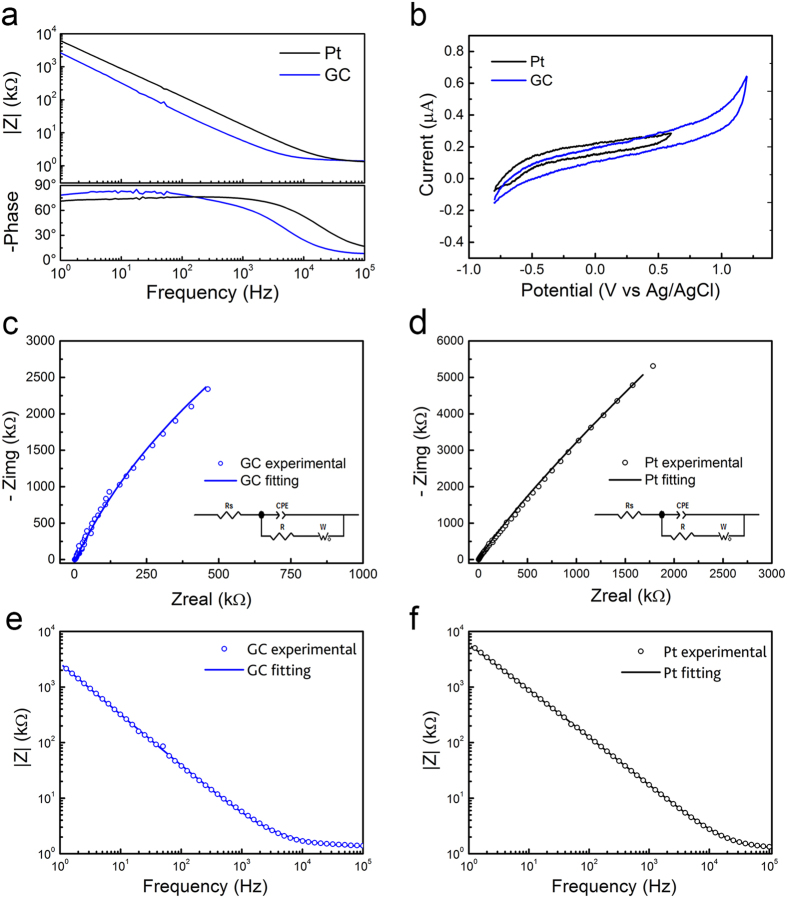
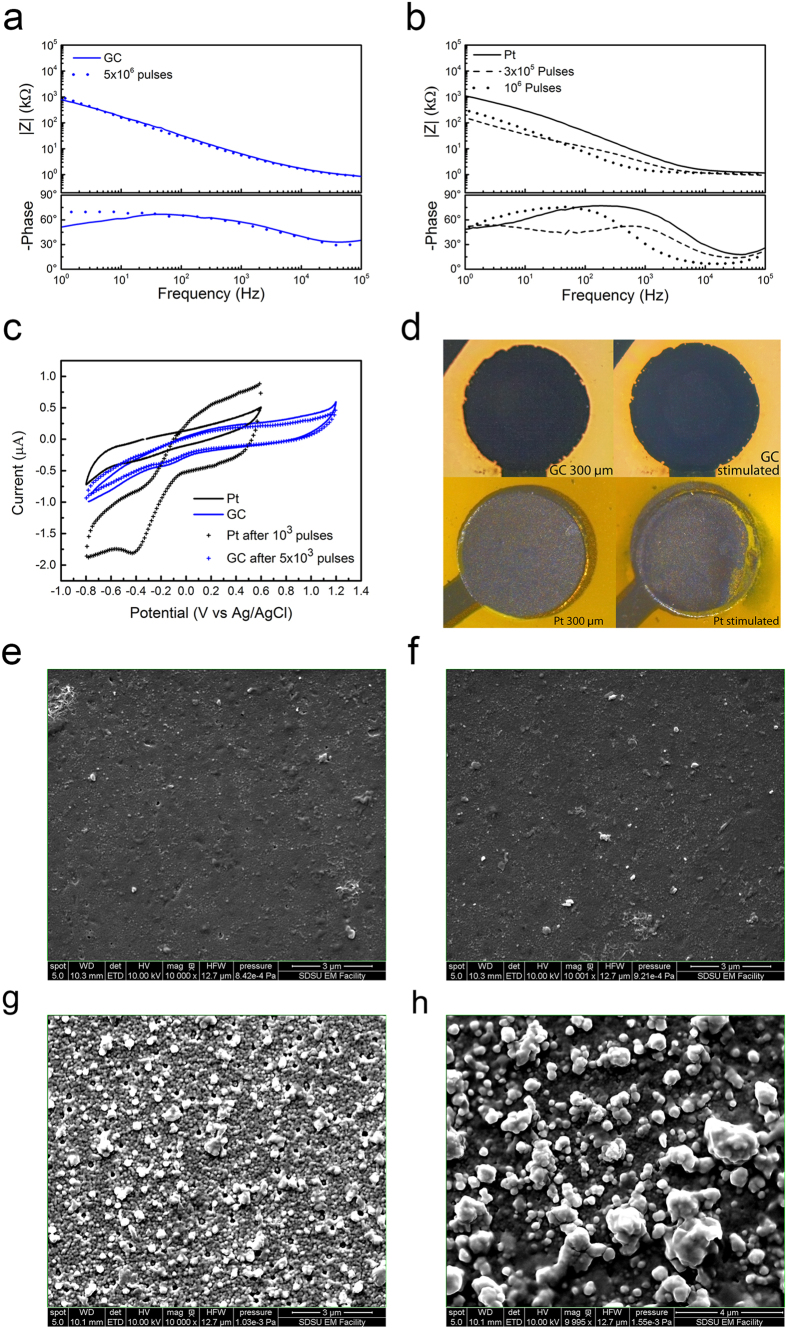
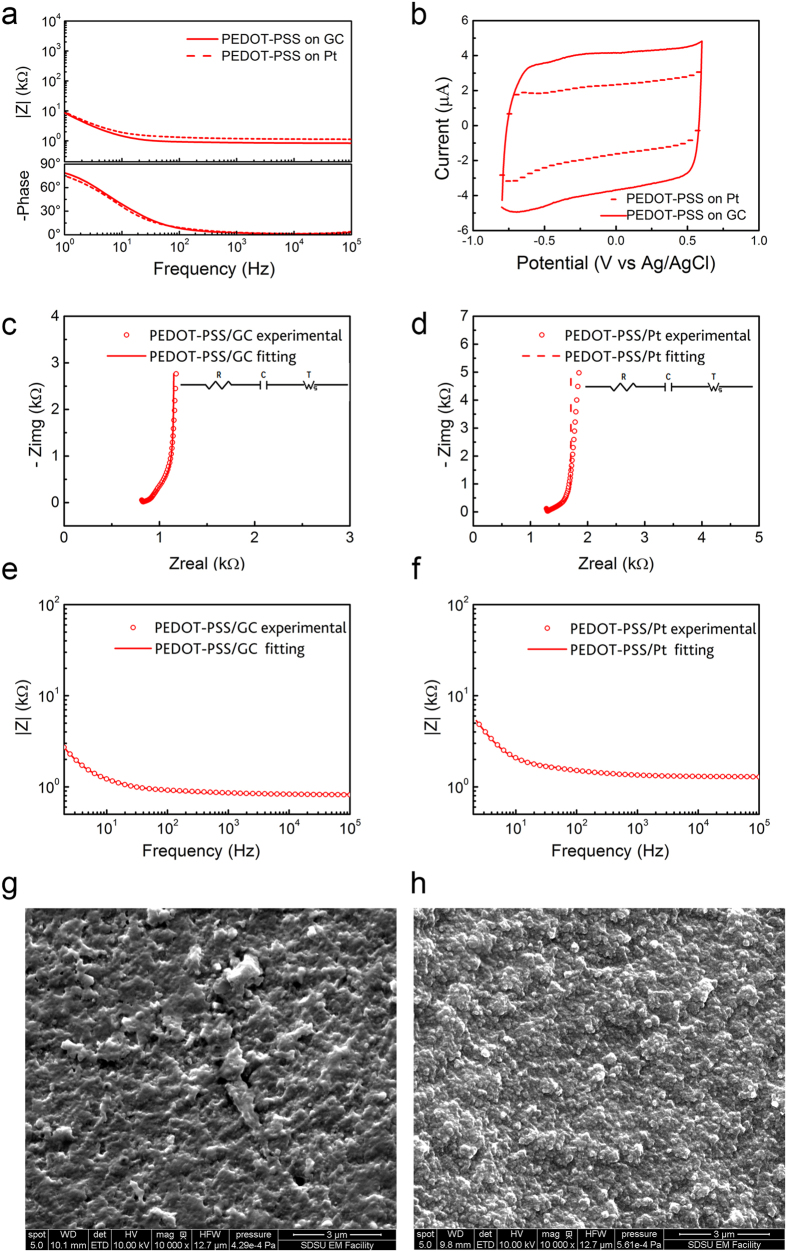
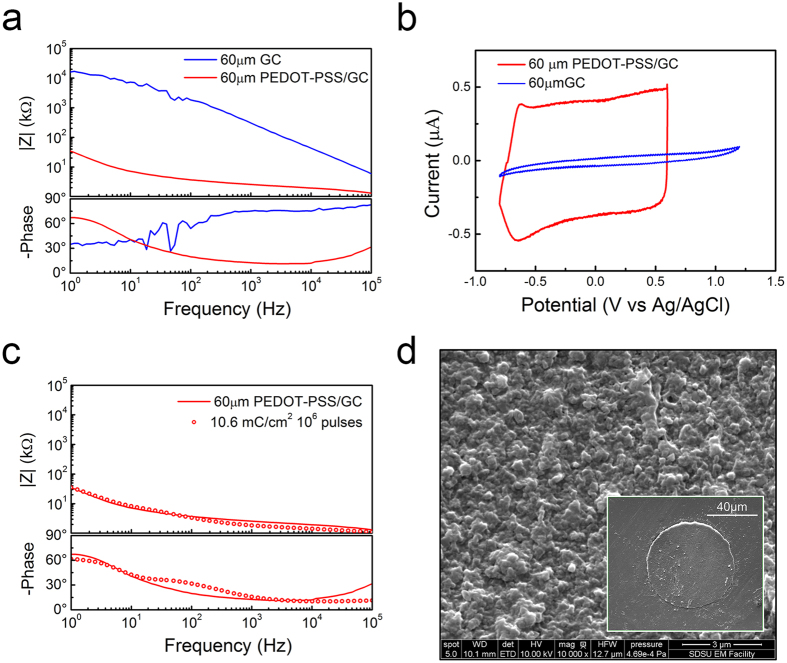
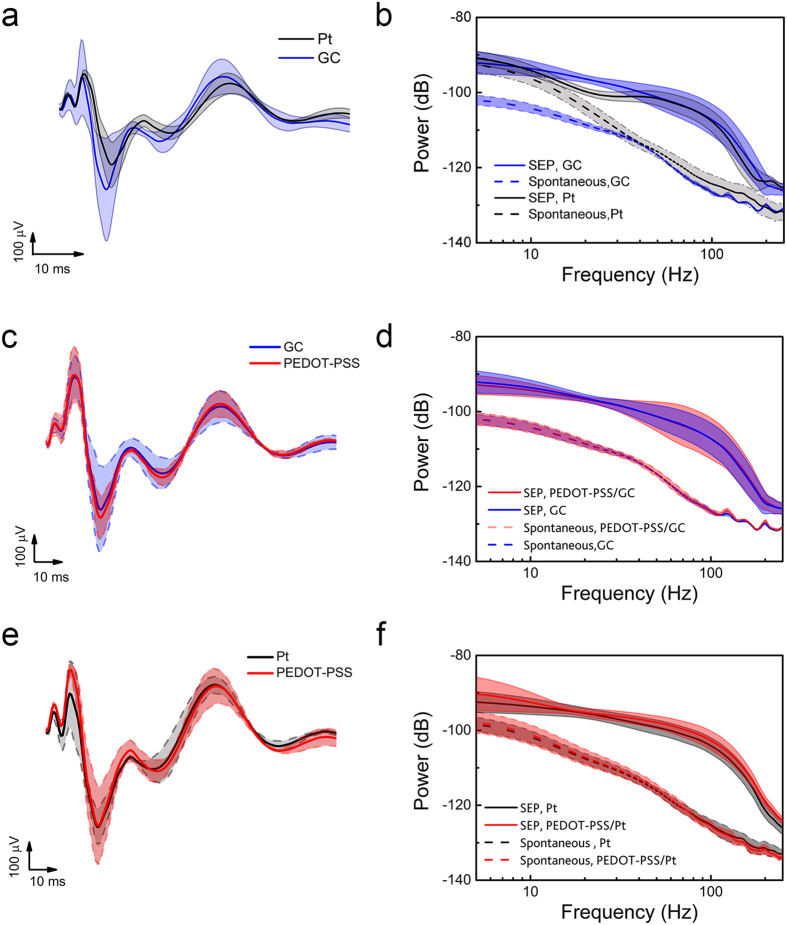
We report on the superior electrochemical properties, in-vivo performance and long term stability under electrical stimulation of a new electrode material fabricated from lithographically patterned glassy carbon. For a direct comparison with conventional metal electrodes, similar ultra-flexible, micro-electrocorticography (μ-ECoG) arrays with platinum (Pt) or glassy carbon (GC) electrodes were manufactured. The GC microelectrodes have more than 70% wider electrochemical window and 70% higher CTC (charge transfer capacity) than Pt microelectrodes of similar geometry. Moreover, we demonstrate that the GC microelectrodes can withstand at least 5 million pulses at 0.45 mC/cm charge density with less than 7.5% impedance change, while the Pt microelectrodes delaminated after 1 million pulses. Additionally, poly(3,4-ethylenedioxythiophene)-poly(styrenesulfonate) (PEDOT-PSS) was selectively electrodeposited on both sets of devices to specifically reduce their impedances for smaller diameters (<60 μm). We observed that PEDOT-PSS adhered significantly better to GC than Pt, and allowed drastic reduction of electrode size while maintaining same amount of delivered current. The electrode arrays biocompatibility was demonstrated through in-vitro cell viability experiments, while acute in vivo characterization was performed in rats and showed that GC microelectrode arrays recorded somatosensory evoked potentials (SEP) with an almost twice SNR (signal-to-noise ratio) when compared to the Pt ones.
我们报告了一种新的电极材料的卓越电化学性能、体内性能和在电刺激下的长期稳定性,该材料由光刻图案化的玻璃碳制成。为了与传统金属电极进行直接比较,我们制造了类似的超灵活、微脑电描记术(μ-ECoG)阵列,具有铂(Pt)或玻璃碳(GC)电极。GC 微电极具有超过 70%更宽的电化学窗口和 70%更高的 CTC(电荷转移能力)比类似几何形状的 Pt 微电极。此外,我们证明 GC 微电极可以承受至少 500 万次脉冲,脉冲密度为 0.45 mC/cm,阻抗变化小于 7.5%,而 Pt 微电极在 100 万次脉冲后分层。此外,聚(3,4-亚乙基二氧噻吩)-聚(苯乙烯磺酸盐)(PEDOT-PSS)被选择性地沉积在这两组器件上,以专门降低它们的阻抗,使其直径更小(<60μm)。我们观察到 PEDOT-PSS 与 GC 的粘附性明显优于 Pt,并且允许电极尺寸大幅度减小,同时保持相同的电流输送量。通过体外细胞活力实验证明了电极阵列的生物相容性,而在大鼠中进行的急性体内表征表明,与 Pt 微电极阵列相比,GC 微电极阵列记录的体感诱发电位(SEP)的 SNR(信号噪声比)几乎提高了一倍。