Hematology and Transfusion Medicine Center - University of Campinas/Hemocentro - Unicamp, Instituto Nacional de Ciência e Tecnologia do Sangue, Campinas, São Paulo, Brazil.
Department of Internal Medicine, University of São Paulo at Ribeirão Preto Medical School, Ribeirão Preto, São Paulo, Brazil.
Sci Rep. 2017 Jan 13;7:40707. doi: 10.1038/srep40707.
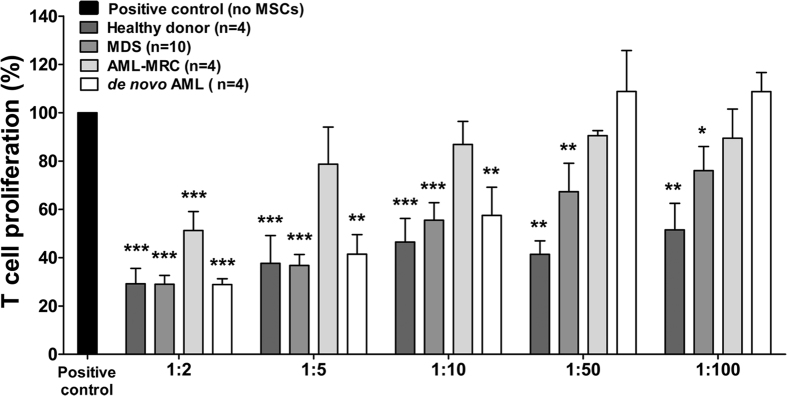
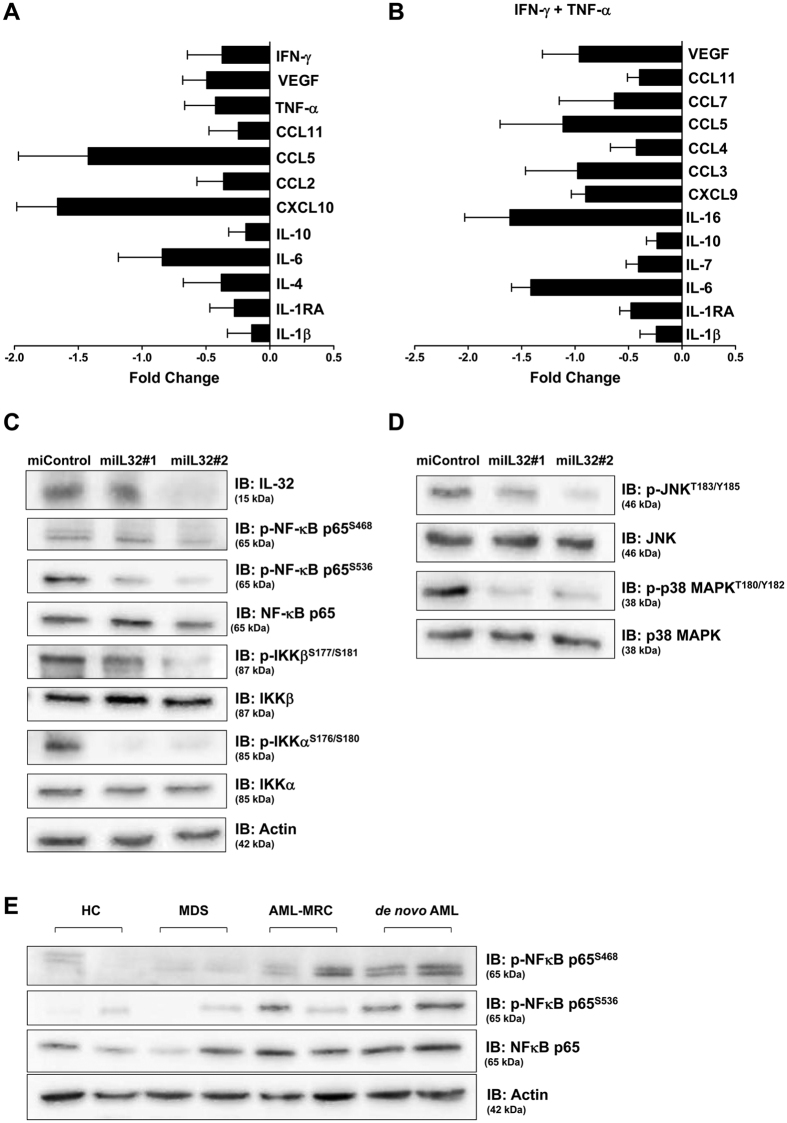
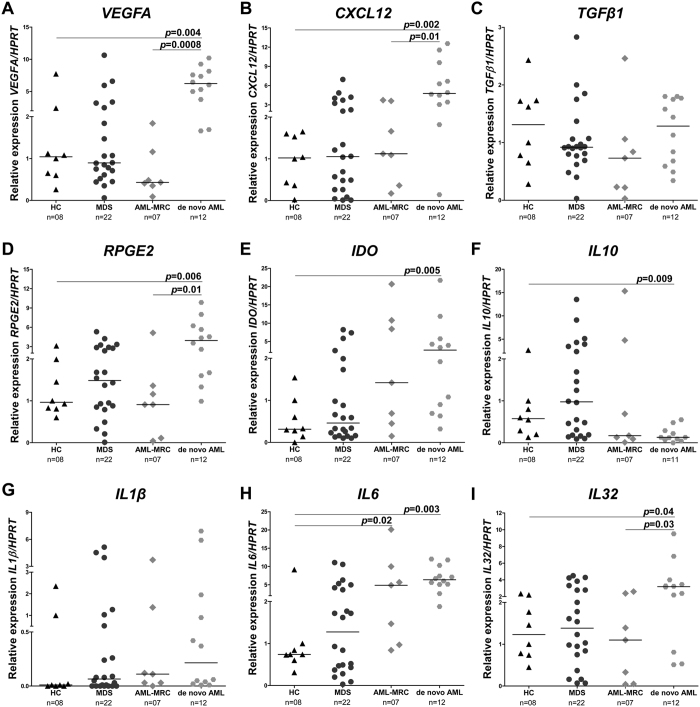
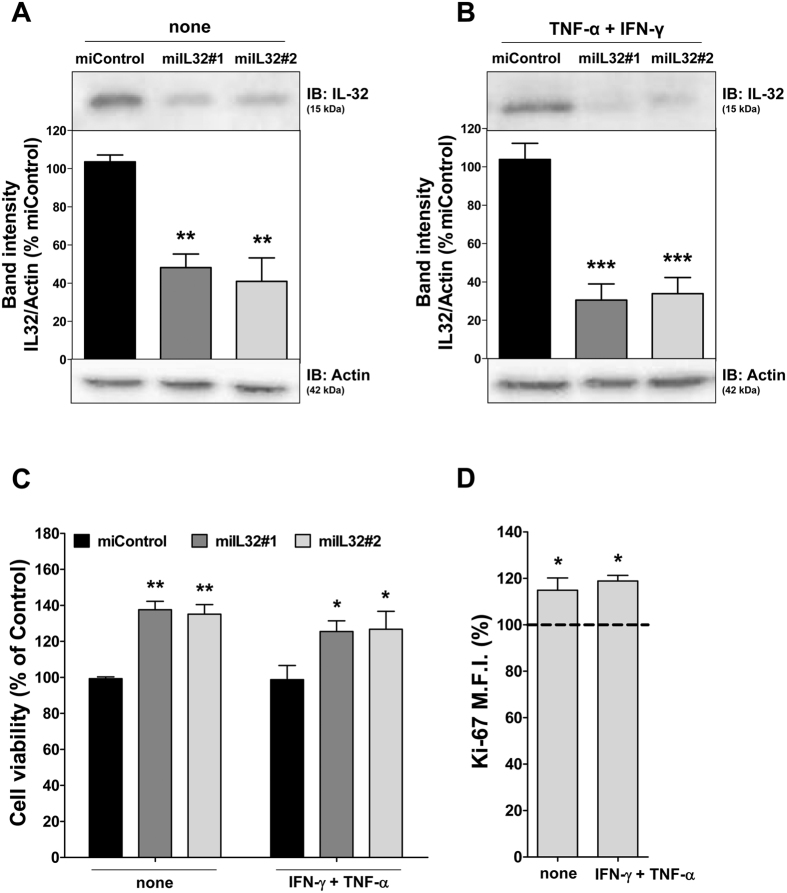
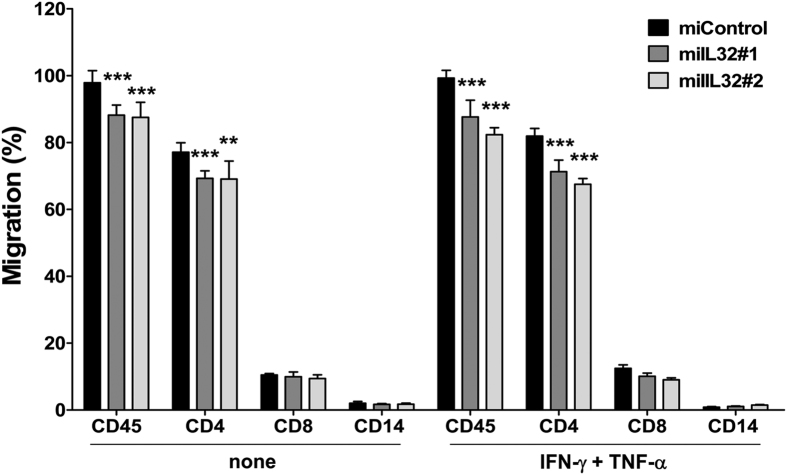
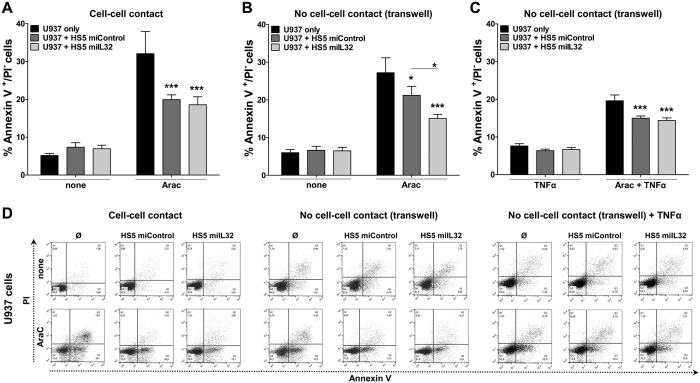
The interaction between the bone marrow microenvironment and malignant hematopoietic cells can result in the protection of leukemia cells from chemotherapy in both myelodysplastic syndromes (MDS) and acute myeloid leukemia (AML). We, herein, characterized the changes in cytokine expression and the function of mesenchymal stromal cells (MSC) in patients with MDS, AML with myelodysplasia-related changes (MRC), a well-recognized clinical subtype of secondary AML, and de novo AML. We observed a significant inhibitory effect of MDS-MSC on T lymphocyte proliferation and no significant differences in any of the cytokines tested. AML-MSC inhibited T-cell proliferation only at a very low MSC/T cell ratio. When compared to the control, AML-MRCderived MSC presented a significant increase in IL6 expression, whereas de novo AML MSC presented a significant increase in the expression levels of VEGFA, CXCL12, RPGE2, IDO, IL1β, IL6 and IL32, followed by a decrease in IL10 expression. Furthermore, data indicate that IL-32 regulates stromal cell proliferation, has a chemotactic potential and participates in stromal cell crosstalk with leukemia cells, which could result in chemoresistance. Our results suggest that the differences between AML-MRC and de novo AML also extend into the leukemic stem cell niche and that IL-32 can participate in the regulation of the bone marrow cytokine milieu.
骨髓微环境与恶性造血细胞的相互作用可导致骨髓增生异常综合征(MDS)和急性髓系白血病(AML)中的白血病细胞对化疗产生保护作用。我们在此描述了 MDS、伴有 MDS 相关改变的 AML(AML-MRC,AML 的一种公认的临床亚型)和初发 AML 患者细胞因子表达和间充质基质细胞(MSC)功能的变化。我们观察到 MDS-MSC 对 T 淋巴细胞增殖有明显的抑制作用,而在测试的任何细胞因子中均无显著差异。AML-MSC 仅在非常低的 MSC/T 细胞比例下才抑制 T 细胞增殖。与对照相比,AML-MRC 来源的 MSC 表现出 IL6 表达显著增加,而初发 AML MSC 则表现出 VEGFA、CXCL12、RPGE2、IDO、IL1β、IL6 和 IL32 的表达水平显著增加,随后 IL10 的表达降低。此外,数据表明 IL-32 调节基质细胞增殖,具有趋化潜能,并参与与白血病细胞的基质细胞串扰,从而导致耐药性。我们的结果表明,AML-MRC 和初发 AML 之间的差异也扩展到了白血病干细胞龛,并且 IL-32 可以参与调节骨髓细胞因子微环境。