Sengupta Ayesha, Bocchio Marco, Bannerman David M, Sharp Trevor, Capogna Marco
Department of Pharmacology, University of Oxford, Oxford, OX1 3QT United Kingdom.
Medical Research Council Brain Network Dynamics Unit, Department of Pharmacology, University of Oxford, Oxford, OX1 3TH United Kingdom.
J Neurosci. 2017 Feb 15;37(7):1785-1796. doi: 10.1523/JNEUROSCI.2238-16.2016. Epub 2017 Jan 13.
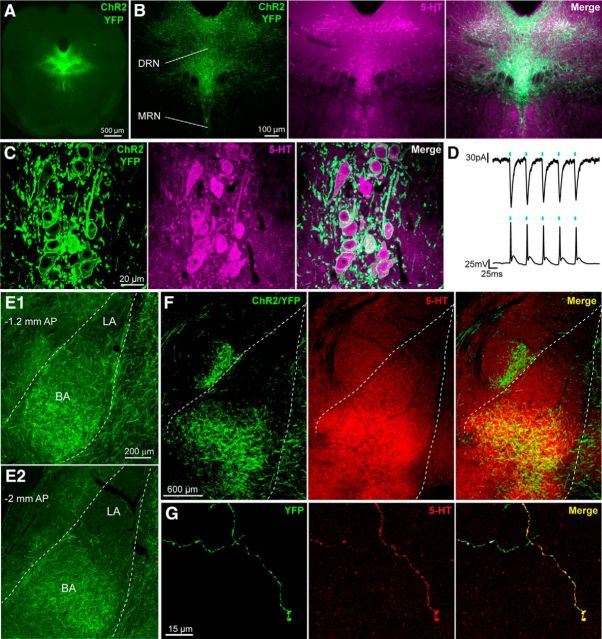
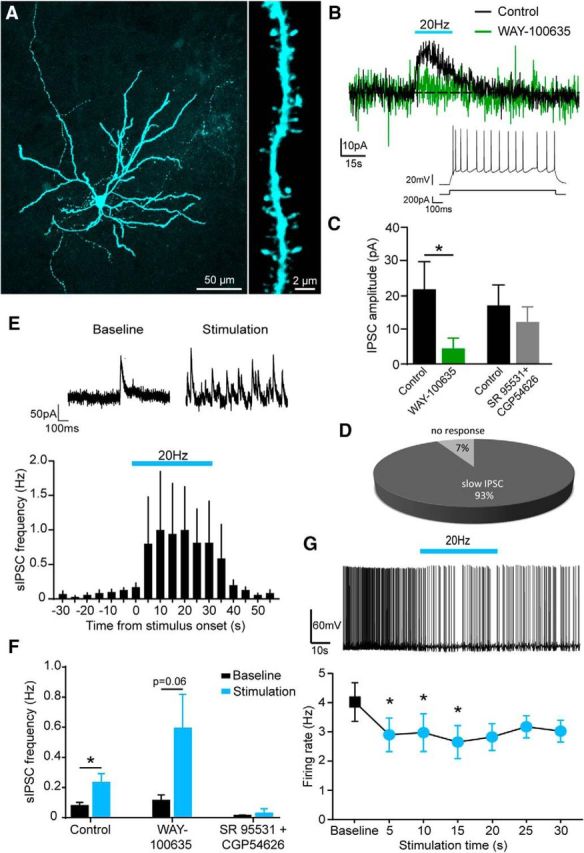
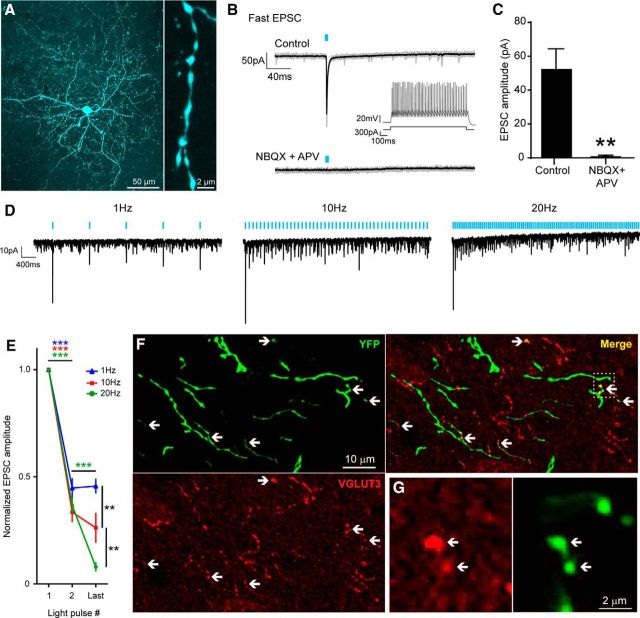
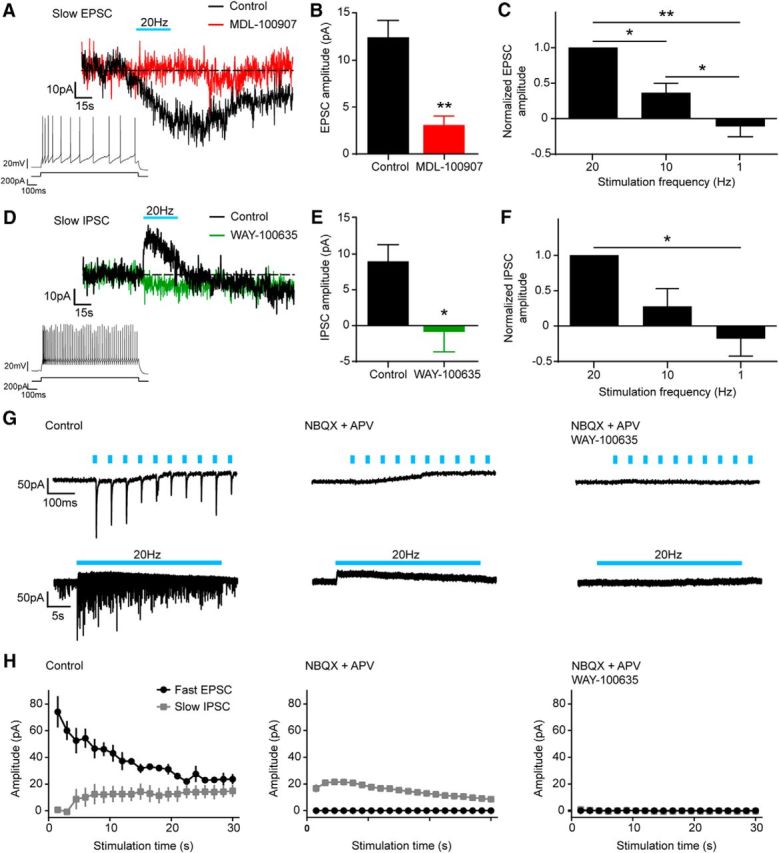
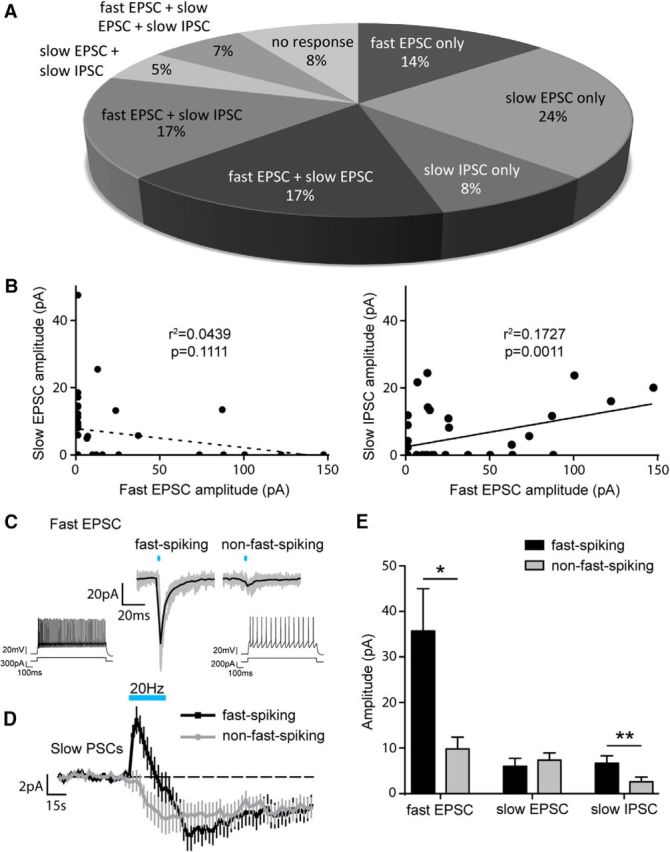
The serotonin (5-HT) system and the amygdala are key regulators of emotional behavior. Several lines of evidence suggest that 5-HT transmission in the amygdala is implicated in the susceptibility and drug treatment of mood disorders. Therefore, elucidating the physiological mechanisms through which midbrain 5-HT neurons modulate amygdala circuits could be pivotal in understanding emotional regulation in health and disease. To shed light on these mechanisms, we performed patch-clamp recordings from basal amygdala (BA) neurons in brain slices from mice with channelrhodopsin genetically targeted to 5-HT neurons. Optical stimulation of 5-HT terminals at low frequencies (≤1 Hz) evoked a short-latency excitation of BA interneurons (INs) that was depressed at higher frequencies. Pharmacological analysis revealed that this effect was mediated by glutamate and not 5-HT because it was abolished by ionotropic glutamate receptor antagonists. Optical stimulation of 5-HT terminals at higher frequencies (10-20 Hz) evoked both slow excitation and slow inhibition of INs. These effects were mediated by 5-HT because they were blocked by antagonists of 5-HT and 5-HT receptors, respectively. These fast glutamate- and slow 5-HT-mediated responses often coexisted in the same neuron. Interestingly, fast-spiking and non-fast-spiking INs displayed differential modulation by glutamate and 5-HT. Furthermore, optical stimulation of 5-HT terminals did not evoke glutamate release onto BA principal neurons, but inhibited these cells directly via activation of 5-HT receptors and indirectly via enhanced GABA release. Collectively, these findings suggest that 5-HT neurons exert a frequency-dependent, cell-type-specific control over BA circuitry via 5-HT and glutamate co-release to inhibit the BA output. The modulation of the amygdala by serotonin (5-HT) is important for emotional regulation and is implicated in the pathogenesis and treatment of affective disorders. Therefore, it is essential to determine the physiological mechanisms through which 5-HT neurons in the dorsal raphe nuclei modulate amygdala circuits. Here, we combined optogenetic, electrophysiological, and pharmacological approaches to study the effects of activation of 5-HT axons in the basal nucleus of the amygdala (BA). We found that 5-HT neurons co-release 5-HT and glutamate onto BA neurons in a cell-type-specific and frequency-dependent manner. Therefore, we suggest that theories on the contribution of 5-HT neurons to amygdala function should be revised to incorporate the concept of 5-HT/glutamate cotransmission.
血清素(5-羟色胺,5-HT)系统和杏仁核是情绪行为的关键调节因子。多项证据表明,杏仁核中的5-HT传递与情绪障碍的易感性和药物治疗有关。因此,阐明中脑5-HT神经元调节杏仁核回路的生理机制可能是理解健康和疾病状态下情绪调节的关键。为了揭示这些机制,我们对基因靶向5-HT神经元的小鼠脑片中的基底杏仁核(BA)神经元进行了膜片钳记录。低频(≤1Hz)光刺激5-HT终末可诱发BA中间神经元(INs)的短潜伏期兴奋,高频刺激时该兴奋受到抑制。药理学分析表明,这种效应是由谷氨酸介导而非5-HT介导的,因为离子型谷氨酸受体拮抗剂可消除该效应。高频(10-20Hz)光刺激5-HT终末可诱发INs的慢兴奋和慢抑制。这些效应是由5-HT介导的,因为它们分别被5-HT和5-HT受体拮抗剂阻断。这些快速的谷氨酸介导反应和缓慢的5-HT介导反应常共存于同一神经元中。有趣的是,快速放电和非快速放电的INs对谷氨酸和5-HT表现出不同的调节作用。此外,光刺激5-HT终末不会诱发谷氨酸释放到BA主神经元上,而是通过激活5-HT受体直接抑制这些细胞,并通过增强GABA释放间接抑制。总的来说,这些发现表明5-HT神经元通过5-HT和谷氨酸的共同释放对BA回路发挥频率依赖性、细胞类型特异性的控制作用,以抑制BA输出。血清素(5-HT)对杏仁核的调节对情绪调节很重要,并且与情感障碍的发病机制和治疗有关。因此,确定中缝背核中的5-HT神经元调节杏仁核回路的生理机制至关重要。在这里,我们结合光遗传学、电生理学和药理学方法来研究杏仁核基底核(BA)中5-HT轴突激活的影响。我们发现5-HT神经元以细胞类型特异性和频率依赖性方式将5-HT和谷氨酸共同释放到BA神经元上。因此,我们建议关于5-HT神经元对杏仁核功能贡献的理论应进行修订,以纳入5-HT/谷氨酸共传递的概念。