Conley Melissa N, Roberts Cooper, Sharpton Thomas J, Iwaniec Urszula T, Hord Norman G
School of Biological and Population Health Sciences, College of Public Health and Human Sciences, Oregon State University, Corvallis, OR, USA.
Center for Healthy Aging Research, Oregon State University, Corvallis, OR, USA.
Mol Nutr Food Res. 2017 May;61(5). doi: 10.1002/mnfr.201600372. Epub 2017 Mar 30.
Studies suggest diets rich in fruit and vegetables reduce bone loss, although the specific compounds responsible are unknown. Substrates for endogenous nitric oxide (NO) production, including organic nitrates and dietary nitrate, may support NO production in age-related conditions, including osteoporosis. We investigated the capability of dietary nitrate to improve NO bioavailability, reduce bone turnover and loss.
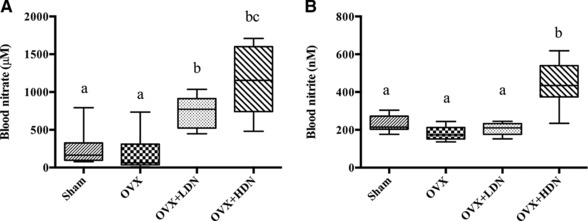
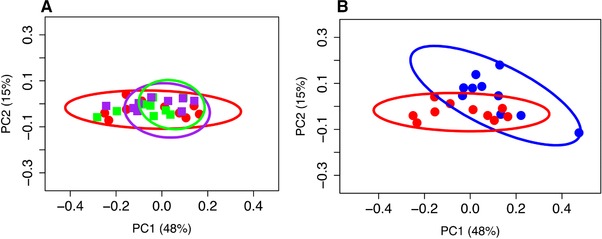
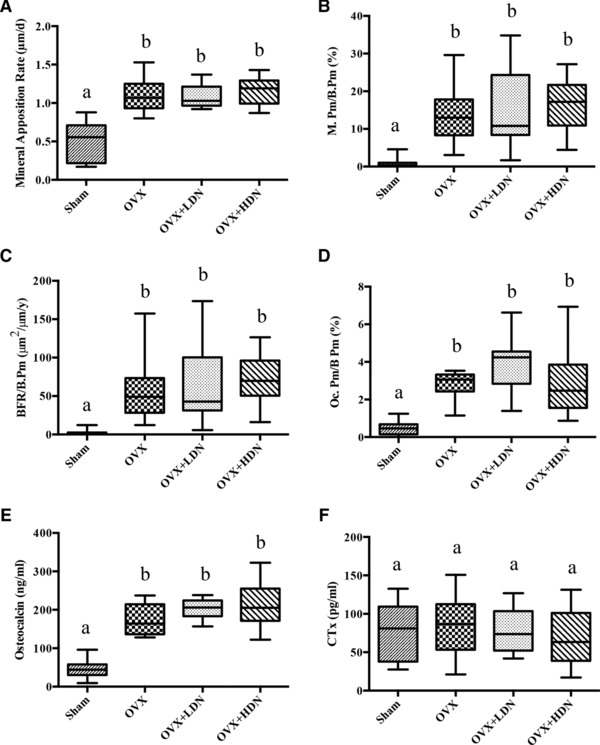
Six-month-old Sprague Dawley rats [30 ovariectomized (OVX) and 10 sham-operated (sham)] were randomized into three groups: (i) vehicle (water) control, (ii) low-dose nitrate (LDN, 0.1 mmol nitrate/kg bw/day), or (iii) high-dose nitrate (HDN, 1.0 mmol nitrate/kg bw/day) for three weeks. The sham received vehicle. Serum bone turnover markers; bone mass, mineral density, and quality; histomorphometric parameters; and fecal microbiome were examined. Three weeks of LDN or HDN improved NO bioavailability in a dose-dependent manner. OVX resulted in cancellous bone loss, increased bone turnover, and fecal microbiome changes. OVX increased relative abundances of Firmicutes and decreased Bacteroideceae and Alcaligenaceae. Nitrate did not affect the skeleton or fecal microbiome.
These data indicate that OVX affects the fecal microbiome and that the gut microbiome is associated with bone mass. Three weeks of nitrate supplementation does not slow bone loss or alter the fecal microbiome in OVX.
研究表明,富含水果和蔬菜的饮食可减少骨质流失,尽管具体的活性成分尚不清楚。内源性一氧化氮(NO)产生的底物,包括有机硝酸盐和膳食硝酸盐,可能在包括骨质疏松症在内的与年龄相关的情况下支持NO的产生。我们研究了膳食硝酸盐改善NO生物利用度、减少骨转换和骨质流失的能力。
将6个月大的Sprague Dawley大鼠[30只去卵巢(OVX)和10只假手术(sham)]随机分为三组:(i)载体(水)对照组,(ii)低剂量硝酸盐(LDN,0.1 mmol硝酸盐/千克体重/天),或(iii)高剂量硝酸盐(HDN,1.0 mmol硝酸盐/千克体重/天),为期三周。假手术组接受载体。检测血清骨转换标志物、骨量、矿物质密度和质量、组织形态计量学参数以及粪便微生物群。三周的LDN或HDN以剂量依赖的方式改善了NO生物利用度。OVX导致松质骨丢失、骨转换增加和粪便微生物群变化。OVX增加了厚壁菌门的相对丰度,降低了拟杆菌科和产碱菌科的相对丰度。硝酸盐对骨骼或粪便微生物群没有影响。
这些数据表明,OVX会影响粪便微生物群,并且肠道微生物群与骨量有关。三周的硝酸盐补充并不能减缓OVX大鼠的骨质流失或改变其粪便微生物群。