Pu Dan, Liu Jiewei, Li Zhixi, Zhu Jiang, Hou Mei
Lung Cancer Center, West China Hospital of Sichuan University, Chengdu, Sichuan, China (mainland).
Lung Cancer Centre, West China Hospital of Sichuan University, Chengdu, Sichuan, China (mainland).
Med Sci Monit. 2017 Jan 15;23:247-257. doi: 10.12659/msm.899005.
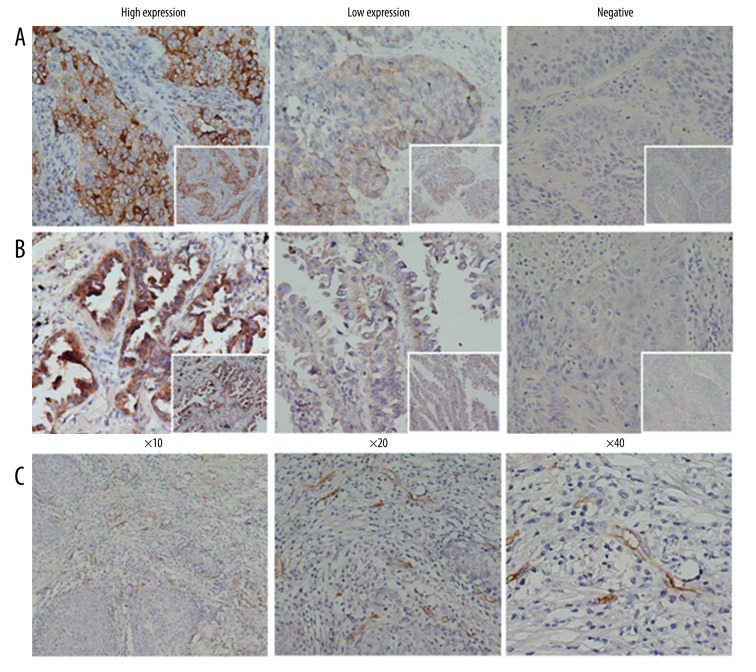
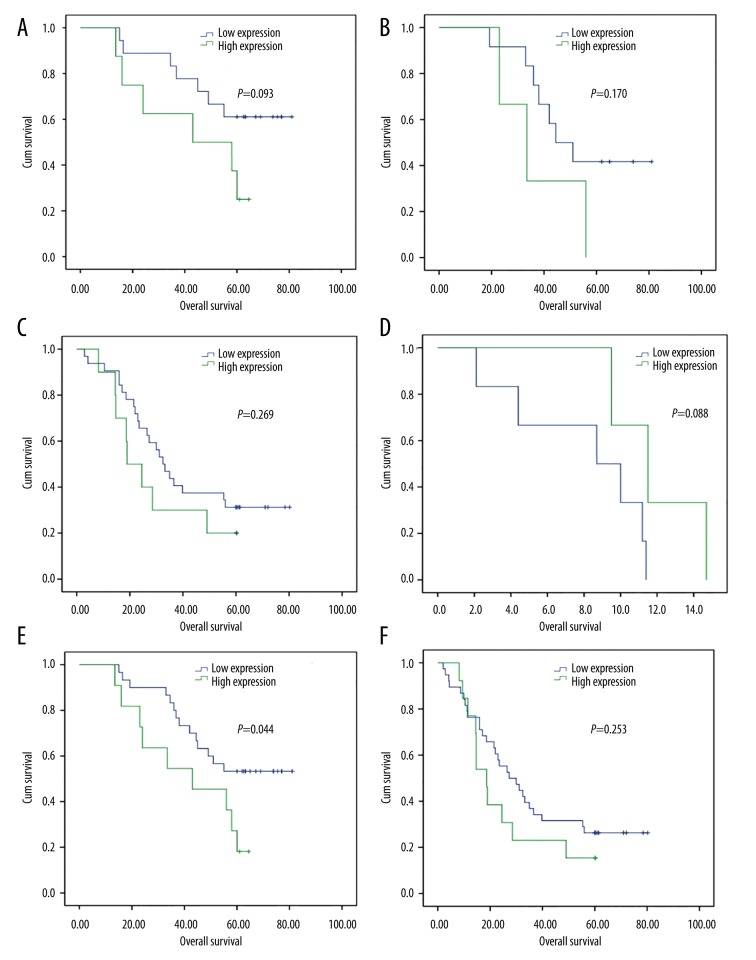
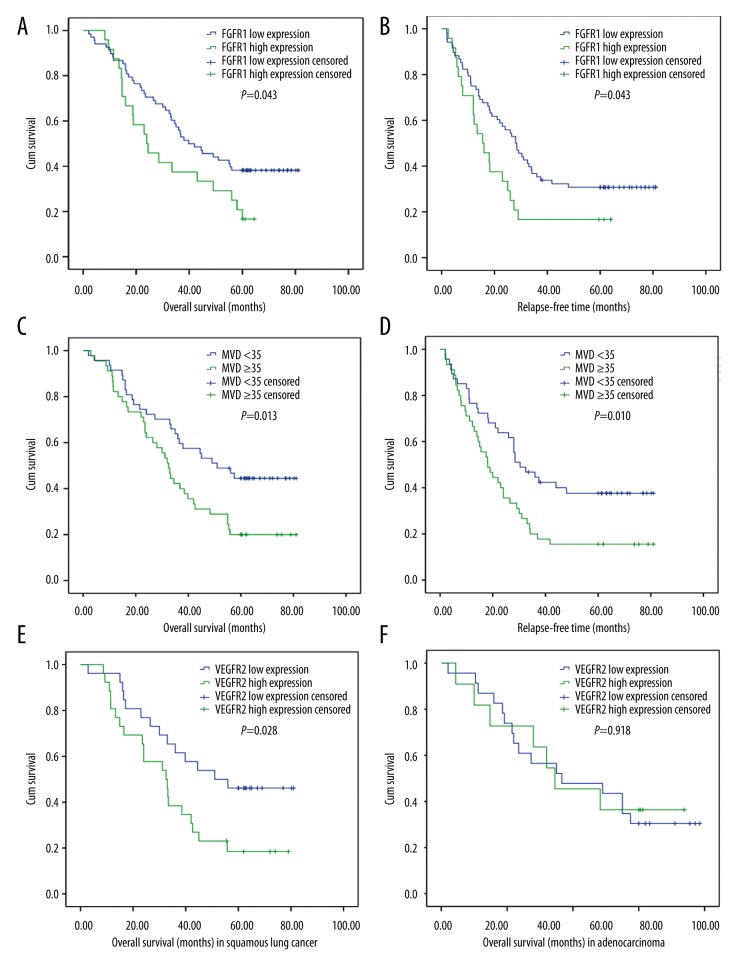
BACKGROUND This study aimed to explore the correlation between FGFR1 and clinical features, including survival analysis and the promotion of angiogenesis by fibroblast growth factor receptor 1 (FGFR1) and vascular endothelial growth factor receptor 2 (VEGFR2). FGFR1 gene amplification has been found in non-small cell lung cancer (NSCLC). However, the prognostic value of FGFR1 and the correlation between FGFR1 and clinical features are still controversial. MATERIAL AND METHODS A total of 92 patients with NSCLC who underwent R0 resection between July 2006 and July 2008 were enrolled in the study. The expression of FGFR1, VEGFR2, and CD34 was detected by immunohistochemistry. The correlations between the aforementioned markers and the patients' clinical features were analyzed by the chi-square test. The impact factors of prognosis were evaluated by Cox regression analyses. RESULTS The expression ratios of FGFR1 and VEGFR2 were 26.1% and 43.4%, respectively. The intensity of FGFR1 expression was related to VEGFR2 and histopathology. To some extent, the average microvessel density (MVD) had correlation to the expression of FGFR1 and VGEFR2. The pathological stages III-IV and high expression of FGFR1 were found to be independent prognostic factors. CONCLUSIONS The expression intensity of FGFR1 and VEGFR2 was associated with MVD, and the expression of FGFR1 is one of the independent prognostic indicators for NSCLC.
背景 本研究旨在探讨成纤维细胞生长因子受体1(FGFR1)与临床特征之间的相关性,包括生存分析以及FGFR1和血管内皮生长因子受体2(VEGFR2)对血管生成的促进作用。在非小细胞肺癌(NSCLC)中已发现FGFR1基因扩增。然而,FGFR1的预后价值以及FGFR1与临床特征之间的相关性仍存在争议。
材料与方法 本研究纳入了2006年7月至2008年7月期间接受R0切除的92例NSCLC患者。采用免疫组织化学法检测FGFR1、VEGFR2和CD34的表达。通过卡方检验分析上述标志物与患者临床特征之间的相关性。采用Cox回归分析评估预后的影响因素。
结果 FGFR1和VEGFR2的表达率分别为26.1%和43.4%。FGFR1的表达强度与VEGFR2和组织病理学有关。平均微血管密度(MVD)在一定程度上与FGFR1和VGEFR2的表达相关。病理分期III-IV期和FGFR1高表达是独立的预后因素。
结论 FGFR1和VEGFR2的表达强度与MVD相关,FGFR1的表达是NSCLC的独立预后指标之一。