Murakami A, Wang L, Kalhorn S, Schraml P, Rathmell W K, Tan A C, Nemenoff R, Stenmark K, Jiang B-H, Reyland M E, Heasley L, Hu C-J
Molecular Biology Graduate Program, University of Colorado Anschutz Medical Campus, Aurora, CO, USA.
Department of Craniofacial Biology, School of Dental Medicine, University of Colorado Anschutz Medical Campus, Aurora, CO, USA.
Oncogenesis. 2017 Jan 16;6(1):e287. doi: 10.1038/oncsis.2016.89.
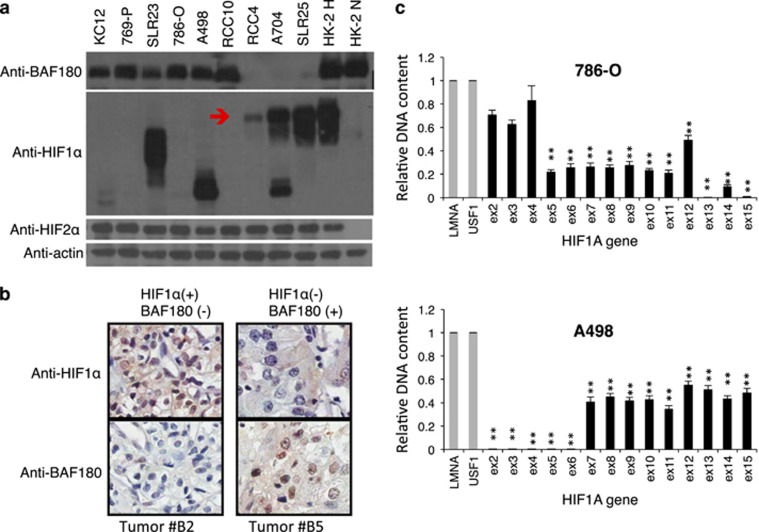
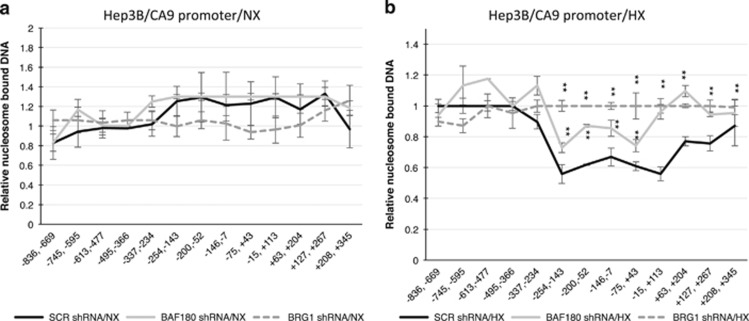
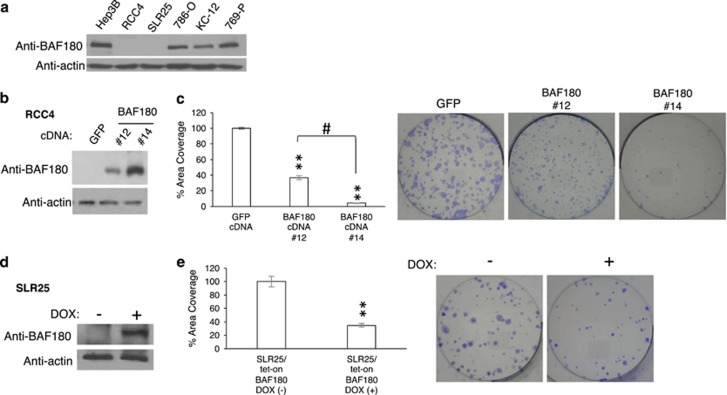
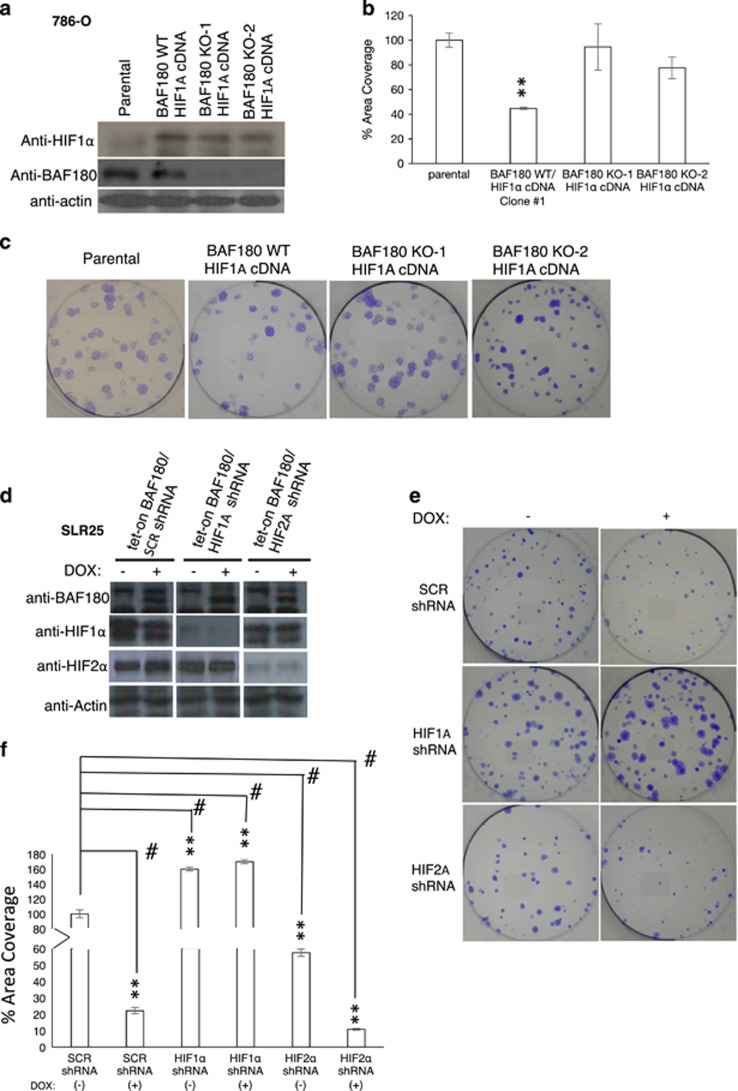
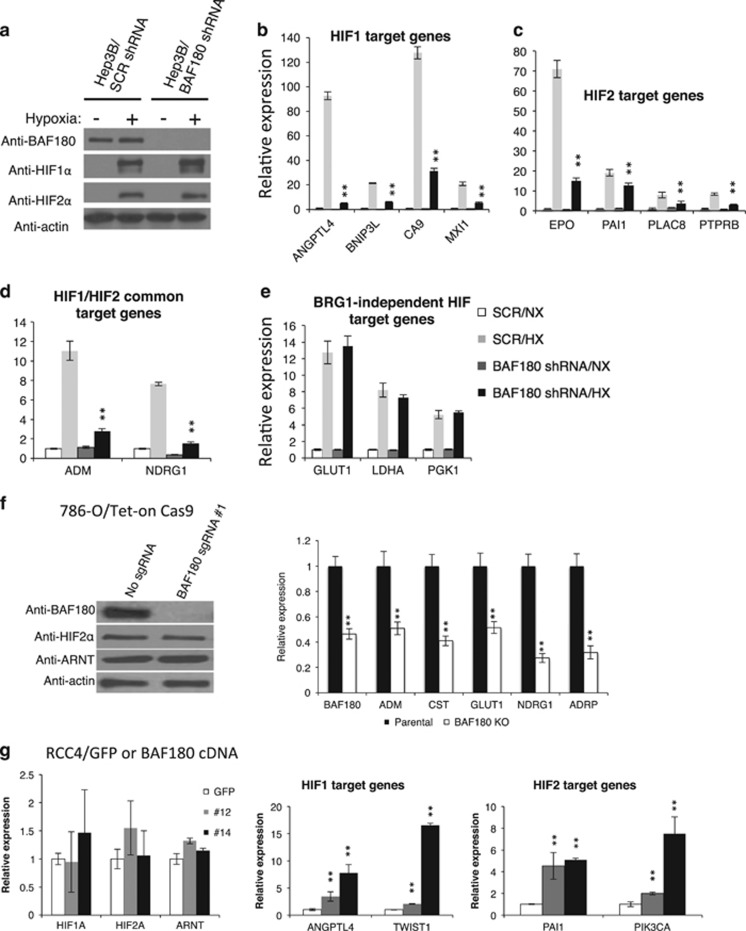
A subset of clear cell renal cell carcinoma (ccRCC) tumors exhibit a HIF1A gene mutation, yielding two ccRCC tumor types, H1H2 type expressing both HIF1α and HIF2α, and H2 type expressing HIF2α, but not functional HIF1α protein. However, it is unclear how the H1H2 type ccRCC tumors escape HIF1's tumor-suppressive activity. The polybromo-1 (PBRM1) gene coding for the BAF180 protein, a component of the SWItch/Sucrose Non-Fermentable (SWI/SNF) chromatin remodeling complex, is inactivated in 40% ccRCCs, the function and mechanism of BAF180 mutation is unknown. Our previous study indicates that BAF180-containing SWI/SNF chromatin remodeling complex is a co-activator for transcription factor HIF to induce HIF target genes. Thus, our questions are if BAF180 is involved in HIF-mediated hypoxia response and if PBRM1/BAF180 mutation has any association with the HIF1A retention in H1H2 type ccRCC. We report here that BAF180 is mutated in H1H2 ccRCC cell lines and tumors, and BAF180 re-expression in H1H2 ccRCC cell lines reduced cell proliferation/survival, indicating that BAF180 has tumor-suppressive role in these cells. However, BAF180 is expressed in HIF1-deficient H2 ccRCC cell lines and tumors, and BAF180 knockdown in H2 type ccRCC cell lines reduced cell proliferation/survival, indicating that BAF180 has tumor-promoting activity in these cells. In addition, our data show that BAF180 functions as co-activator for HIF1- and HIF2-mediated transcriptional response, and BAF180's tumor-suppressive and -promoting activity in ccRCC cell lines depends on co-expression of HIF1 and HIF2, respectively. Thus, our studies reveal that BAF180 function in ccRCC is context dependent, and that mutation of PBRM1/BAF180 serves as an alternative strategy for ccRCC tumors to reduce HIF1 tumor-suppressive activity in H1H2 ccRCC tumors. Our studies define distinct functional subgroups of ccRCCs based on expression of BAF180, and suggest that BAF180 inhibition may be a novel therapeutic target for patients with H2, but not H1H2, ccRCC tumors.
一部分透明细胞肾细胞癌(ccRCC)肿瘤存在HIF1A基因突变,产生两种ccRCC肿瘤类型,即同时表达HIF1α和HIF2α的H1H2型,以及表达HIF2α但不表达功能性HIF1α蛋白的H2型。然而,尚不清楚H1H2型ccRCC肿瘤如何逃避HIF1的肿瘤抑制活性。编码BAF180蛋白(SWItch/蔗糖非发酵(SWI/SNF)染色质重塑复合物的一个组分)的多溴-1(PBRM1)基因在40%的ccRCC中失活,BAF180突变的功能和机制尚不清楚。我们之前的研究表明,含BAF180的SWI/SNF染色质重塑复合物是转录因子HIF诱导HIF靶基因的共激活因子。因此,我们的问题是BAF180是否参与HIF介导的缺氧反应,以及PBRM1/BAF180突变与H1H2型ccRCC中HIF1A的保留是否存在关联。我们在此报告,BAF180在H1H2 ccRCC细胞系和肿瘤中发生突变,并且在H1H2 ccRCC细胞系中重新表达BAF180可降低细胞增殖/存活,这表明BAF180在这些细胞中具有肿瘤抑制作用。然而,BAF180在缺乏HIF1的H2 ccRCC细胞系和肿瘤中表达,并且在H2型ccRCC细胞系中敲低BAF180可降低细胞增殖/存活,这表明BAF180在这些细胞中具有促肿瘤活性。此外,我们的数据表明,BAF180作为HIF1和HIF2介导的转录反应的共激活因子发挥作用,并且BAF180在ccRCC细胞系中的肿瘤抑制和促肿瘤活性分别取决于HIF1和HIF2的共表达。因此,我们的研究揭示了BAF180在ccRCC中的功能取决于背景情况,并且PBRM1/BAF180突变是ccRCC肿瘤在H1H2 ccRCC肿瘤中降低HIF1肿瘤抑制活性的一种替代策略。我们的研究基于BAF180的表达定义了ccRCC的不同功能亚组,并表明抑制BAF180可能是H2型而非H1H2型ccRCC肿瘤患者的一种新型治疗靶点。