Cheke Lucy G, Bonnici Heidi M, Clayton Nicola S, Simons Jon S
Department of Psychology, University of Cambrigde, UK.
Department of Psychology, University of Cambrigde, UK.
Neuropsychologia. 2017 Feb;96:137-149. doi: 10.1016/j.neuropsychologia.2017.01.013. Epub 2017 Jan 16.
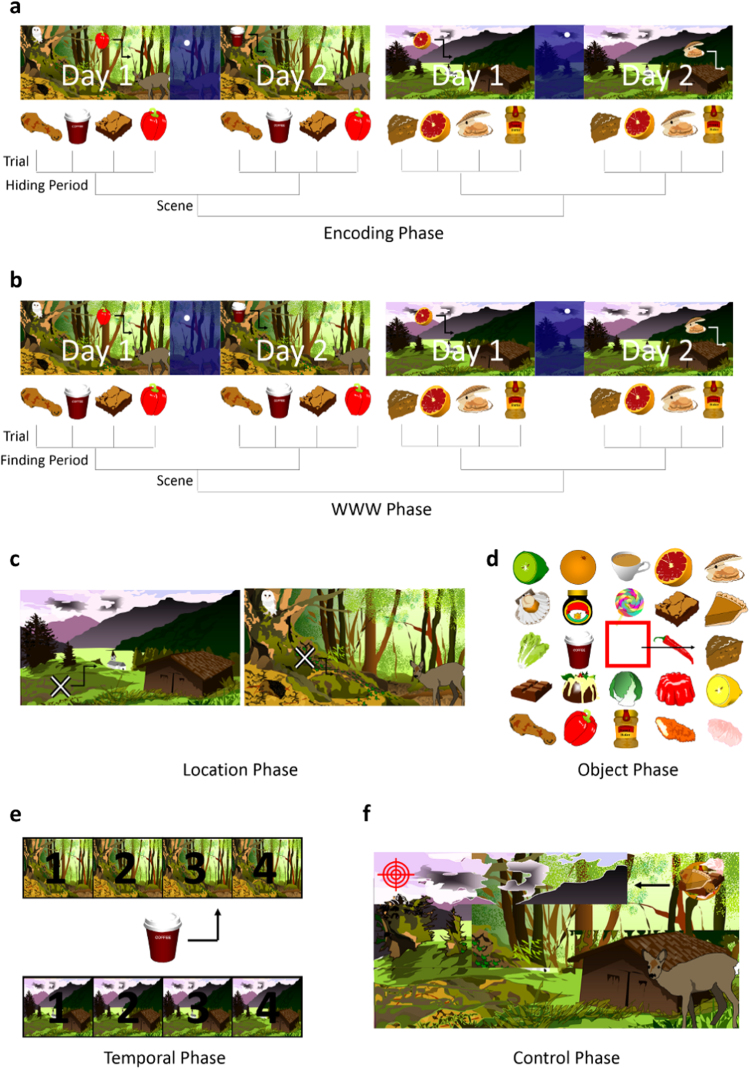
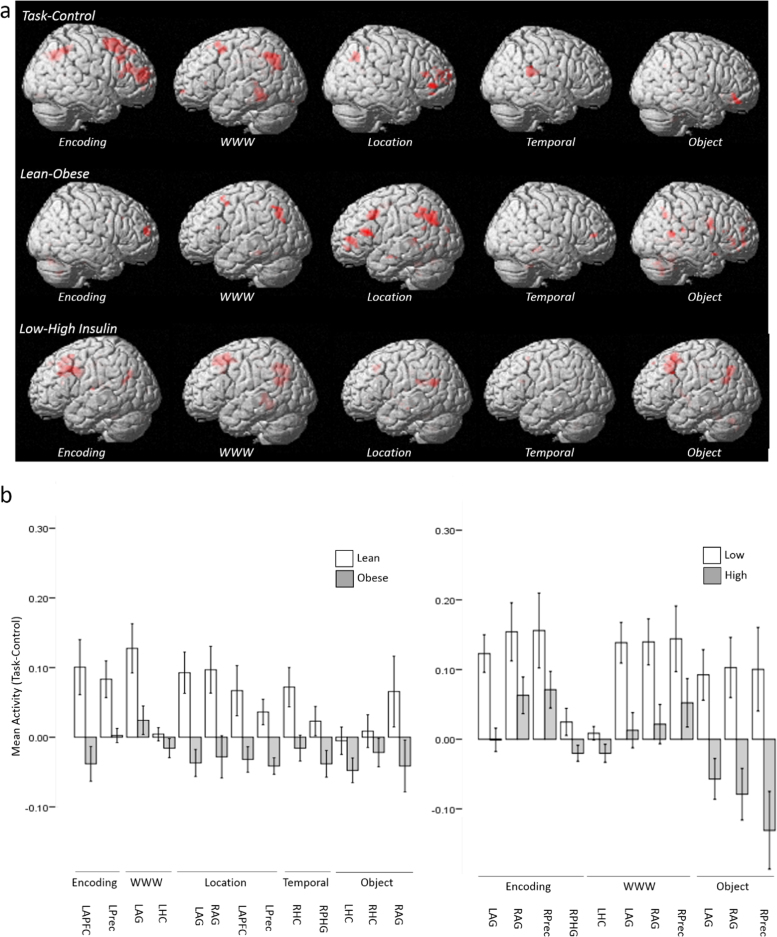
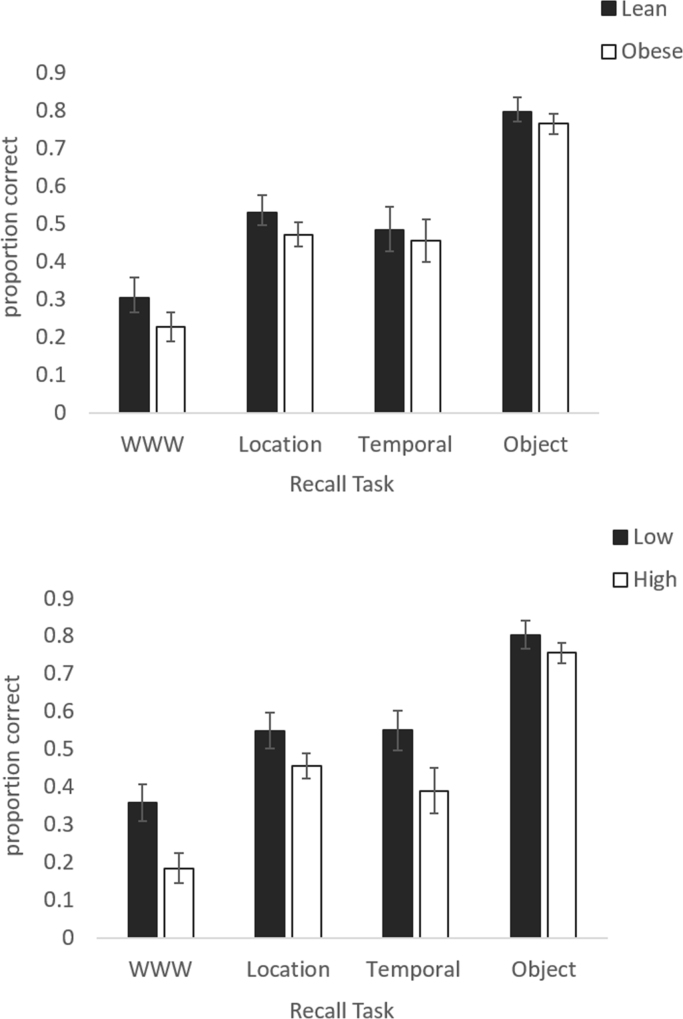
Increasing research in animals and humans suggests that obesity may be associated with learning and memory deficits, and in particular with reductions in episodic memory. Rodent models have implicated the hippocampus in obesity-related memory impairments, but the neural mechanisms underlying episodic memory deficits in obese humans remain undetermined. In the present study, lean and obese human participants were scanned using fMRI while completing a What-Where-When episodic memory test (the "Treasure-Hunt Task") that assessed the ability to remember integrated item, spatial, and temporal details of previously encoded complex events. In lean participants, the Treasure-Hunt task elicited significant activity in regions of the brain known to be important for recollecting episodic memories, such as the hippocampus, angular gyrus, and dorsolateral prefrontal cortex. Both obesity and insulin resistance were associated with significantly reduced functional activity throughout the core recollection network. These findings indicate that obesity is associated with reduced functional activity in core brain areas supporting episodic memory and that insulin resistance may be a key player in this association.
越来越多针对动物和人类的研究表明,肥胖可能与学习和记忆缺陷有关,尤其是情景记忆的减退。啮齿动物模型已表明海马体与肥胖相关的记忆损伤有关,但肥胖人类情景记忆缺陷背后的神经机制仍未明确。在本研究中,体型偏瘦和肥胖的人类参与者在完成一项“何处-何时-何物”情景记忆测试(“寻宝任务”)时接受了功能磁共振成像扫描,该测试评估了对先前编码的复杂事件的综合物品、空间和时间细节的记忆能力。在体型偏瘦的参与者中,寻宝任务在大脑中已知对情景记忆回忆很重要的区域引发了显著活动,如海马体、角回和背外侧前额叶皮质。肥胖和胰岛素抵抗均与整个核心回忆网络的功能活动显著降低有关。这些发现表明,肥胖与支持情景记忆的核心脑区功能活动降低有关,且胰岛素抵抗可能是这种关联中的关键因素。