Université François-Rabelais de Tours, EA2106 "Biomolécules et Biotechnologies Végétales", Tours, France.
Metabolic Integration and Cell Signaling Group, Plant Physiology Section, Department of CAMN, Universitat Jaume I, Spain.
Sci Rep. 2017 Jan 17;7:40453. doi: 10.1038/srep40453.
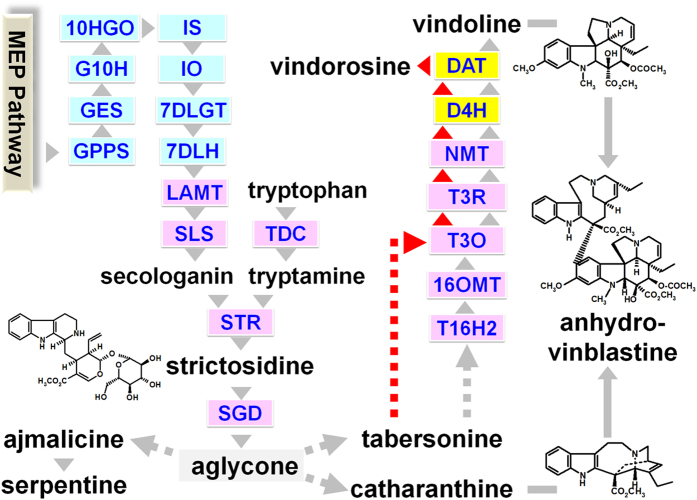
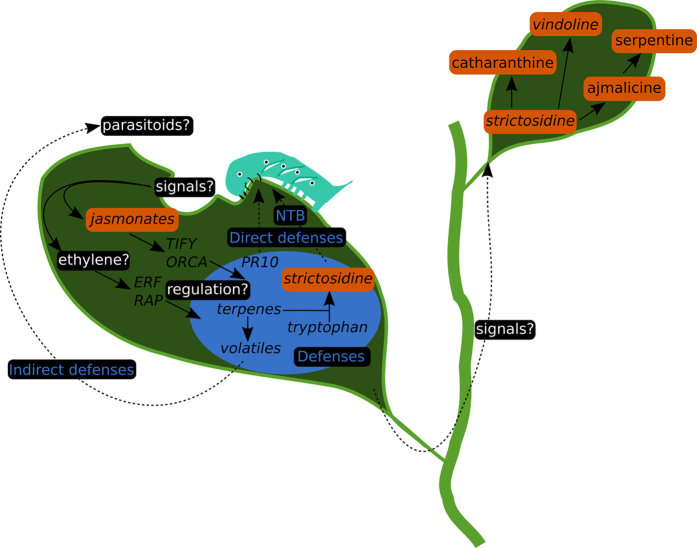
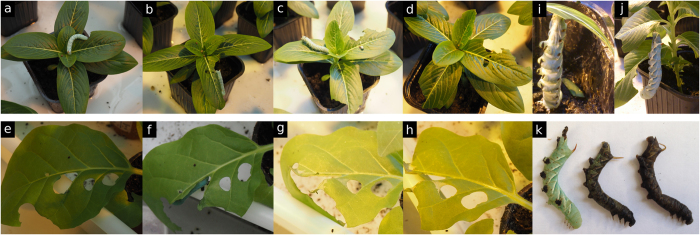
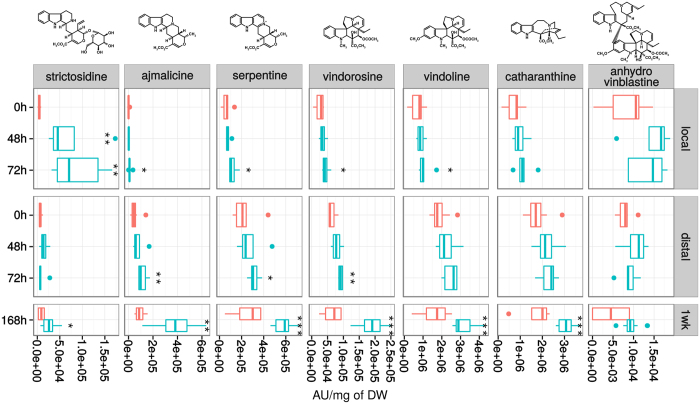
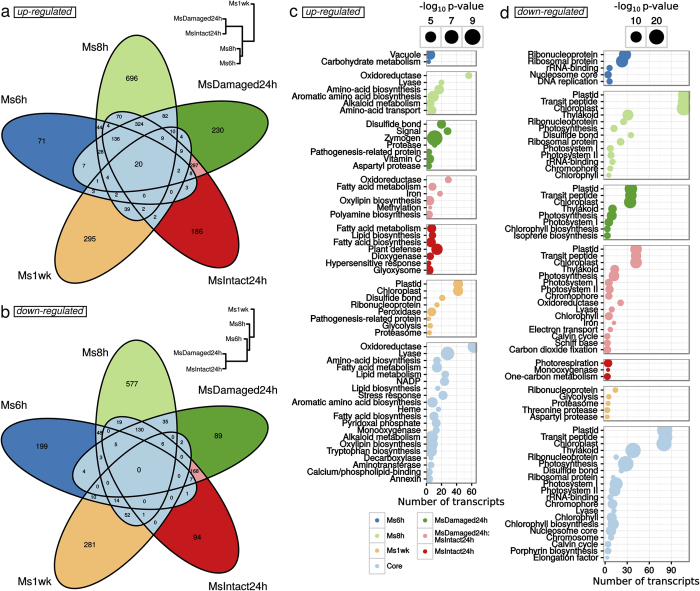
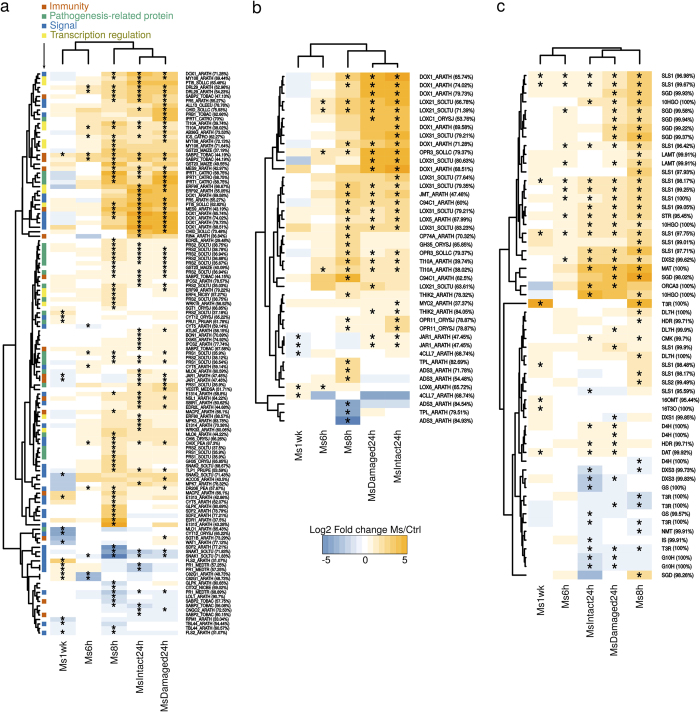
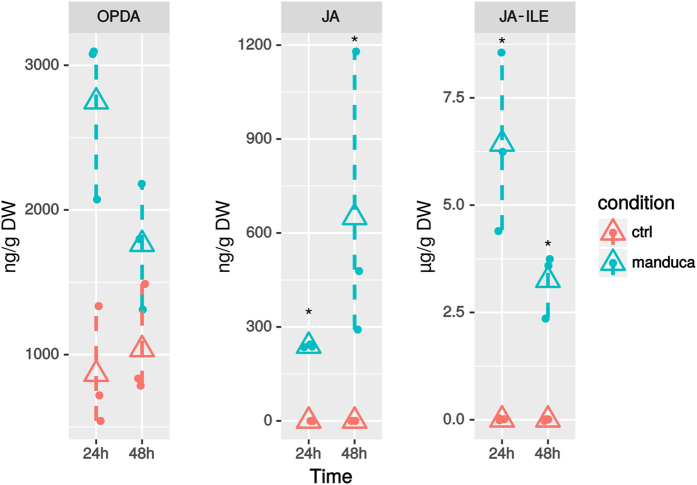
Plants deploy distinct secondary metabolisms to cope with environment pressure and to face bio-aggressors notably through the production of biologically active alkaloids. This metabolism-type is particularly elaborated in Catharanthus roseus that synthesizes more than a hundred different monoterpene indole alkaloids (MIAs). While the characterization of their biosynthetic pathway now reaches completion, still little is known about the role of MIAs during biotic attacks. As a consequence, we developed a new plant/herbivore interaction system by challenging C. roseus leaves with Manduca sexta larvae. Transcriptomic and metabolic analyses demonstrated that C. roseus respond to folivory by both local and systemic processes relying on the activation of specific gene sets and biosynthesis of distinct MIAs following jasmonate production. While a huge local accumulation of strictosidine was monitored in attacked leaves that could repel caterpillars through its protein reticulation properties, newly developed leaves displayed an increased biosynthesis of the toxic strictosidine-derived MIAs, vindoline and catharanthine, produced by up-regulation of MIA biosynthetic genes. In this context, leaf consumption resulted in a rapid death of caterpillars that could be linked to the MIA dimerization observed in intestinal tracts. Furthermore, this study also highlights the overall transcriptomic control of the plant defense processes occurring during herbivory.
植物会通过产生具有生物活性的生物碱来应对环境压力和抵御生物侵害,从而形成独特的次生代谢途径。长春花(Catharanthus roseus)在这种代谢途径中表现得尤为突出,它可以合成一百多种不同的单萜吲哚生物碱(monoterpene indole alkaloids,MIAs)。虽然其生物合成途径的特征现已基本明确,但对于 MIA 在生物攻击中的作用仍知之甚少。因此,我们通过用烟青虫(Manduca sexta)幼虫攻击长春花叶片,开发了一种新的植物/植食性动物相互作用系统。转录组和代谢分析表明,长春花通过局部和系统过程对食叶做出响应,这些过程依赖于特定基因簇的激活以及茉莉酸(jasmonate)产生后的不同 MIA 的生物合成。虽然在受攻击的叶片中检测到严格叶蛋白(strictosidine)的大量局部积累,其通过蛋白交联特性可以驱避毛毛虫,但新发育的叶片显示出严格叶蛋白衍生的 MIA( vindoline 和 catharanthine)的生物合成增加,这是通过 MIA 生物合成基因的上调实现的。在这种情况下,叶片的消耗导致毛毛虫迅速死亡,这可能与在肠道中观察到的 MIA 二聚化有关。此外,本研究还强调了在植食性动物取食过程中发生的植物防御过程的整体转录组控制。