Counihan Jessica L, Duckering Megan, Dalvie Esha, Ku Wan-Min, Bateman Leslie A, Fisher Karl J, Nomura Daniel K
Departments of Chemistry, Molecular and Cell Biology, and Nutritional Sciences and Toxicology, 127 Morgan Hall, University of California, Berkeley , Berkeley, California 94720, United States.
ACS Chem Biol. 2017 Mar 17;12(3):635-642. doi: 10.1021/acschembio.6b01001. Epub 2017 Jan 20.
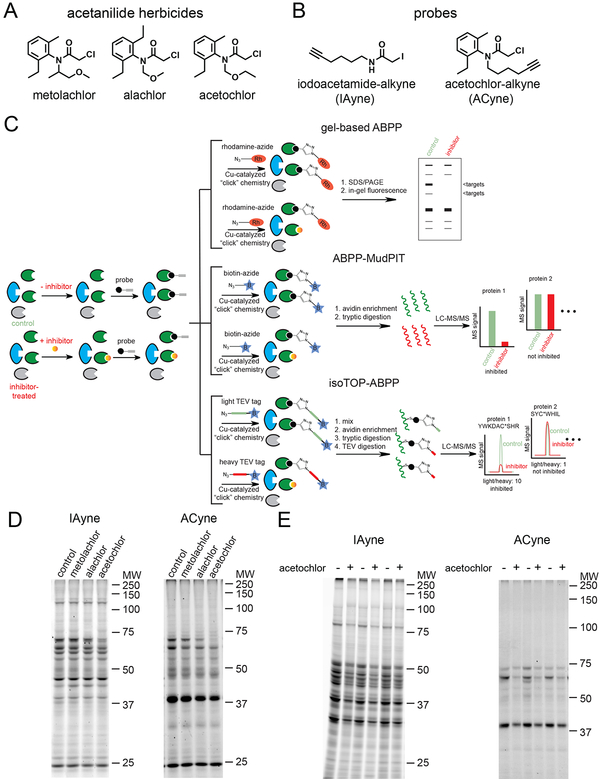
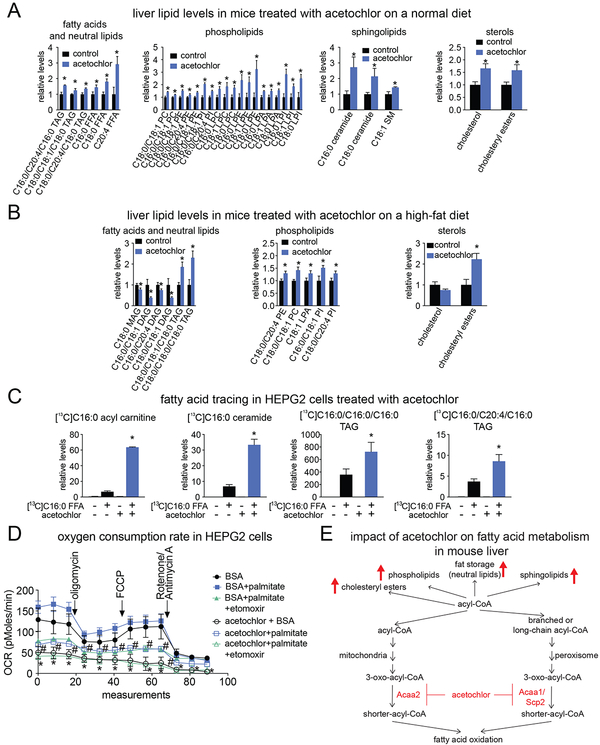
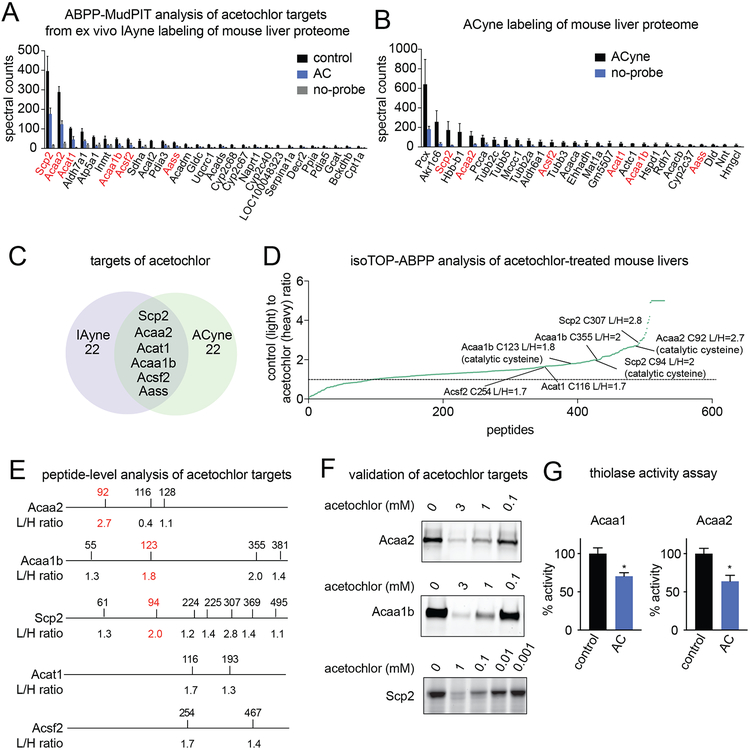
Acetanilide herbicides are among the most widely used pesticides in the United States, but their toxicological potential and mechanisms remain poorly understood. Here, we have used chemoproteomic platforms to map proteome-wide cysteine reactivity of acetochlor (AC), the most widely used acetanilide herbicide, in vivo in mice. We show that AC directly reacts with >20 protein targets in vivo in mouse liver, including the catalytic cysteines of several thiolase enzymes involved in mitochondrial and peroxisomal fatty acid oxidation. We show that the fatty acids that are not oxidized, due to impaired fatty acid oxidation, are instead diverted into other lipid pathways, resulting in heightened free fatty acids, triglycerides, cholesteryl esters, and other lipid species in the liver. Our findings show the utility of chemoproteomic approaches for identifying novel mechanisms of toxicity associated with environmental chemicals like acetanilide herbicides.
乙酰胺类除草剂是美国使用最广泛的杀虫剂之一,但其毒理学潜力和作用机制仍知之甚少。在此,我们利用化学蛋白质组学平台在小鼠体内绘制了使用最广泛的乙酰胺类除草剂乙草胺(AC)的全蛋白质组半胱氨酸反应性图谱。我们发现,AC在小鼠肝脏中可与20多种蛋白质靶点直接发生反应,包括参与线粒体和过氧化物酶体脂肪酸氧化的几种硫解酶的催化性半胱氨酸。我们还发现,由于脂肪酸氧化受损而未被氧化的脂肪酸转而进入其他脂质途径,导致肝脏中游离脂肪酸、甘油三酯、胆固醇酯及其他脂质种类增加。我们的研究结果表明,化学蛋白质组学方法可用于识别与乙酰胺类除草剂等环境化学物质相关的新毒性机制。