Cheng Jianzhong, Ma Shaozeng, Yang Guanghua, Wang Lisen, Hou Wei
Department of Ultrasound, Zhumadian Central Hospital, Zhumadian, Henan, China (mainland).
Department of Internal Medicine, Zhumadian Central Hospital, Zhumadian, Henan, China (mainland).
Med Sci Monit. 2017 Jan 17;23:292-299. doi: 10.12659/msm.898526.
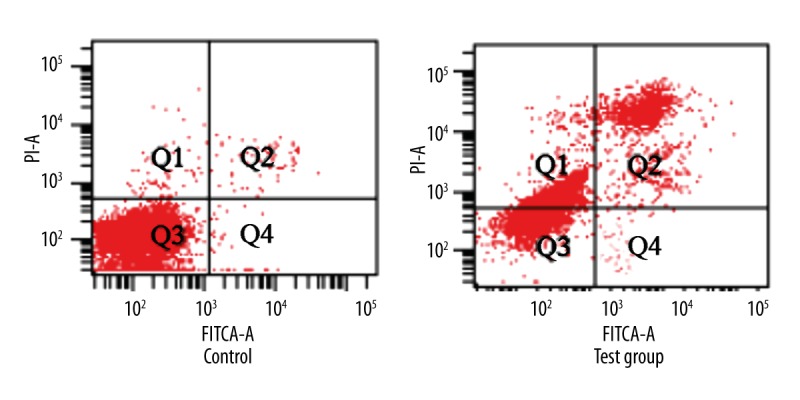
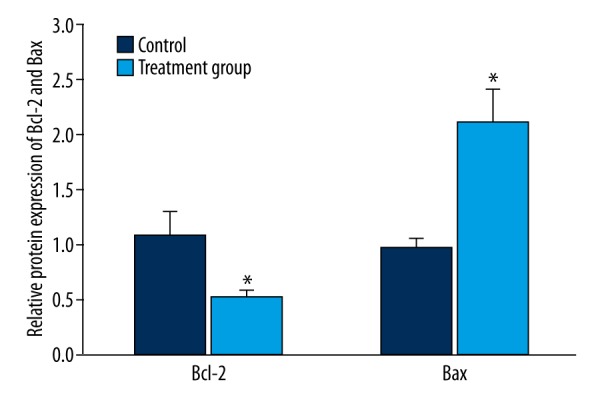
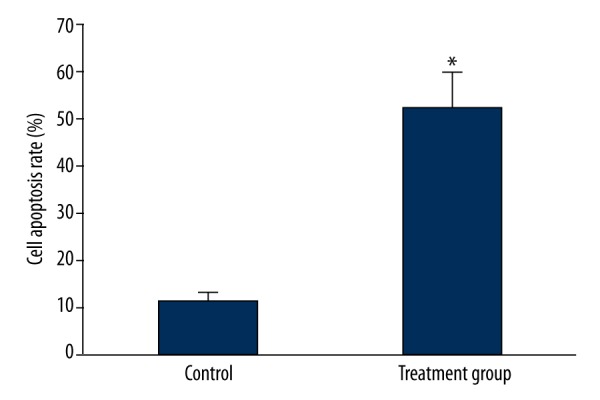
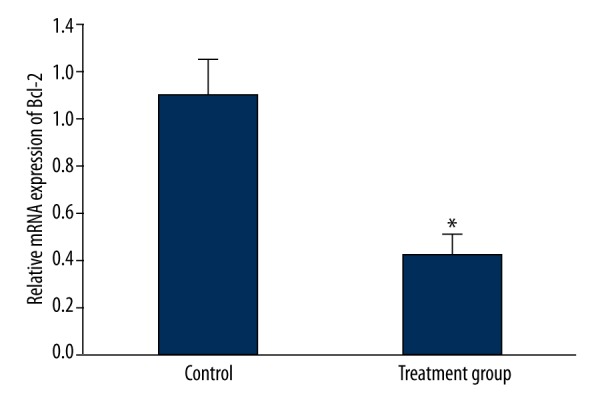
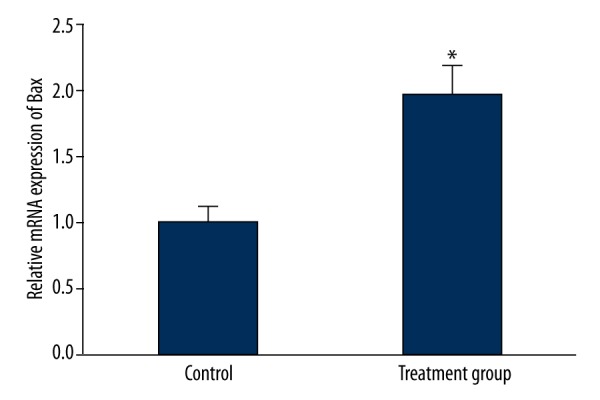
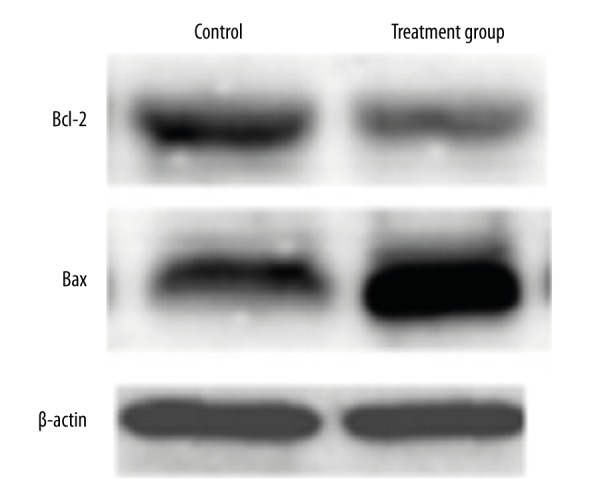
BACKGROUND The incidence of malignant tumor has gradually increased. How to improve the survival and quality of life of patients who lose the opportunity for surgery or who are unwilling to receive surgery remains an obstacle. At present, 125I particle interstitial implant therapy has been applied in a variety of treatments of tumors. However, the mechanism of computed tomography (CT)-guided 125I particle therapy in lung cancer has not been fully elucidated. MATERIAL AND METHODS A total of 42 patients with advanced non-small cell lung cancer were retrospectively analyzed between January 2013 and December 2013, including 19 patients who received CT-guided 125I particle therapy and 23 patients who received chemotherapy. Curative effect and adverse reactions at 6 months and 12 months were compared and analyzed. A rabbit lung cancer VX2 model was treated by 125I particle implantation therapy under CT guidance. The change in tumor volume was detected. Tumor cell apoptosis was tested by flow cytometry. Bcl-2 and Bax expression were determined by real-time polymerase chain reaction (PCR) and Western blot. RESULTS 125I particle therapy obviously reduced tumor volume after 6 months and 12 months. It showed significantly higher efficiency (57.9%, 57.9%) and control (78.9%, 73.7%) than the rates of efficiency and control in the chemotherapy group (P<0.05). 125I particle implantation therapy markedly suppressed rabbit VX2 transplanted tumor cell proliferation, promoted tumor regression, induced tumor cell apoptosis, reduced Bcl-2 expression, and upregulated Bax expression level (P<0.05). CONCLUSIONS CT-guided 125I particle implantation therapy can inhibit tumor proliferation and growth by regulating the expression of apoptosis-related genes and proteins, which is a promising approach in lung cancer treatment.
背景 恶性肿瘤的发病率逐渐上升。如何提高失去手术机会或不愿接受手术的患者的生存率和生活质量仍是一个难题。目前,125I粒子组织间植入治疗已应用于多种肿瘤治疗。然而,计算机断层扫描(CT)引导下的125I粒子治疗肺癌的机制尚未完全阐明。 材料与方法 回顾性分析2013年1月至2013年12月期间42例晚期非小细胞肺癌患者,其中19例接受CT引导下125I粒子治疗,23例接受化疗。比较分析6个月和12个月时的疗效及不良反应。在CT引导下对兔肺癌VX2模型进行125I粒子植入治疗。检测肿瘤体积变化。采用流式细胞术检测肿瘤细胞凋亡情况。通过实时聚合酶链反应(PCR)和蛋白质印迹法检测Bcl-2和Bax表达。 结果 125I粒子治疗6个月和12个月后肿瘤体积明显缩小。其有效率(57.9%,57.9%)和控制率(78.9%,73.7%)显著高于化疗组(P < 0.05)。125I粒子植入治疗明显抑制兔VX2移植瘤细胞增殖,促进肿瘤消退,诱导肿瘤细胞凋亡,降低Bcl-2表达,上调Bax表达水平(P < 0.05)。 结论 CT引导下125I粒子植入治疗可通过调节凋亡相关基因和蛋白的表达抑制肿瘤增殖和生长,是一种有前景的肺癌治疗方法。