Department of Immunology, Faculty of Medicine, University of Manitoba, 471 Apotex Centre, 750 McDermot Avenue, Winnipeg, MB, Canada R3E 0T5.
J Immunol Res. 2016;2016:6374379. doi: 10.1155/2016/6374379. Epub 2016 Dec 20.
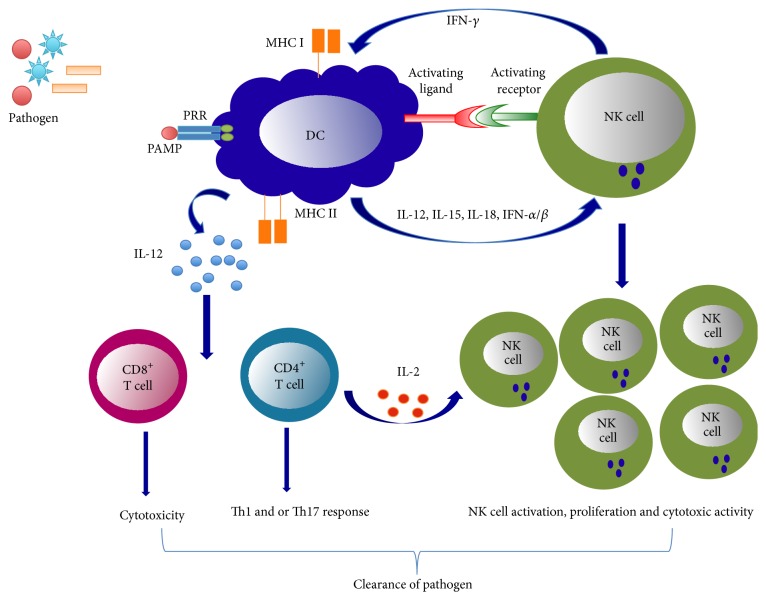
The interaction between natural killer (NK) cell and dendritic cell (DC), two important cellular components of innate immunity, started to be elucidated in the last years. The crosstalk between NK cells and DC, which leads to NK cell activation, DC maturation, or apoptosis, involves cell-cell contacts and soluble factors. This interaction either in the periphery or in the secondary lymphoid organs acts as a key player linking innate and adaptive immune responses to microbial stimuli. This review focuses on the mechanisms of NK-DC interaction and their relevance in antimicrobial responses. We specifically aim to emphasize the ability of various microbial infections to differently influence NK-DC crosstalk thereby contributing to distinct adaptive immune response.
近年来,人们开始阐明自然杀伤 (NK) 细胞和树突状细胞 (DC) 这两种固有免疫的重要细胞成分之间的相互作用。NK 细胞和 DC 之间的相互作用导致 NK 细胞激活、DC 成熟或凋亡,涉及细胞-细胞接触和可溶性因子。这种在周围组织或次级淋巴器官中的相互作用充当着连接先天和适应性免疫反应与微生物刺激的关键环节。本综述重点介绍了 NK-DC 相互作用的机制及其在抗菌反应中的相关性。我们特别旨在强调各种微生物感染对 NK-DC 串扰的不同影响,从而有助于产生不同的适应性免疫反应。