Chitnis Tanuja, Graves Jennifer, Weinstock-Guttman Bianca, Belman Anita, Olsen Cody, Misra Madhusmita, Aaen Gregory, Benson Leslie, Candee Meghan, Gorman Mark, Greenberg Benjamin, Krupp Lauren, Lotze Timothy, Mar Soe, Ness Jayne, Rose John, Rubin Jennifer, Schreiner Teri, Tillema Jan, Waldman Amy, Rodriguez Moses, Casper Charlie, Waubant Emmanuelle
Partners Pediatric Multiple Sclerosis Center Massachusetts General Hospital for Children Boston Massachusetts.
Department of Neurology University of California San Francisco California.
Ann Clin Transl Neurol. 2016 Nov 4;3(12):897-907. doi: 10.1002/acn3.365. eCollection 2016 Dec.
The aim of this study was to examine the relative contributions of body mass index (BMI) and pubertal measures for risk and age of onset of pediatric MS.
Case-control study of 254 (63% female) MS cases (onset<18 years of age) and 420 (49% female) controls conducted at 14 U.S. Pediatric MS Centers. Sex- and age-stratified BMI percentiles were calculated using CDC growth charts from height and weight measured at enrollment for controls, and within 1 year of onset for MS cases. Sex-stratified associations between MS risk and age at symptom onset with both BMI and pubertal factors were estimated controlling for race and ethnicity.
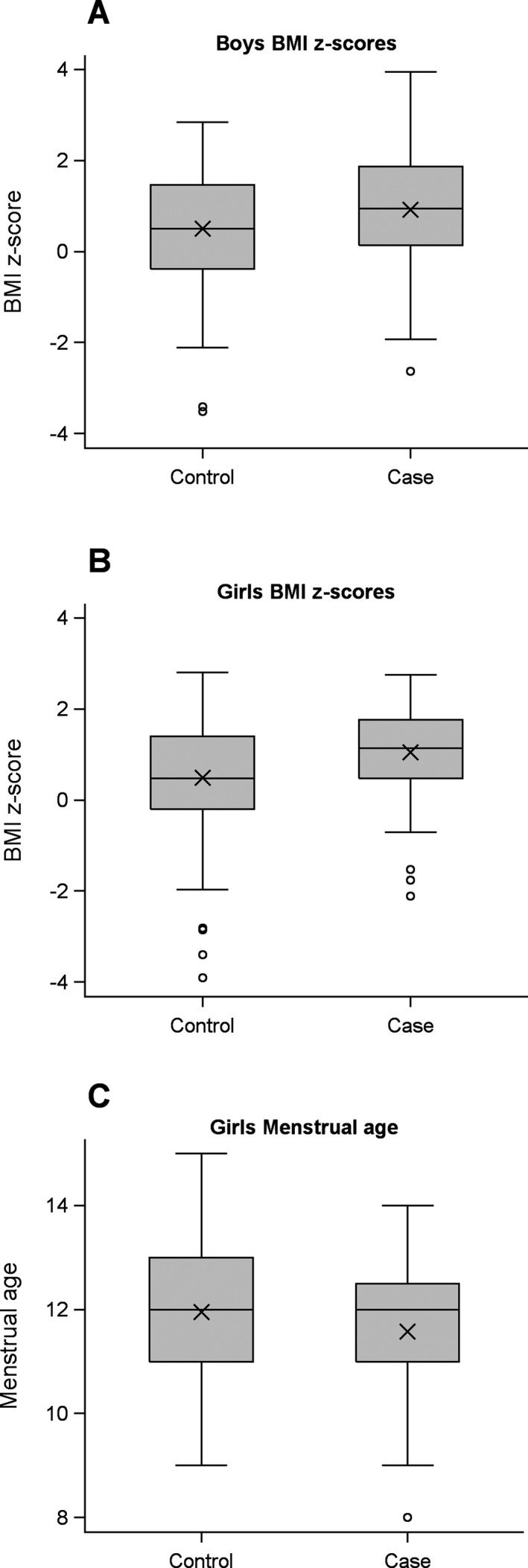
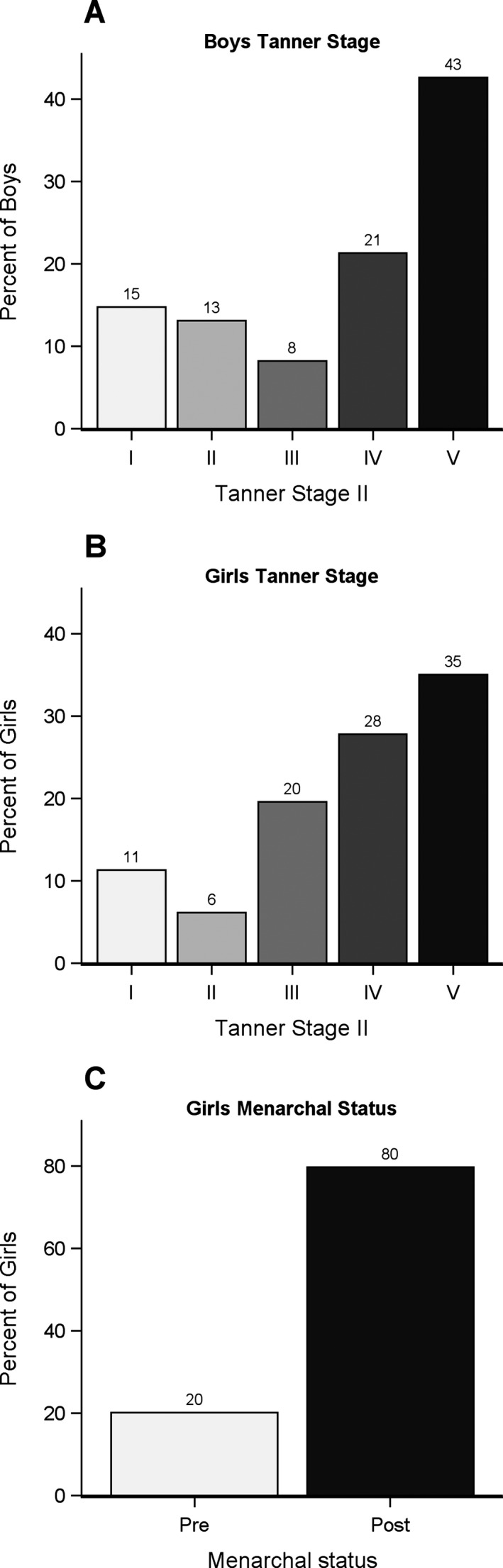
Only 11% of girls and 15% of boys were prepubertal (Tanner stage I) at MS onset. 80% of girls had onset of MS after menarche. BMI percentiles were higher in MS cases versus controls (girls: < 0.001; boys: = 0.018). BMI was associated with odds of MS in multivariate models in postpubertal girls (OR = 1.60, 95% confidence interval [CI]: 1.12, 2.27, = 0.009) and boys (OR = 1.43, 95% CI: 1.08, 1.88, = 0.011). In girls with MS onset after menarche, higher BMI was associated with younger age at first symptoms ( = 0.031). Younger menarche was associated with stronger effects of BMI through mediation and interaction analysis. In pubertal/postpubertal boys, 89% of whom were obese/overweight, earlier sexual maturity was associated with earlier onset of MS ( < 0.001).
Higher BMI in early adolescence is a risk factor for MS in girls and boys. Earlier age at sexual maturity contributes to earlier age at MS onset, particularly in association with obesity.
本研究旨在探讨体重指数(BMI)和青春期指标对儿童多发性硬化症(MS)发病风险及发病年龄的相对影响。
在美国14家儿科MS中心进行了一项病例对照研究,纳入254例(63%为女性)MS病例(发病年龄<18岁)和420例(49%为女性)对照。使用美国疾病控制与预防中心(CDC)的生长图表,根据对照组入组时测量的身高和体重以及MS病例发病后1年内测量的身高和体重,计算按性别和年龄分层的BMI百分位数。在控制种族和民族因素的情况下,估计MS风险与症状发作年龄之间按性别分层的关联,同时考虑BMI和青春期因素。
MS发病时,只有11%的女孩和15%的男孩处于青春期前(坦纳I期)。80%的女孩在月经初潮后发病。与对照组相比,MS病例的BMI百分位数更高(女孩:<0.001;男孩:=0.018)。在多变量模型中,BMI与青春期后女孩(比值比[OR]=1.60,95%置信区间[CI]:1.12,2.27,P=0.009)和男孩(OR=1.43,95%CI:1.08,1.88,P=0.011)的MS发病几率相关。在月经初潮后发病的女孩中,较高的BMI与首次出现症状时年龄较小相关(P=0.031)。通过中介和交互分析,初潮年龄较小与BMI的影响更强相关。在青春期/青春期后的男孩中,其中89%为肥胖/超重,性成熟较早与MS发病较早相关(P<0.001)。
青春期早期较高的BMI是女孩和男孩患MS的危险因素。性成熟较早会导致MS发病年龄较早,尤其是与肥胖相关时。