State Key Laboratory of Military Stomatology, Department of Operative Dentistry &Endodontics, School of Stomatology, the Fourth Military Medical University, Xi'an Shaanxi, China.
Shaanxi Key Laboratory of Stomatology, School of Stomatology, the Fourth Military Medical University, Xi'an Shaanxi, China.
Sci Rep. 2017 Jan 18;7:40681. doi: 10.1038/srep40681.
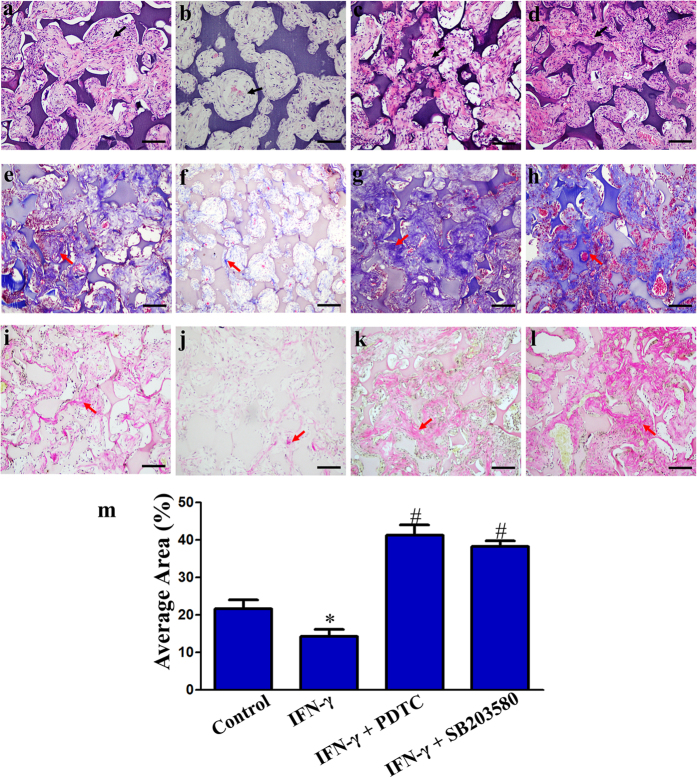
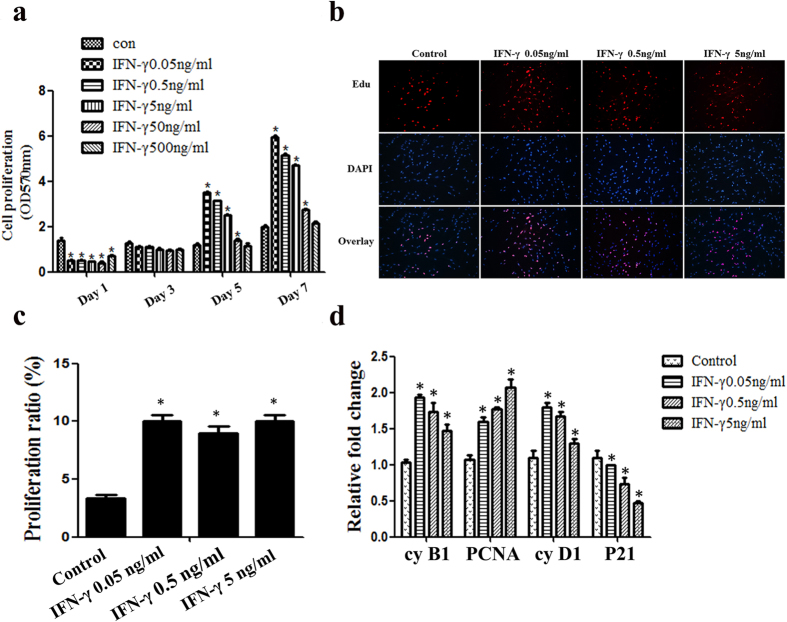
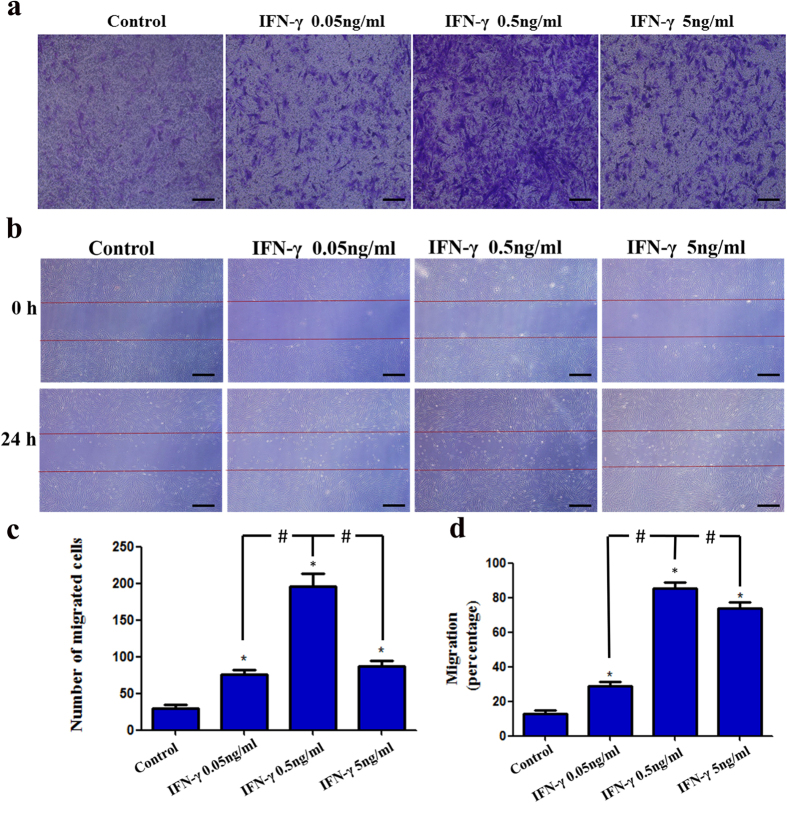
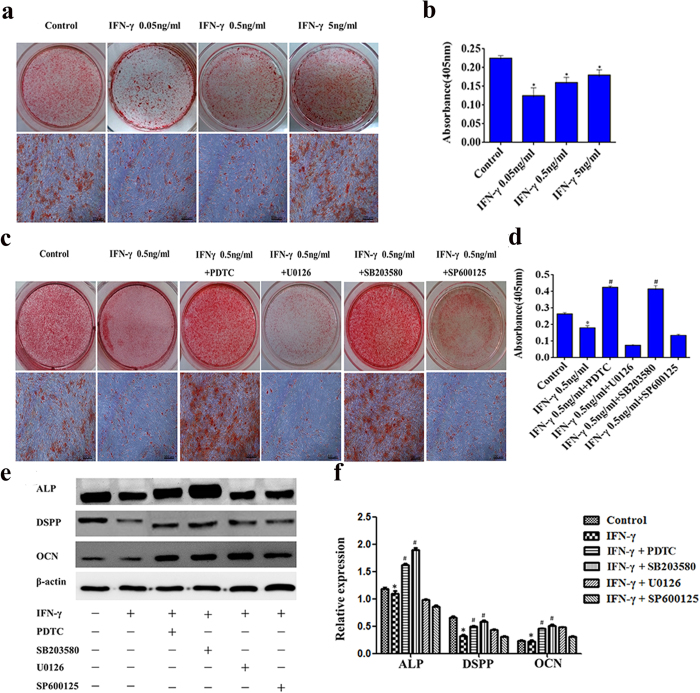
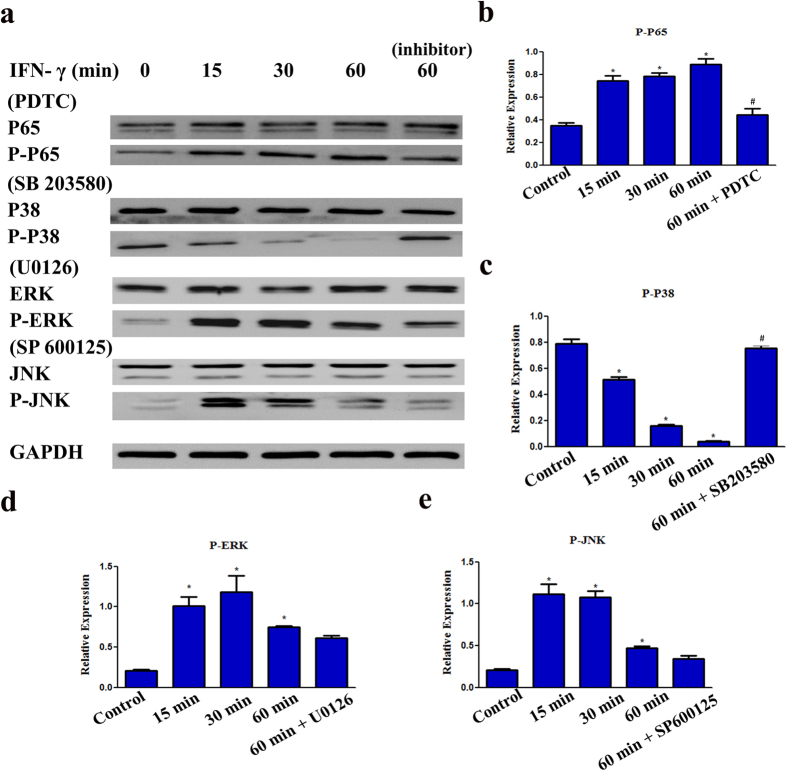
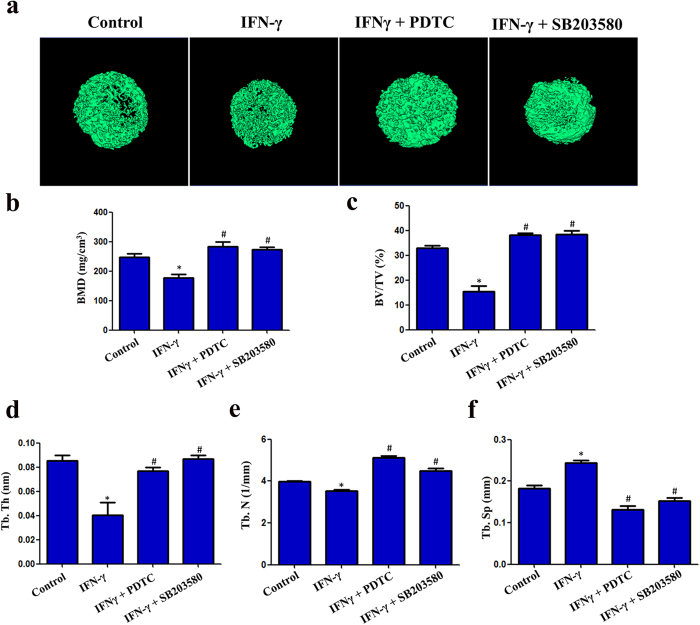
During caries, dental pulp expresses a range of pro-inflammatory cytokines in response to the infectious challenge. Interferon gamma (IFN-γ) is a dimerized soluble cytokine, which is critical for immune responses. Previous study has demonstrated that IFN-γ at relative high concentration (100 ng/mL) treatment improved the impaired dentinogenic and immunosuppressive regulatory functions of disease-derived dental pulp stem cells (DPSCs). However, little is known about the regulatory effects of IFN-γ at relative low concentration on healthy DPSC behavior (including proliferation, migration, and multiple-potential differentiation). Here we demonstrate that IFN-γ at relatively low concentrations (0.5 ng/mL) promoted the proliferation and migration of DPSCs, but abrogated odonto/osteogenic differentiation. Additionally, we identified that NF-κB and MAPK signaling pathways are both involved in the process of IFN-γ-regulated odonto/osteogenic differentiation of DPSCs. DPSCs treated with IFN-γ and supplemented with pyrrolidine dithiocarbamate (PDTC, an NF-κB inhibitor) or SB203580 (a MAPK inhibitor) showed significantly improved potential for odonto/osteogenic differentiation of DPSCs both in vivo and in vitro. These data provide important insight into the regulatory effects of IFN-γ on the biological behavior of DPSCs and indicate a promising therapeutic strategy for dentin/pulp tissue engineering in future endodontic treatment.
在龋齿发生过程中,牙髓会针对感染性挑战表达一系列促炎细胞因子。干扰素 γ(IFN-γ)是一种二聚体可溶性细胞因子,对免疫反应至关重要。先前的研究表明,相对高浓度(100ng/mL)的 IFN-γ 处理可改善疾病来源的牙髓干细胞(DPSC)受损的成牙本质和免疫抑制调节功能。然而,对于相对低浓度的 IFN-γ 对健康 DPSC 行为(包括增殖、迁移和多潜能分化)的调节作用知之甚少。在这里,我们证明相对低浓度(0.5ng/mL)的 IFN-γ 可促进 DPSC 的增殖和迁移,但会破坏牙向/成骨分化。此外,我们发现 NF-κB 和 MAPK 信号通路均参与了 IFN-γ 调节 DPSC 牙向/成骨分化的过程。用 IFN-γ 处理并补充吡咯烷二硫代氨基甲酸盐(PDTC,NF-κB 抑制剂)或 SB203580(MAPK 抑制剂)的 DPSCs 显示出在体内和体外都明显改善了 DPSCs 的牙向/成骨分化潜能。这些数据深入了解了 IFN-γ 对 DPSCs 生物学行为的调节作用,并为未来牙髓治疗中的牙本质/牙髓组织工程提供了有前途的治疗策略。